Louis Vuitton has a legacy in the world of luxury fashion. When people hear Louis Vuitton, they think of elegant, classy, (and expensive) French fashion on the cutting edge of the season’s trends perfectly balanced with a timeless appeal. What many don’t realize is that LVMH owns far more than fashion brands. As is the case with many of the world’s most successful corporations, Louis Vuitton has a long reach.
Meta is updating its Brand Rights Protection Manager tool
that helps detect product replicas in product listings, with new measures directed
at helping brands to protect their IP. Around the same theme, Meta is also
launching a new Intellectual Property Reporting Center that consists of a
database of IP reports to ensure more efficient tracking of them. Additionally,
a new Protecting Businesses section has been added on the Meta for Business
website, where businesses can find helpful notes and guides to assist them in
developing a brand protection strategy.
Within the Brand Rights Protection Manager, Meta is adding
some AI-powered features to the Brand Rights tracking tool that provides
product security by detecting duplicates based on reference images uploaded by
the business. The updated system, according to Meta, will ensure broader
protection of products by finding better, more refined matches based on how a
brand has previously made use of the tool. Its search abilities will also be
also broader-reaching, hence simplifying the process of discovery. Moreover,
Meta has increased the limit of image uploads from 50 to 200 images at once. This
will allow Meta’s systems to have a wider range of variations for better cross-checking.
Nestle is far from just a candy brand. In fact, Nestle is a giant company that owns several different brands across several different industries. From the team at Wyoming LLC Attorney is this newly published infographic that lists out everything owned by Nestle, and you may actually find some of these to be rather surprising.
LinkedIn has added a new search functionality within the Ad
library, using which you can specifically find branded content partnerships. LinkedIn’s
Ad library consists of database that is publicly available and contains
information about advertisements on the platform.
More specifically, LinkedIn creators tagged with the Brand
Partnership label will be discoverable through the new search feature. Users will
be able to search for partnerships by entering keywords and refining their
search using a filter for the date when the content was posted, including ‘Past
24 hours,’ ‘Past Week,’ and ‘Past Month.’ However, the feature does not offer
the ability to directly search for sponsored content by a specific brand or
advertiser, as of now.
Twitter is undergoing a major change: the platform will soon
be known as “X,” as confirmed by the CEO Elon Musk himself. When you visit X.com,
you will be redirected to Twitter.com, and will also see a new “interim X logo”
in place of the iconic bird logo for Twitter.
The day before, Musk joined a Twitter Spaces session where after an hour of silence, he finally confirmed that the new Twitter logo would be out the next day. While Twitter’s business has already been renamed as X corp, it’s the first time that the platform’s logo will become a symbol for the change.
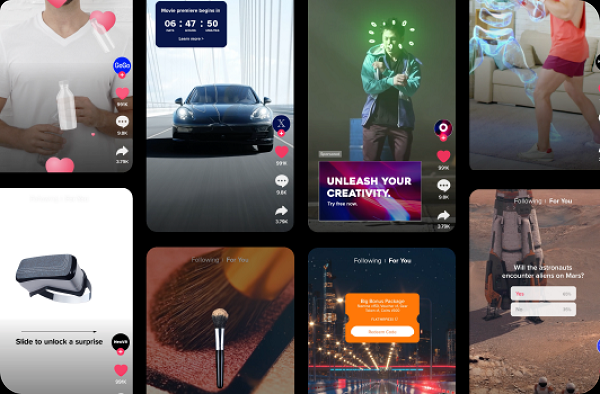
TikTok has released a new business promotion feature ‘InteractiveAdd-Ons’ for businesses on its platform. These include stickers, pop-ups, and
other visual elements displayed in users’ For You feed ads that prompt potential
customers to engage with the ads.
According to TikTok, “Viewers who have shared, liked, or
commented on a TikTok brand video are 150% more likely to buy a product or
service.” Interactive Add-Ons could therefore contribute to a business’ sales
by enticing more customers to engage with a brand’s in-feed promotions. The reason
behind the efficacy of Interactive Add-Ons is that these features create an
immersive environment that is likely to catch users’ undivided attention.
The Add-Ons are available in two types: Standard and Premium, each consisting of tools that serve a brand differently depending on its requirements. More specifically, Standard Add-Ons would cater to lower-funnel marketing goals such as driving clicks and conversions. Premium Add-Ons, on the other hand, are meant to help reach upper-funnel goals like brand awareness and community building.
Reddit has announced two new options for advertisers to
improve performance of their ad campaigns on the platform. These include Contextual
Keyword Targeting and Product Ads.
According to Reddit, there are two ways that advertisers can
benefit from Contextual Keyword Targeting. One, they can” select specific
keywords to associate with their brand.” And two, they can “align keywords with
their creative ad copy for added relevance.”
Until now, advertisers on Reddit were able to rely on targeting options of specific communities, interests, and locations. Adding relevant keywords in campaigns would add more relevance and precision to the campaigns in terms of reach. This could significantly benefit many brands.
Getting deeper into the generative AI shift, Google has
developed a variety of AI-based tools for businesses to make the most out of
their ad campaigns. These include the ability to generate background visuals
for product shots, a feature that summarizes website content, a new Search ad
creation process, and more.
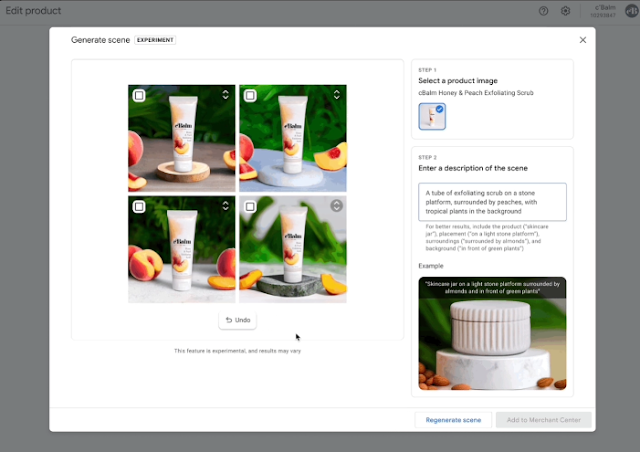
Businesses will now be able to add AI-generated background
visuals to their product shots to enhance the presence of their products.
The feature can be accessed within Google’s Product Studio, and can be used to
“create unique and tailored product imagery for free.” By simply providing a
text prompt to the tool, businesses can generate multiple versions of their product
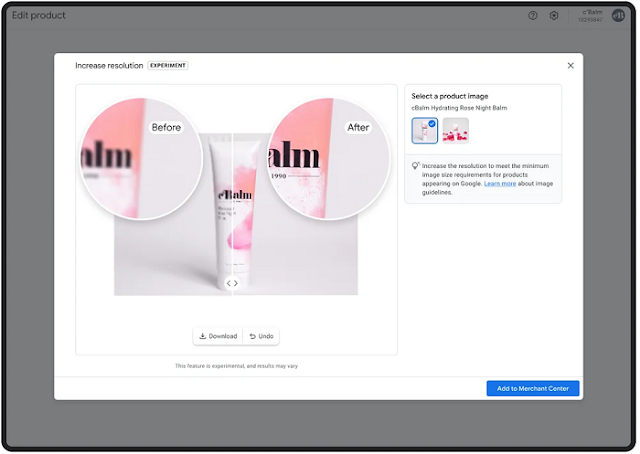
images. Additionally, the feature will also improve the quality of small or
low-resolution images without causing one the hassle of reshooting.
Another AI tool has been designed to provide businesses summaries of their website pages. Based on the website’s content, the tool will then help enhance ad campaigns by generating “relevant and effective keywords, headlines, descriptions, images and other assets.” These suggestions can be reviewed and edited before being employed.
To enable direct interactions between brands and customers,
Meta is expanding its Lead Ads product as well as updating it with new
features like conditional questions and Instant Forms overlaid on web. The company
is also testing a new ad format ‘Promotional Ads,’ designed to facilitate people
in discovering, managing, and applying digital promotions to their purchases.
Promotional ads will help people find brand deals, since customers
tend to actively seek offers before buying from their favourite brands.
The process of applying promotions, according to Meta, seems
to be simple. When you see an ad with a special promotion on Facebook, for
instance, you will be able to claim the offer by clicking on the ad, which will
have the discount automatically applied to your purchase. Moreover, if you
leave your purchase incomplete, you will receive a notification to remind you to
complete it before the deal expires.
Corporate gifting is a powerful tool that can be used to build relationships, foster growth, and create opportunities. 80% of CEOs believe that corporate gifting has a positive and measurable return on investment. Gifting can retain customers, boost word of mouth, and create constant touchpoints that keep your brand at the forefront of your clients' minds. Gifting throughout the year can create lasting loyalty, with 80% of customers willing to do business with a brand after personalized experiences, including receiving a corporate gift that fits their brand archetype.
TikTok’s influence continues to grow over people’s behaviors
and interactions on social media, including new trends, discovering music, and
creating content. With that, the platform is looking back at the key shifts
that have happened in 2022, and based on that, offering marketers its perspective
on what to experiment with in the coming year.
TikTok has published a new report for 2023 called “What’s
Next,” where the company has discussed predictions for marketing trends and shared
insights and tips based on recent statistics. There are three main categories that marketers could learn
from in the guide, namely Actionable Entertainment, Making Space for Joy, and Community-Built
Ideals.
Actionable Entertainment focuses on what makes brand
promotions more entertaining on TikTok. For that matter, TikTok suggests
marketers to rely on techniques that maintain viewers’ attention. For example,
syncing sounds to transitions or adding text overlays – basically anything that
aligns with users’ interests and latest usage behaviors.
For creators specifically, TikTok suggests using storytelling methods to promote content, which it believes to be significantly effective in driving the impact of a message.
TikTok has become a valuable app in the recent years for
advertisers and brands to promote their ad campaigns. The social company has
been thus making efforts to provide branding opportunities in various ways, one
of them being TikTok Works, which is a series on important insights and notes
to guide brands towards effective marketing on the platform.
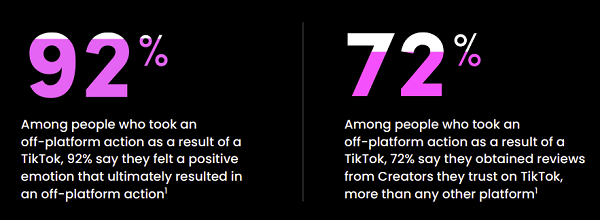
TikTok has shared the first set of data from TikTok Works, which
proves the app to be worthy for advertisers of Consumer Packaged Goods. The return
on ad spend and sales efficiency for CPG brands was observed to be considerable
as a result of TikTok’s capability in driving sales outcomes. Additionally, the
increases in paid media ROAS were the highest in the US, Middle East, Europe
and Southeast Asia.
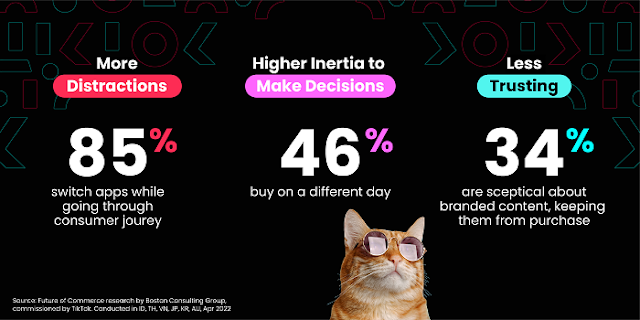
Apart from providing entertainment to the
app’s users, TikTok has also worked to enhance shopping and advertising experience
on its platform. The company has initiated a new approach, that it calls ‘shoppertainment;’
a combination of entertainment and shopping. After surveying people about their
online shopping experience, TikTok found out that the reduced impact of advertisement
influences consumers’ shopping experience, and is therefore sharing key insights
for advertisers to consider while creating ads in alignment with consumers’
needs.
TikTok begins its advertising lesson by highlighting two main needs of consumers: functional and emotional. By addressing both, brands can maximize their presence on the app, suggests TikTok. Following these needs are more specific things that consumers look for from a brand, which include storytelling and education, short content that maintains attention, unforced decision making, authenticity, and recommendations on trends.

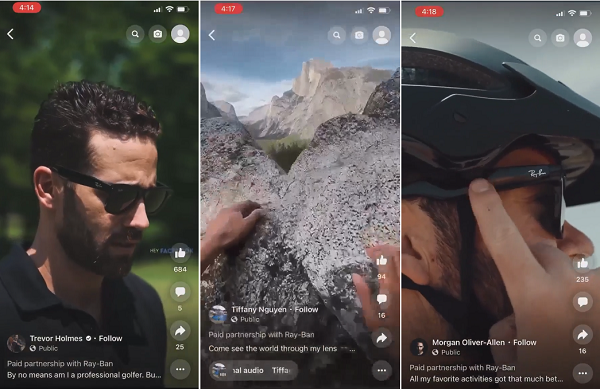
As per Meta’s latest announcement, creators on Instagram and
Facebook will be able to use the tagging tool called ‘Branded Content’ to make
money off of their Reels content.
The tool will enable brands tagged in a Reel to convert the
clip into a Branded Content Ad, which will be indicated by a ‘Sponsored with’
label. Once a creator tags a brand in their Reel, the brand will be notified of
the post and be able to acquire metrics about its performance.
Snapchat
recently conducted a survey-research with over twenty-five thousand people, in
collaboration with Ispos, on how AR and its potential value is perceived by social
and digital media users, including brands and consumers.
The main conclusion
that Snapchat derived from the research suggests that people are only aware of
the superficial value of AR, while there is actually a wide range of benefits
that AR could offer. Snapchat estimates that around 60% of people in the
US, and almost all social/communications apps users will be frequent users of
AR by 2025.
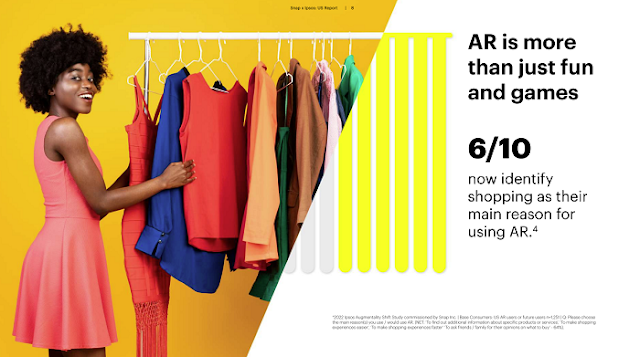
The report
gathered key points in relation to people’s opinions of AR. This includes the potential
of AR in online shopping experience, as every 6 out of 10 people identified
shopping as their main reason of using AR, 84% of consumers expressed interest
in using AR to interact with a product before purchasing it, and 73% were of
the view that AR made their shopping experience easier. Snapchat also adds how
AR helps consumers to make better purchase decisions by allowing them to visualize,
share, and gather feedback before making purchases.
In addition
to that, 73% of the consumers showed interest in experiencing AR at events and
conferences, while 79% of them were keen to experience AR as a means of
entertainment, like concerts and sport events.
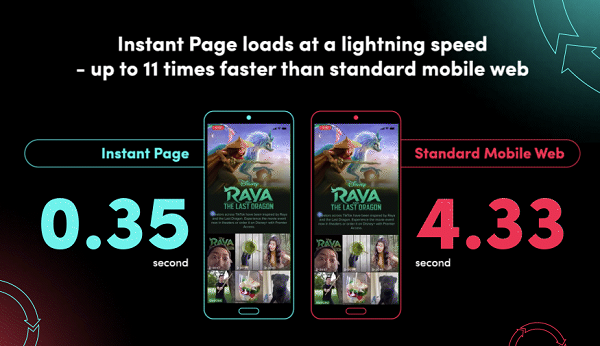
TikTok launched a landing page for advertisers to display
their ads on the platform earlier this year. The Instant Page has the ability to
load up to 11 times faster than standard mobile pages and allows users to view ads
and explore other relevant sites without having to exit TikTok. To help
advertisers adopt effective practices to enhance their ad campaigns using
Instant Page, TikTok has shared several tips in a new post.
According to TikTok, “Instant Page is especially useful for
informing, educating, and engaging users on complex topics where ad creatives
can’t go into the necessary detail e.g., for finance brands.” It adds that
displaying ads on Instant Page assists in reducing consumers’ decision-making
time, while clearly mentioning the important information about the product or
service.
Social media is a powerful tool to build loyalty and influence buying decisions for your business. Often, social media is used poorly. Many companies approach social media advertising in the wrong way, losing valuable interaction across platforms; this includes reposting the same content across social media channels, using a formal tone, and resorting to clickbait. If used correctly, advertising on social media can help you reach your target market, saving you time and money.
Meta reports that over 20 billion messages are exchanged
over Messenger each month between businesses and customers. This insight
suggests that direct messaging has become a convenient way for brands and
consumers to interact with one another.
To further understand how users in the APAC (Asia-Pacific)
region are relying on messaging for brand queries, and how businesses can serve
customers in a better way using messaging, Meta conducted a research in
collaboration with the Boston Consulting Group, which consisted of surveying more
than 6,500 respondents across the APAC region.
The analysis in the report shows some valuable information on the significance of direct messaging between brands and consumers. Some of the key points mentioned in the report are as follows:


.jpg)