Visualistan: Augmented Reality -->

    Social Items


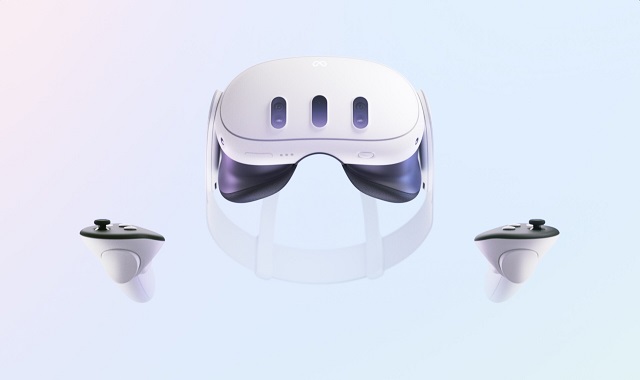
Meta has finally revealed exciting details of its new next-generation virtual and mixed reality headset ‘Quest 3.’ With a starting price of $US499.99 for 128GB, the device will be available for purchase this fall.


The three main technical elements that the Quest 3 will be featuring include a 2x improved processing power, high-fidelity color Passthrough that produces AR experience, and a smaller and sleeker design making the headset more comfortable to wear than the previous model.


According to Meta, the Quest 3 headset features the tech giant’s “highest resolution display and pancake optics.” The increased processing power of the Quest 3 results from a Snapdragon chipset integrated in the device that helps enhance its visual capabilities. “You’ll get smoother performance and incredibly crisp details in immersive games,” Meta claims.

Meta Shares Thrilling Preview of Quest 3 Headset, Announces Lower Prices and Software Upgrades for Quest 2


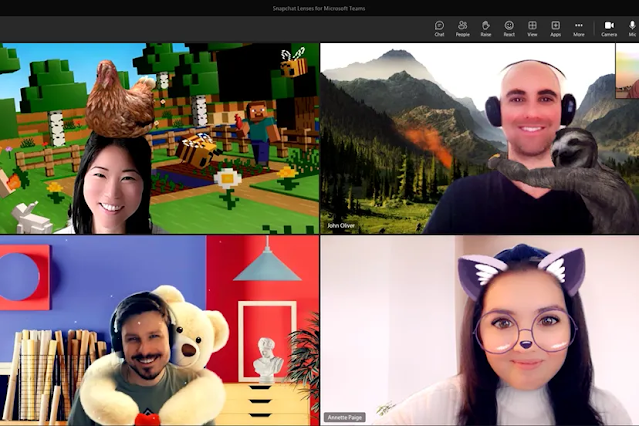
Snapchat and Microsoft have collaborated on a new integration that lets Work users on Microsoft Teams enjoy some of the most popular Snapchat Lenses to add AR effects in their video meetings. There are more than 20 Lenses that users can choose from.


The Lenses are powered by Snap's Camera Kit and offer an AR effect to video calls, making them livelier and more interactive. “Since AR uses cameras, sensors, and displays, which are already built into video conferencing, it is a perfect and seamless fit with Teams,” says Microsoft. Previously, the filters in Teams were powered by the Snap Camera that was launched in 2018 and primarily designed for Twitch streams, and was later shut down.

Microsoft Introduces a Range of Snapchat Lenses in Teams


In a latest monetization effort utilizing AR, Snapchat has developed a new project that combines AI and AR, dedicated to retailers who can use the service to earn from AI and AR shopping tools.


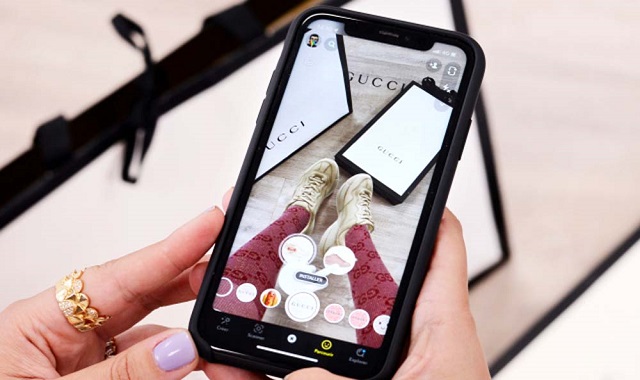
The AR Enterprise Services (ARES) by Snapchat provides retailers with shopping tools that can be used to virtually try on products like clothes, jewellery, makeup, etc. The integration of AR shopping tools in ARES will facilitate retailers by increasing conversions and reducing return rates.


Snapchat’s Latest AR Creation Helps Retailers Make Money Off of AR and AI Shopping


A new Bloomberg report revealed that Apple could be announcing its mixed reality headset this spring, ahead of the Worldwide Developers Conference that is to be held in June.


The prediction has also been confirmed, in a way, by a recent tweet shared by Apple analyst Ming-Chi Kuo, who provided an update on the development progress of the headset. He stated that due to issues involving the mechanical component drop testing as well as the availability of software development tools, the headset would most likely not be revealed in the January media event. Ming-Chi Kuo further confirmed that the headset would most likely be announced in the spring.

Apple is Reportedly Preparing to Launch its Mixed-Reality Headset in Fall


As part of its recent AR advancement, Snapchat has launched a new AR Lens that is meant to help users discover products of their preference during the holiday season. The lens features a voiceML technology that relies on audio prompts instead of typed text to engage with and facilitate users.


The Lens, called ‘New Balance,’ works by listening to audio prompts from a user who answers a series of questions to reach the product they are looking for. The Lens will then provide product recommendations that best match with the user’ answers.

Snapchat Rolls Out New AR, Voice-Powered Shopping Lens in US


Meta hosted its Connect conference for 2022 just now to reveal its latest VR products and tools. These include a new version of the Quest headset, new professional integrations with Microsoft, updated interaction tools, and control devices.


Meta’s new Quest headset is priced at $US1,499 and called ‘Quest Pro’, which the company describes as its first entry in its new “high-end line” of devices. Meta has redesigned the headset in its appearance, which is more sleek-looking, and has developed it with innovative features including high-resolution sensors for mixed reality experiences, a more realistic display with more pixels, crisp LCD displays for sharp visuals, and an eye-tracking system.


Additionally, the Quest Pro facilitates multi-screen display, as well as Meta’s new VR feature called ‘Magic Rooms’, which is a combination of VR and the display of participants in a video conference.

Meta Displays its Latest VR Advancements at the 2022 Connect Conference


Snapchat recently conducted a survey-research with over twenty-five thousand people, in collaboration with Ispos, on how AR and its potential value is perceived by social and digital media users, including brands and consumers.


The main conclusion that Snapchat derived from the research suggests that people are only aware of the superficial value of AR, while there is actually a wide range of benefits that AR could offer. Snapchat estimates that around 60% of people in the US, and almost all social/communications apps users will be frequent users of AR by 2025.


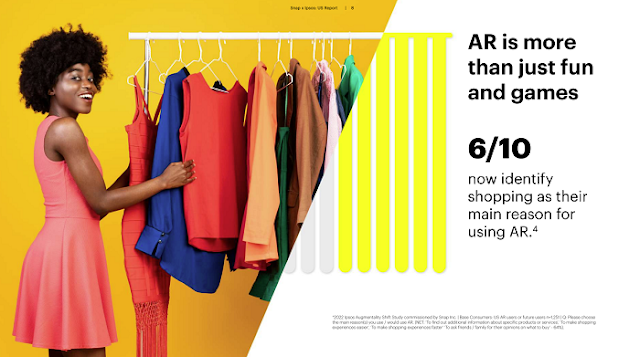
The report gathered key points in relation to people’s opinions of AR. This includes the potential of AR in online shopping experience, as every 6 out of 10 people identified shopping as their main reason of using AR, 84% of consumers expressed interest in using AR to interact with a product before purchasing it, and 73% were of the view that AR made their shopping experience easier. Snapchat also adds how AR helps consumers to make better purchase decisions by allowing them to visualize, share, and gather feedback before making purchases.


In addition to that, 73% of the consumers showed interest in experiencing AR at events and conferences, while 79% of them were keen to experience AR as a means of entertainment, like concerts and sport events.  


Snapchat’s Latest Report Reveals Potential of AR and Opportunities for Brands to Make Use of it


Meta prepares to host the 2022 Meta Connect Conference on the 11th of October, where it aims to showcase a range of its new AR and VR creations, along with a virtual design of the Metaverse. “Industry leaders will share the latest technologies and developer sessions will cover how to use them. Our goal is to bring the world closer together and deepen human connection through new experiences,” says Meta.


One of the major exhibits in the conference will be Meta’s latest ‘Cambria’ VR headset that it had first previewed last October. The headset features advanced, high-end technology, including higher resolution image quality and outward-facing cameras, hence enabling the wearer to experience a unique mixed-reality. The only drawback of the Cambria headset, it seems like, is its price, which is around $1000 and would likely result in lower take-up.

Meta to Unfold its Vision of Metaverse and New Technologies at 2022 Connect Conference


To enhance its AR and VR experiences further, Meta is now developing new spatial audio tools. With the help of this integration, people will be able to live moments of immersive graphics and sounds when they put on their AR glasses.  


Spatial audio is one of Meta’s key drivers for the Metaverse, and the company has already introduced a bit of the spatial audio experience in its Ray-Ban Stories glasses that feature open air speakers to deliver sound directly into the wearer’s ears, without an earpiece.


Currently, Meta is creating three new models for audio-visual understanding and inviting developers and audio experts to contribute to its research. According to Meta, the models “focus on human speech and sounds in video.”

Meta is Creating New Spatial Audio Tools for AR and VR Experiences

In its annual Partner Summit this year, Snapchat announced some cool, new updates. These include advanced AR tools for brands, a small drone called ‘Pixy’ that can capture and save your photos and videos on Snapchat Memories for you, a 3D asset manager platform, and new creative tools.


Of course, we are most curious to discover everything about the most interesting product, the Pixy drone, first. This product is a creation of Zero Zero Robotics, that Snapchat partnered with last year. The drone costs $230 and is small enough to fit in your pocket. It is initially being launched in the US and France.


You can easily carry the Pixy drone with you anywhere you go. Its technology will let you capture photos and videos while it flies some feet above you. And that doesn’t end here! Pixy will also save your time by uploading the content that it captures on your Snap Memories, so you can access it anytime you want.

Snapchat Announces Advanced AR Tools for Brands, a Pocket-Sized Drone and More


Snapchat has updated its AR tools with yet another eCommerce related feature called Catalog-Powered Shopping Lenses. This is offering a variety of virtual try-on options for users and simultaneously facilitating brands to showcase their products within a single Lens on the app. Each item displayed in the Lens will also provide you details about the product, including its price.


These Catalog Lenses will be directly linked to brands’ product catalogs, so you may check out other similar products offered by the companies. At the same time, Snapchat will be able to deliver direct, product-aligned feedback to brands, in real-time.


This eCommerce and AR collaboration by Snapchat will also give valuable insights to the company in terms of what products its users are interested in engaging with. The data will also help it improve its ad target systems as well as the performance of its campaigns.


Snapchat has also updated its Lens Web Builder tool with new templates and tools to streamline the process of creating shopping AR Lenses for brands. For example, brands can build AR experiences by using pre-made functions, while users point and click their way through the Lens creation process.

Snapchat Simplifies its AR Tools with the New Catalog-Powered Shopping Lenses


Snapchat’s AR Try-On tools have been updated with a new option called ComplexCon, using which, people can now virtually try on branded clothes including t-shirts and hoodies in the app and check out their look without having to visit shops.


Visually, however, the digital overlays do not appear perfect in their alignment according to the user’s proportions. Nonetheless, Snapchat is likely going to improve its body-mapping technology, which it has been constantly updating ever since its release.


The ComplexCon is similar to Snapchat’s existing AR feature that allows trying on other products like make-up, glasses, jewelry, shoes, purses, etc., which Snapchat had primarily launched for ad campaigns. Moreover, the company had also collaborated with Prada and Farfetch to offer a range of try-on upper body clothing.


Snapchat Updates AR Try-On Tools with New Feature ‘ComplexCon’

Subscribe Our Newsletter