Visualistan: Advertising -->

    Social Items

Graphic Displays the Most Expensive Super Bowl Commercials

The team at Qualtrics created a celebration of an iconic aspect of the Super Bowl with a graphic ranking the most expensive commercials ever run in this primetime slot. Super Bowl commercials are expensive by nature. With so many eyes on the big game, the ad space is invaluable because of the huge audience. Companies promote their most important product and have to make the most of the time slot with a well-produced creative commercial that will stick in the minds of the audience long after the game ends.

Graphic Displays the Most Expensive Super Bowl Commercials infographic


LinkedIn is taking down its ad targeting option ‘Lookalike Audiences,’ preventing their creation and editing in ad development processes, starting the 29th of February.


With the help of Lookalike Audiences, advertisers could extract a list of customer information from their own database. LinkedIn’s system in turn could scan the list for different characteristics and match them with other similar and potentially interested users. The process has since been helpful to advertisers in specifically targeting people who match the profile of their existing customers.


Advertisers who have been relying on Lookalike Audiences would need to make changes to their active campaigns that are using the option. LinkedIn also adds that active campaigns using Lookalike Audiences “will continue to deliver using the static audience.”

LinkedIn Will No Longer Offer the Lookalike Audiences Ad Option


Meta is planning to remove and consolidate some of its detailed ad targeting options due to their limited usage or being related to topics that may be perceived as sensitive by users. This action, as Meta has announced, will be implemented starting January 15.


Meta further explains that “existing ad sets with impacted targeting options will continue to run until March 18”, but users will be required to update their targeting selections. “After this date, we will stop delivering ads to the discontinued detailed targeting options, and impacted ad sets may be paused,” says the social media giant.


Other targeting options that will remain available to advertisers include Broad targeting, Custom audiences, Lookalike audiences, Meta Advantage lookalike, and Meta Advantage detailed targeting.

Meta is Making Changes to its Detailed Ad Targeting Options


Pinterest is expanding its direct linking options to more objectives and campaign formats. As a result, brands will be able to use direct links for both consideration and conversion campaigns, across image and video formats. This will ultimately help in driving Pin traffic to specific pages, hence more efficient conversions.


Direct links, according to LinkedIn, help businesses convert more of the Pinterest users shopping on the platform into active customers on their sites / stores. Ads that use direct links take the users directly to the advertiser’s site with just one click. Regular ads, on the other hand, require two clicks for a user to navigate off Pinterest to the advertiser’s website.

Pinterest Announces Expansion of Direct Links on Ads to More Objectives and Formats


TikTok has announced a new integration that is created to help advertisers on TikTok that are also Salesforce customers. Salesforce is a leading cloud-based platform for sales, ecommerce and other touchpoints that uses AI and trusted first-party data and where companies can deliver personalized and engaging experiences.


With the help of a new Salesforce Marketing Cloud integration on TikTok, advertisers can capture and convert the leads generated by their marketing campaigns directly to Salesforce via ‘Lead Generation.’ TikTok describes Lead Generation as the “next-gen solution for capturing leads from an audience that's uniquely tuned in to discover, search, and connect on TikTok.”


As a result of this process, advertisers can receive more TikTok insights directly to their CRM, which will aid them in the process of managing and maximizing their ad campaigns.

TikTok Adds the Salesforce Marketing Cloud on its Platform, Allowing for Real-Time Transfer of Leads


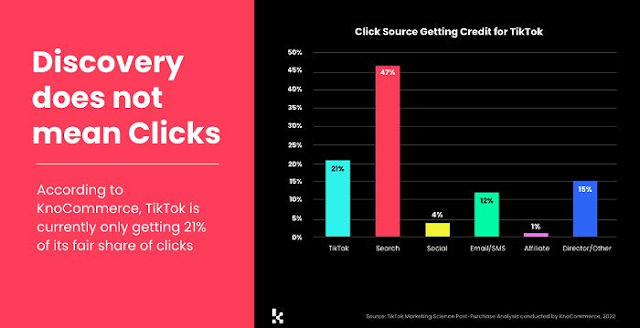
"Discovery does not mean clicks," says TikTok as it shares latest insights based on how people are using its app. The social media company is letting advertisers know that current ad measurement solutions are failing to capture a significant percentage of purchases driven by its platform. 


After collaborating with external researchers, TikTok discovered that last-click attribution undervalues its conversions by 73%, and 79% of the purchases are not even reported through commonly prevalent attribution methods.


TikTok Advises Advertisers to Rely on Non-Traditional Ad Measurement Methods for More Valid Campaign Performance Insights


LinkedIn has added a new search functionality within the Ad library, using which you can specifically find branded content partnerships. LinkedIn’s Ad library consists of database that is publicly available and contains information about advertisements on the platform.


More specifically, LinkedIn creators tagged with the Brand Partnership label will be discoverable through the new search feature. Users will be able to search for partnerships by entering keywords and refining their search using a filter for the date when the content was posted, including ‘Past 24 hours,’ ‘Past Week,’ and ‘Past Month.’ However, the feature does not offer the ability to directly search for sponsored content by a specific brand or advertiser, as of now.


LinkedIn Releases New ‘Brand Partnerships Search’ Functionality


YouTube is improving its ad controls that are meant to “optimize creator revenue” and make ad placement more effective. The new ad control options will be rolled out some time in November.


As a result of improved ad control, content creators on YouTube will no longer need to manually select ad formats (pre-roll, post-roll, skippable, and non-skippable ads), as YouTube will simplify the process by determining relevant ads for viewers. This will “both maximize revenue and ensure a positive viewing experience,” says YouTube.


It is important to note that over 90 percent of the videos on YouTube already have various ad options enabled by default, which means that most creators wouldn’t notice the update.


On the other side, since the update will result in mid-roll ads in some videos, many users may find it disruptive and annoying. The new ad control settings, however, will be applied on new uploads only, therefore the ad formats displayed in all previous videos will remain unchanged.

YouTube Announces New, Improved Ad Control Updates that Enhance Creator Revenue and Viewing Experience


TikTok has shared a new guide called ‘A Beginner’s Handbook’ on its Creative Center. It is meant for advertisers to help them improve the performance and reach of their ad campaigns on the platform, in alignment with current trends and preferences.  


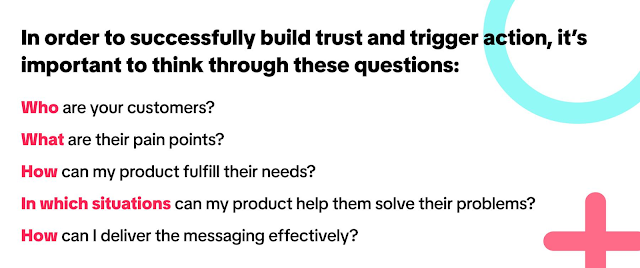
Foremost, TikTok encourages advertisers to think about some important questions, the answers to which could make it easy for them to create ad campaigns that entice potential customers into purchasing their products or services.


The questions are further broken down and explained in detail, specifically categorized into three main sections: ‘Storytelling Factors’, ‘Fundamental Info’, and ‘Setting up your TikTok account.’


Storytelling Factors are meant to help advertisers:

-        - Highlight features that make their products attractive to their target audience. In case of a product   having multiple selling points, advertisers can also learn to prioritize selling points instead of showing   them all in their creative ads.

-        - Take into consideration common characteristics and pain points that their target audience shares. On        the basis of these, advertisers can then learn to establish a deeper connection and long-term trust with    their audiences.

-        - Brainstorm the ideal scenarios in which their products or services would be used. 


TikTok Shares a New Guide to Help Advertisers Improve their Creative Ad Campaigns


To provide advertisers with more control over ad placement, Meta is introducing a set of ad placement control options on Instagram feed. Since last March, the company has been offering advertisers three different settings to control the type of monetizable content that can appear above and below an ad. The options include Expanded inventory, Moderate inventory, and Limited inventory.


These are multi-stage AI review models, according to Meta, and in alignment with the company’s existing technology that works to detect content that violates its community standards and guidelines. 


The system is capable of classifying content - including text, images, and videos, depending on whether it meets Meta’s monetization policies. If some content is not detected to meet the monetization policies, it will be ineligible to have ads appear in its proximity. Similarly, if found to be eligible, the content will be assigned to a suitability category.


Meta Updates its Ad Placement Control Options, Including an Expansion of ‘Brand Suitability Verification Solution’ to Instagram Feed


In alignment with the changes in EU privacy laws and broader industry shifts, TikTok is updating its data usage policies. These updates mainly revolve around data that TikTok collects from younger users on its platform.


More specifically, TikTok has developed these policy updates in line with the new EU Digital Services Act (DSA) that states new laws around the use of data to target young users. The DSA is going to be implemented in the coming months. “Starting today, we're restricting the types of data that can be used to show ads to teens by region,” says TikTok.


TikTok’s revised ad policy includes the following:

  • Removal of personalized ads on TikTok based on off-app activities for users aged 13 to 15 in the US.
  • Removal of personalized ads on TikTok based on off-app activities for users aged 13 to 17 in the European Economic Area, United Kingdom, and Switzerland


Considering that two-thirds of teens in the US are users of TikTok, the changes in TikTok’s data usage policies will have a considerable impact on how advertisers run their campaigns on the platform to target the population.

TikTok Announces Revised Ad Policy Around Data of Teen Users, and New Tools for Data control and Transparency


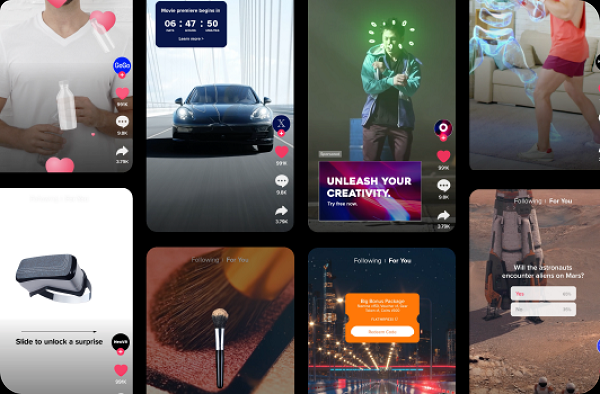
TikTok has released a new business promotion feature ‘InteractiveAdd-Ons’ for businesses on its platform. These include stickers, pop-ups, and other visual elements displayed in users’ For You feed ads that prompt potential customers to engage with the ads.


According to TikTok, “Viewers who have shared, liked, or commented on a TikTok brand video are 150% more likely to buy a product or service.” Interactive Add-Ons could therefore contribute to a business’ sales by enticing more customers to engage with a brand’s in-feed promotions. The reason behind the efficacy of Interactive Add-Ons is that these features create an immersive environment that is likely to catch users’ undivided attention.


The Add-Ons are available in two types: Standard and Premium, each consisting of tools that serve a brand differently depending on its requirements. More specifically, Standard Add-Ons would cater to lower-funnel marketing goals such as driving clicks and conversions. Premium Add-Ons, on the other hand, are meant to help reach upper-funnel goals like brand awareness and community building. 

TikTok Introduces ‘Interactive Add-Ons’ for Brands to Drive Engagement with their Ads

Subscribe Our Newsletter