Visualistan: Artificial Intelligence -->

    Social Items

The Ultimate Timeline of Artificial Intelligence Technology

The team at AIPRM showcased the surprisingly long history of artificial intelligence in an illustrated timeline of AI technology development. The chart shows that so many previous inventions, theories, and ideas were necessary to create the accessible AI we have today. The graphic displays the progress of computing and AI in great detail.

The Ultimate Timeline of Artificial Intelligence Technology infographic

The Future of AI and Worldwide Laws

As AI grows and develops, many countries have focused on how they should regulate its growth and use. AI offers a ton of potential for great benefits and world-changing advances, but it also carries some real risks. It’s in our best interests that governments and companies consider policies that will prevent AI from doing harm and limit what bad faith actors can do to use AI in a negative way.

The Future of AI and Worldwide Laws #Infographic

Fixing the Healthcare Insurance Industry with AI

The market for health insurance faces many obstacles. One of their biggest financial challenges is the $71 billion in claims that are rejected each year because of mistakes made while registering patients. A lot of this is due to human error, because it can be difficult to locate the required information such as insurance payer, payerID, and details about claims submission. It is not readily available on insurance cards, which drives the 19.3% error rate on submitted insurance information.

Fixing the Healthcare Insurance Industry with AI #Infographic


As AI technologies continue to be adopted by mainstream digital and social media platforms, AI-generated content is being seen all over the internet. LinkedIn is one of the platforms that hasn't stayed behind in the AI domain. Amongst its existing AI tools including AI-generated profile summaries, AI-assisted job descriptions, generative AI messages for job candidates, and an AI InMail assistant, the latest development is a post-generating feature. Discovered by app researchers some time ago, the tool is now being officially launched to users.


LinkedIn’s post generating tool will help users draft posts by prompting them to share their ideas within the composer, based on which it will generate suggestions. LinkedIn explains that it has created the functionality to simplify the process of writing full-fledged posts, which can get time consuming.


LinkedIn Launches New AI-Powered Post Generating Feature

Intelligent Document Processing and AI

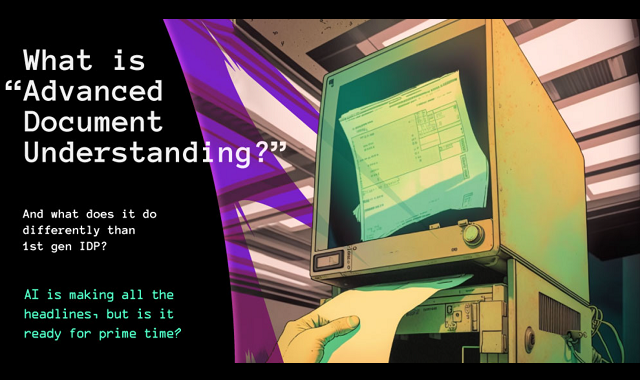
Artificial intelligence (AI) continues to improve every year, and today AI has taken various forms, including dynamic content suggestions and generative AI. The technology comes in various types as well, from machine learning to expert systems, with AI applications being further broken down into categories such as generative AI, computer vision, and natural language processing. In fact, it is predicted that businesses and governments will globally spend more than $500 billion in 2023. 


It is also projected that businesses will use twice as much AI capabilities in 2023 compared to 2022 with some of the most used capabilities being computer vision and natural language text understanding. AI is commonly being used for functions varying from optimizing service operations and digital asset management to risk modeling and predictive services. If businesses and governments continue to use more AI solutions, they could further improve productivity, boost monitoring, and enhance talent management, although it’s crucial to recognize that all businesses won’t benefit from the same AI solution.

Intelligent Document Processing and AI #Infographic

How Can AI Pioneer the Future?

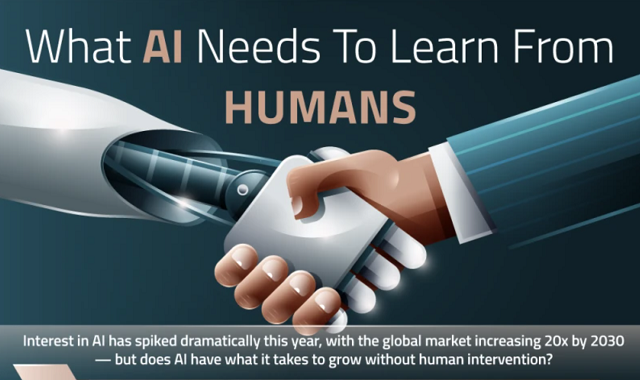
Within 2023 alone, artificial intelligence (AI) has exploded in both popularity and innovation. While it still lacks complex certain skills, AI has shown remarkable improvement. With new capabilities for object recognition, facial recognition, image generation, and depth of intelligence, the technology has been nothing short of revolutionized. 


Even in its current state, the implementation of AI into several fields would see massively beneficial ramifications. Sam Altman, the CEO of OpenAI and overseer of ChatGPT, describes AI as a ‘copilot for humanity’. He goes on to imply not only its wide applicability of AI but also its efficacy in that assistant role. Similarly, the former CEO of Google insinuates ‘AI will become necessary for researchers’, as competition against AI-integrated companies is impossible for companies not using it.

How Can AI Pioneer the Future? #Infographic


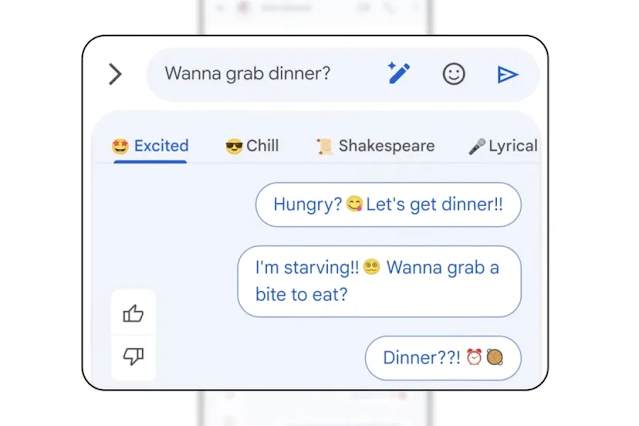
Showcased earlier at its latest I/O Event, Google’s new AI-powered experimental messaging feature “Magic Compose” is now being rolled out in beta to a limited number of users. The technology has been designed to generate “stylized, suggested responses with the context of your messages,” according to Google.


While messages in Magic Compose are secured with end-to-end encryption, Google has mentioned on the Google App’s support page that up to 20 previous messages, including emojis, reactions, and URLs, will be sent to Google’s servers “to make suggestions relevant to your conversation.”

Google is Rolling Out its AI-Powered Messaging Functionality ‘Magic Composer’ in Beta


Google is transforming the way Search works, with the integration of the company’s new hub for testing Search features, called ‘Labs.’ Some of the Labs features include Search Generative Experience, Add to Sheets, and Code Tips.


Labs was first introduced two weeks ago and is gradually spreading out to Search users. One major noticeable difference to selected users is how Search results appear as a result of the Search Generative Experience feature. This SGE is replacing the usual Search results with AI-generated pieces of information related to the text entered in the Search bar, along with some links for further reading, displayed at the top.


This update will not only change the way results appear on Search, but also the SEO business, as people will be aiming to have their writings included in the AI-generated summaries.

Google Opens a Waitlist for Users to Test Out ‘Search Labs’ Features


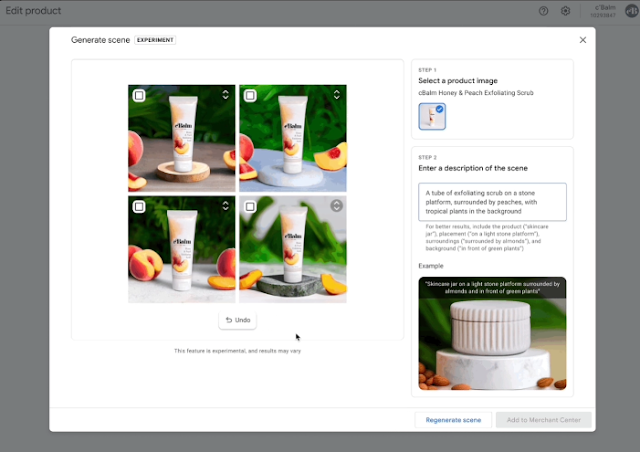
Getting deeper into the generative AI shift, Google has developed a variety of AI-based tools for businesses to make the most out of their ad campaigns. These include the ability to generate background visuals for product shots, a feature that summarizes website content, a new Search ad creation process, and more.


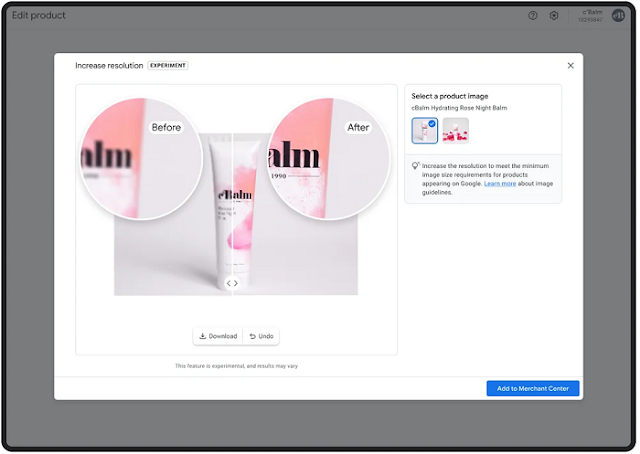
Businesses will now be able to add AI-generated background visuals to their product shots to enhance the presence of their products. The feature can be accessed within Google’s Product Studio, and can be used to “create unique and tailored product imagery for free.” By simply providing a text prompt to the tool, businesses can generate multiple versions of their product images. Additionally, the feature will also improve the quality of small or low-resolution images without causing one the hassle of reshooting.


Another AI tool has been designed to provide businesses summaries of their website pages. Based on the website’s content, the tool will then help enhance ad campaigns by generating “relevant and effective keywords, headlines, descriptions, images and other assets.” These suggestions can be reviewed and edited before being employed.

Google Showcases a Range of New Generative AI Ad Tools at its Marketing Live Event


AI technologies have been rapidly advancing, and in a latest development, allowing people to change the appearances of photos in just seconds. From re-generating an underlying object to rotating images as if they were 3D, you can manipulate images with a simple motion of your fingers, thus producing  outputs close to your preferences.


“DragGAN” is a research project which lets a user “deform an image with precise control over where pixels go, thus manipulating the pose, shape, expression, and layout of diverse categories such as animals, cars, humans, landscapes, etc.”


As described by the research team itself, the work involves studying “a powerful yet much less explored way of controlling GANs, that is, to ‘drag’ any points of the image to precisely reach target points in a user-interactive manner.”


It is amusing to see that you can make 2D images appear in a 3D form by adjusting reflections on them, change the direction of a face, turn a smile into a frown, and so much more.

Latest AI Development Allows One to Manipulate Images with a Simple Click and Drag


OpenAI has launched a free-to-use ChatGPT app for iOS and plans to launch one for Android in the near future as well. The app can be downloaded on an iPhone or iPad from Apple’s App Store.


Chat GPT was originally launched as an experiment last November, that quickly gained popularity and found a large number of consumer audience that has been using the technology on the go for a range of purposes. Later in February, a premium offering of Chat GPT, for $20 a month, was released with exclusive features including priority access, faster response time, and access to OpenAI’s latest language model, GPT-4.

OpenAI Launches a ChatGPT App for iOS Users


Ever since the launch of Bing Chat, which was not too long ago, Microsoft has been constantly updating the AI chatbot with new additions. The company has just launched new Bing features for mobile including the ability to switch Bing Chats between mobile and desktop, a contextual chat feature for Edge mobile, a Bing widget for iOS and Android, and more.


First off, the mobile-desktop chat option will enable users to pick up a conversation on their mobile that they left on desktop, and vice versa. For instance, you could ask Bing to create a recipe for you and then have it provide a substitute on your mobile phone when you’re at a grocery store and can’t find the ingredient you are looking for.

Microsoft is Releasing New Bing Chat Features for Mobile, Including the Ability to Switch Chats Between Mobile and Desktop

Subscribe Our Newsletter