We can learn what different age groups value and need based on their spending habits. The team at Qualtrics did an extensive study among Boomers, Gen X, Millennials, and Gen Z, breaking down what categories they like to splurge on. We can learn a lot about the culture of different age groups through this data. For example, Millennials in their late twenties to early 40s are balancing careers, families, and aging parents. This balancing act is reflected in their top splurge categories. They splurge the most on restaurants and dining out, which is not just enjoyable but sometimes a time-saving choice. Same with their third most popular category, which is groceries. Millennials were the first to widely adopt grocery apps like Uber Eats and Postmates, another time-saving luxury. Finally, Millennials like to splurge on clothing and apparel, possibly due to a need for workwear or because they’re interested in fashion.
The team at Qualtrics illustrates the dominance of the social media landscape through a graphic ranking of the top brands based on their number of followers. They show us the number of followers each brand has on X, Facebook, TikTok, and Instagram. The team’s graphics display a ranking of overall follower count and rankings on each platform.
To help marketers and advertisers plan out their content campaigns
in advance for the year 2024, X has put out its latest ‘marketing calendar.’ The
calendar contains an overview of all the anticipated key events and dates of this
year, in a simplified and interactive format.
You can tap one a date to view the events that are expected to take place on that day. On the right side of the calendar, the events are also listed individually so you can simply scroll through them all if you want to. The listing can also be downloaded on your device so you can easily access it as needed.
Explore this insightful guide to effectively promote your company on LinkedIn in 2024. Packed with valuable information, it offers essential tips and strategies for successful company promotion on the platform. Don't miss out on this valuable resource!
This informative visual guide by VizionOnline provides comprehensive insights into initiating your LinkedIn journey. It covers essential LinkedIn marketing strategies such as profile optimization, content creation, and effective networking. Additionally, it outlines daily, weekly, and yearly activities crucial for maximizing your LinkedIn presence. The guide also delves into advanced LinkedIn marketing tactics and poses thought-provoking questions for your strategic self-reflection.
TikTok has announced a new integration that is created to help
advertisers on TikTok that are also Salesforce customers. Salesforce is a
leading cloud-based platform for sales, ecommerce and other touchpoints that
uses AI and trusted first-party data and where companies can deliver
personalized and engaging experiences.
With the help of a new Salesforce Marketing Cloud integration on TikTok, advertisers can capture and convert the leads generated by their marketing campaigns directly to Salesforce via ‘Lead Generation.’ TikTok describes Lead Generation as the “next-gen solution for capturing leads from an audience that's uniquely tuned in to discover, search, and connect on TikTok.”
As a result of this process, advertisers can receive more TikTok insights directly to their CRM, which will aid them in the process of managing and maximizing their ad campaigns.
TikTok is streamlining the process of using its Creative Center with the help of its latest innovation: a new AI-powered ad creation model called Creative Assistant, dedicated to assisting advertisers through various aspects of the creation process of ad campaigns and videos. During the process, advertisers will be able to acquire relevant examples, recommendations, tools, and sample ad scripts.
To put it briefly, Creative Assistant will act as a holistic guide incorporating TikTok’s best practices and all its existing Creative Center options, to make their access simpler, precise, and easier. In TikTok’s words, Creative Assistant ‘draws information from a wealth of TikTok-focused creative knowledge,’ hence providing users with “the most relevant responses” during the ad or video creation process on the platform.
Digital marketing agencies can now be ‘Meta Certified,’ as
Meta is giving them a chance to showcase their marketing expertise pertaining
to its platforms, to potential clients.
“For the first time, we’re offering Certification at the
Organizational level, awarded to companies who achieve a threshold of
individual Meta Blueprint certifications in specific focus areas,” explains Meta.
The certifications are offered in five different categories: Meta Media, Meta Marketing Science, Meta Creative Strategy, Meta Community Management, and Meta Spark.
TikTok’s influence continues to grow over people’s behaviors
and interactions on social media, including new trends, discovering music, and
creating content. With that, the platform is looking back at the key shifts
that have happened in 2022, and based on that, offering marketers its perspective
on what to experiment with in the coming year.
TikTok has published a new report for 2023 called “What’s
Next,” where the company has discussed predictions for marketing trends and shared
insights and tips based on recent statistics. There are three main categories that marketers could learn
from in the guide, namely Actionable Entertainment, Making Space for Joy, and Community-Built
Ideals.
Actionable Entertainment focuses on what makes brand
promotions more entertaining on TikTok. For that matter, TikTok suggests
marketers to rely on techniques that maintain viewers’ attention. For example,
syncing sounds to transitions or adding text overlays – basically anything that
aligns with users’ interests and latest usage behaviors.
For creators specifically, TikTok suggests using storytelling methods to promote content, which it believes to be significantly effective in driving the impact of a message.
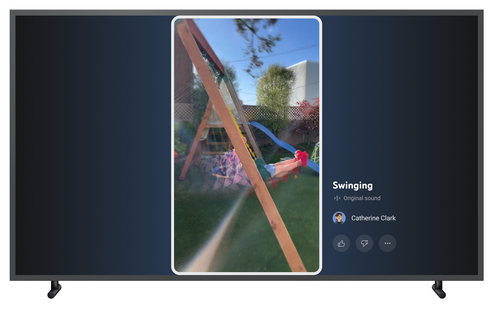
YouTube has merged its two most used functionalities: the short-form video creation tool Shorts and Connected TV (CTV)
viewing. As a result, users will be able to view Shorts in full screen on their
TVs.
YouTube reveals that it had been testing the development of the best presentation format for Shorts for a while and found the large-screen viewing to be worthy. Explaining the initiative, YouTube says, “It was important that the Shorts experience on TV felt consistent with what the community sees on mobile and also natural on the bigger screen.”
TikTok has become a valuable app in the recent years for
advertisers and brands to promote their ad campaigns. The social company has
been thus making efforts to provide branding opportunities in various ways, one
of them being TikTok Works, which is a series on important insights and notes
to guide brands towards effective marketing on the platform.
TikTok has shared the first set of data from TikTok Works, which
proves the app to be worthy for advertisers of Consumer Packaged Goods. The return
on ad spend and sales efficiency for CPG brands was observed to be considerable
as a result of TikTok’s capability in driving sales outcomes. Additionally, the
increases in paid media ROAS were the highest in the US, Middle East, Europe
and Southeast Asia.
Apart from providing entertainment to the
app’s users, TikTok has also worked to enhance shopping and advertising experience
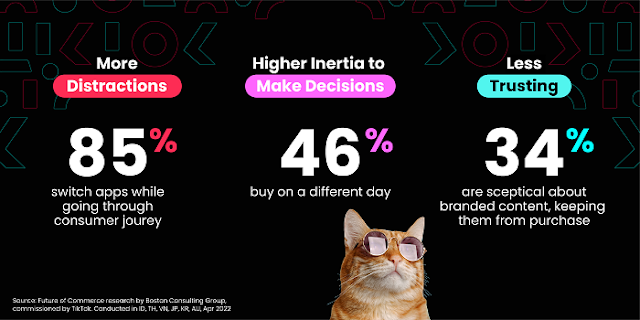
on its platform. The company has initiated a new approach, that it calls ‘shoppertainment;’
a combination of entertainment and shopping. After surveying people about their
online shopping experience, TikTok found out that the reduced impact of advertisement
influences consumers’ shopping experience, and is therefore sharing key insights
for advertisers to consider while creating ads in alignment with consumers’
needs.
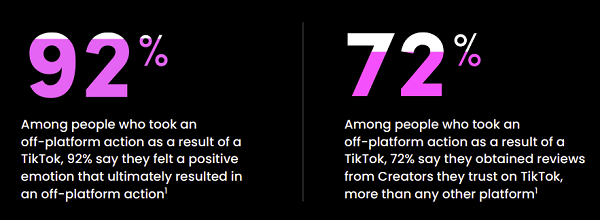
TikTok begins its advertising lesson by highlighting two main needs of consumers: functional and emotional. By addressing both, brands can maximize their presence on the app, suggests TikTok. Following these needs are more specific things that consumers look for from a brand, which include storytelling and education, short content that maintains attention, unforced decision making, authenticity, and recommendations on trends.
TikTok has launched a separate app TikTok Academy, that is exclusively
dedicated to providing marketers with free courses. The courses are designed to
help marketers adopt the how-to’s of successful marketing, as well as learn important
insights on creativity and media excellence.
Creators and marketers can sign up to TikTok Academy using a verified email ID, which will then lead them to courses to explore and enrol into. For now, the app offers only two courses, namely ‘TikTok 101’ and ‘Small Business,’ while another course called ‘Commerce’ is soon to be added too.
The courses are quite short in duration, with TikTok 101 being 2-4 hours long and Small Business having a completion time of about an hour only.
At the second TikTok World event that TikTok recently hosted,
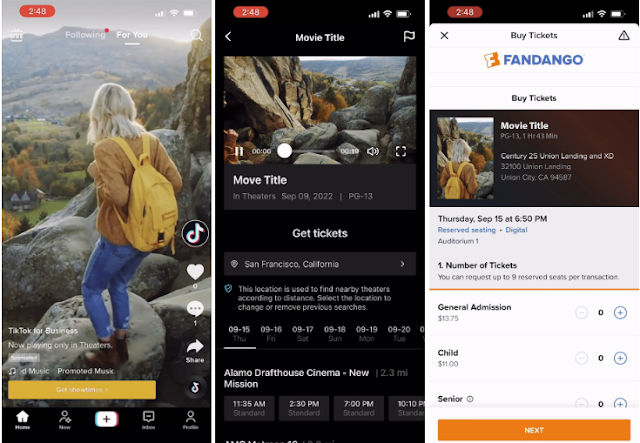
the social company announced new ad and promotional features, including ‘Showtimes’ ad unit
for movies, a new ad objective ‘Focused View’, new elements for the Lead Gen
ads offering, and more.
Using the Showtimes feature, users can select showtimes and
buy tickets at their local cinemas during streaming. This integration is a part
of TikTok’s larger eCommerce push, as it will encourage more users to spend
directly in-stream. On the other hand, it will help cinemas target younger
audiences.
Focused View is described by TikTok as the “next generation” of its current Video View campaign objective on TikTok Ads Manager. In TikTok’s words, “With Focused View, brands only pay when users have voluntarily watched an ad for at least 6 seconds or when they interacted with the ad within the first 6 seconds (whichever comes first). This means that ads are shown to users who are truly paying attention and voluntarily engaging with the brand.”
Instagram has been testing a new in-app feature called Media
Kit, which it has now taken to the next stage of testing and re-named as
Creator Portfolio.
The feature is aimed at providing a separate platform for creators to showcase their talent and content, that they can directly share with brands and business partners in the app, hence enhancing content discovery and making way for more marketing opportunities.
App researcher Alessandro Paluzzi spotted the latest prototype of the feature, which shows a welcome screen and an overview of the functionality.
Snapchat
recently conducted a survey-research with over twenty-five thousand people, in
collaboration with Ispos, on how AR and its potential value is perceived by social
and digital media users, including brands and consumers.
The main conclusion
that Snapchat derived from the research suggests that people are only aware of
the superficial value of AR, while there is actually a wide range of benefits
that AR could offer. Snapchat estimates that around 60% of people in the
US, and almost all social/communications apps users will be frequent users of
AR by 2025.
The report
gathered key points in relation to people’s opinions of AR. This includes the potential
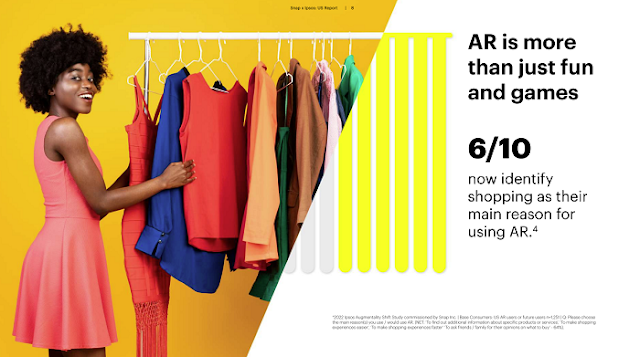
of AR in online shopping experience, as every 6 out of 10 people identified
shopping as their main reason of using AR, 84% of consumers expressed interest
in using AR to interact with a product before purchasing it, and 73% were of
the view that AR made their shopping experience easier. Snapchat also adds how
AR helps consumers to make better purchase decisions by allowing them to visualize,
share, and gather feedback before making purchases.
In addition
to that, 73% of the consumers showed interest in experiencing AR at events and
conferences, while 79% of them were keen to experience AR as a means of
entertainment, like concerts and sport events.
In a new video clips series, TikTok has gathered a bunch of important
tips and steps for businesses to brand themselves on the platform and maximize
their marketing during the holiday shopping season.
The videos outline the core functionalities of TikTok in a format that is easy to follow. Each video explains a single function, starting from “How to create a TikTok video in 7 steps” to “How to create a TikTok Business account” to “How to create a TikTok Ads Manager account.” The clips further highlight small tips relevant to each functionality.
TikTok launched a landing page for advertisers to display
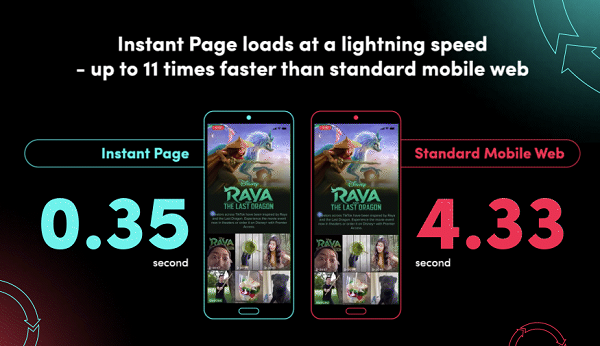
their ads on the platform earlier this year. The Instant Page has the ability to
load up to 11 times faster than standard mobile pages and allows users to view ads
and explore other relevant sites without having to exit TikTok. To help
advertisers adopt effective practices to enhance their ad campaigns using
Instant Page, TikTok has shared several tips in a new post.
According to TikTok, “Instant Page is especially useful for
informing, educating, and engaging users on complex topics where ad creatives
can’t go into the necessary detail e.g., for finance brands.” It adds that
displaying ads on Instant Page assists in reducing consumers’ decision-making
time, while clearly mentioning the important information about the product or
service.
To promote eCommerce on its platform, TikTok has introduced
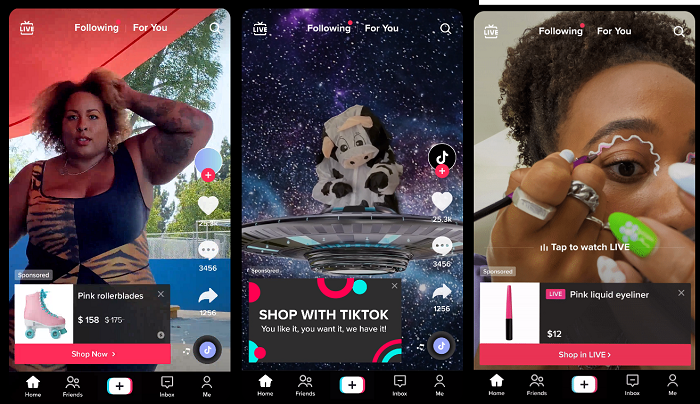
new Shopping Ads through which brands can showcase their products in-stream. According
to TikTok, “it’s a three-in-one solution with new formats to adopt and combine:
Video Shopping Ads, Catalog Listing Ads, and LIVE Shopping Ads.”
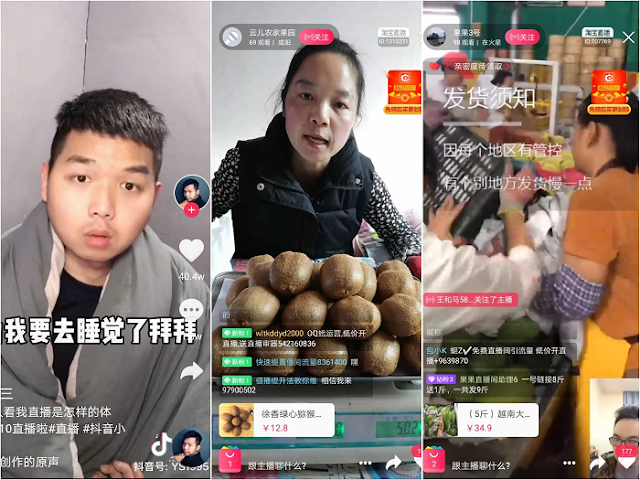
While live shopping is not as popular in the West, TikTok
has had major success with the feature in China via the Chinese version of its
app, Douyin. The company seems to be hoping for a fortunate result in the Western
social media market as well, thus expanding its business ecosystem by giving creators
the opportunity to generate revenue from their creative efforts in the app.
TikTok has also shared some insights into the interest of its users in in-stream purchase. The data reports that 56% of the users have been led to discover new products or brands via ads, 48% have shown interest in buying a product on or from TikTok in the next 3 months, while 70% of the users report that they found it convenient to make a purchase through a shopping-related ad on the app.
Meta reports that over 20 billion messages are exchanged
over Messenger each month between businesses and customers. This insight
suggests that direct messaging has become a convenient way for brands and
consumers to interact with one another.
To further understand how users in the APAC (Asia-Pacific)
region are relying on messaging for brand queries, and how businesses can serve
customers in a better way using messaging, Meta conducted a research in
collaboration with the Boston Consulting Group, which consisted of surveying more
than 6,500 respondents across the APAC region.
The analysis in the report shows some valuable information on the significance of direct messaging between brands and consumers. Some of the key points mentioned in the report are as follows:
In today’s world, creating video content is an important tool used by brands as their marketing strategy. With the available options of social media platform, it’s overwhelming to decide where to spend your budget and efforts. We’ll be discussing some important facts and stats for three leading video-centric social media platforms; YouTube, TikTok and Instagram.
21st century has become the digital era and thus digital platforms have gained recognizable position especially for the marketing purposes. According to research, a total of 12.5 trillion hours are to be spent surfing internet in the year 2022, out of which most of the time is spent scrolling different social media platforms. The next question is, which platform is used the most?