Visualistan: camera -->

    Social Items


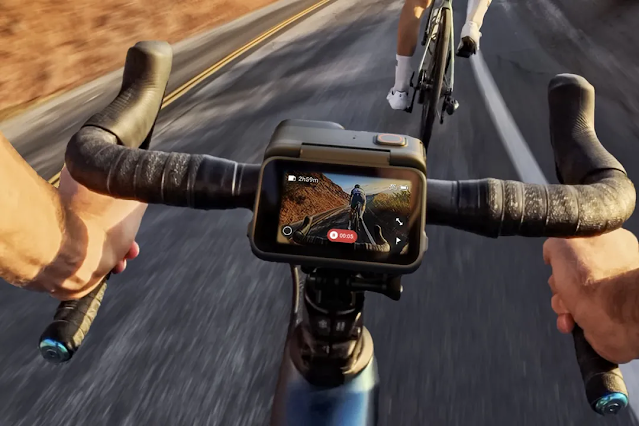
Insta360’s new Ace and Ace Pro action cameras are now available to purchase, equipped with a flip screen that adds more utility – such as making it easier to frame vlogs and bike rides. The rest of the design of these devices is similar to the blocky design of GoPro’s Hero series.
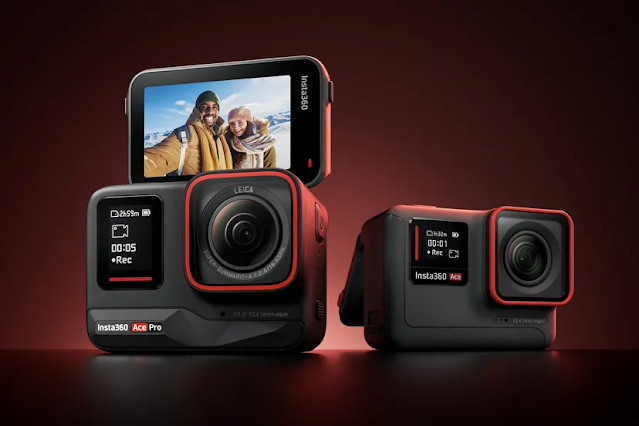


The Ace camera starts from $379.99, while the Pro version is priced at $449.99. The specialty of the Pro camera includes a Leica Summarit lens, a large 1/1.3-inch image sensor for outstanding low-light performance, as well as recording up to 8K at 24 frames per second. On the other hand, the regular Ace camera features a smaller 1/2-inch image sensor and supports recording up to 6K at 30 frames per second. The Pro model can also capture additional nighttime detail and record daytime videos in Active HDR mode.

Insta360 Launches New Ace and Ace Pro Action Cameras that Come with Flip Screens


TP-Link’s smart home brand Tapo just announced a new home security camera ‘Tapo C120,’ priced at $39.99. The device is designed for both indoor and outdoor usage, including pet or baby monitoring. It comes with a magnetic mount and adjustable stand that make it easy to set it up.


The C120 is a wired camera and small enough to fit in a palm. It offers a video resolution of 2K, local storage with an onboard microSD card, AI-powered person detection, adjustable dual spotlights, a starlight sensor for color night vision, full duplex two-way audio, and an alarm system. The features crammed inside this little camera make it an all-rounder, and that too at a reasonable price.


TP-Link’s Smart Home Brand Introduces New, Handy Home Camera ‘Tapo C120’

Google just announced software updates for its Pixel phones, that also extend to the Pixel Watch and Fitbit devices. The latest feature drop includes camera enhancements, new personal safety options, and updates to haptics and adaptive charging.


Foremost, the most significant camera enhancement feature is the new ‘macro mode,’ that enables enhanced filming of little details. This, however, is exclusively a Pixel 7 Pro feature and not available for all camera apps or modes.


Moreover, phones from Pixel 6 onwards will be equipped with a new hands-free gesture where you show your palm to the viewfinder frame, to enable a timer when taking photos. Upon detecting the gesture, the camera will count down from 3 or 10 seconds, depending on the set number, and then snap a shot.


Another enhancement feature is the ability to create ‘cinematic wallpapers’ that add more depth to your lock screen, as well as a slick parallax effect. Cinematic photos are not a new Google technology as they have been a Google Photos feature for quite some time now. However, until now users didn’t have control over selecting photos for this effect, and will now be able to create cinematic effect for any photo of their choice.

Google’s New Software Updates for Pixel Phones Include Camera Enhancements, New Safety Controls and More

The Cities with Most Surveillance in the World

This is a quite surprising fact that the global urban population has taken over the rural population. According to the records of the year 2007, the two groups were split nearly 50/50, with around 3.3 billion people apiece. In today’s date, the percentage of people who live in the urban areas has grown to be over 55% and is expected to reach 68% by the year 2050. It is because of this trend that many of the world’s largest cities have become home to millions of people.

Due to this increasing density in the urban areas, different businesses, households and also governments have installed numerous security cameras which could serve many purposes but the mainly being crime protection. To get a hold of the scale of this surveillance, data from a recent report by Comparitech is taken which helps to visualize the most surveilled cities in the world.

The Cities with Most Surveillance in the World #Infographic


TikTok has announced a new feature that enables and prompts users to take and share a photo or video captured by their device’s front and back camera simultaneously. The feature is called ‘TikTok Now’, and it seems like a replica of the app BeReal.


As per TikTok, “You’ll receive a daily prompt to capture a 10-second video or a static photo to easily share what you’re up to.” Previously, other popular platforms including Instagram and Snapchat also released their versions of the same functionality, after BeReal started gaining popularity with the original idea.

TikTok Announces Dual Camera Feature ‘TikTok Now’


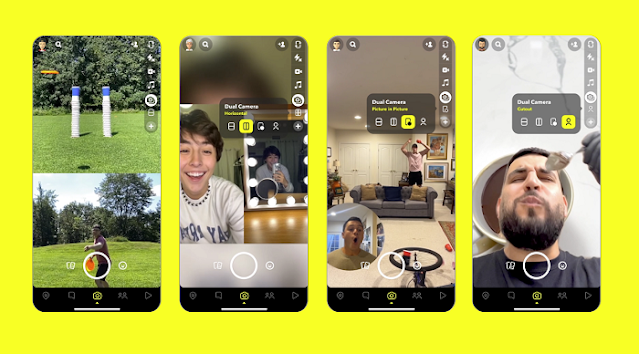
Snapchat has released a new Dual Camera option, which it has imitated from the French social media app BeReal.


The Dual Camera functionality allows for recording videos or taking photos that are captured by the front and back-facing cameras at the same time. It supports several output formats including vertical, horizontal, picture-in-picture, and cut-out.


While Instagram also developed its own version of the feature, Snapchat’s primary intention behind the launch is to provide users with more creative opportunities and trends. The company originally previewed the option as a part of its Director Mode, which contains more advanced editing tools for creative purposes.

Snapchat Rolls Out a Dual Camera Functionality


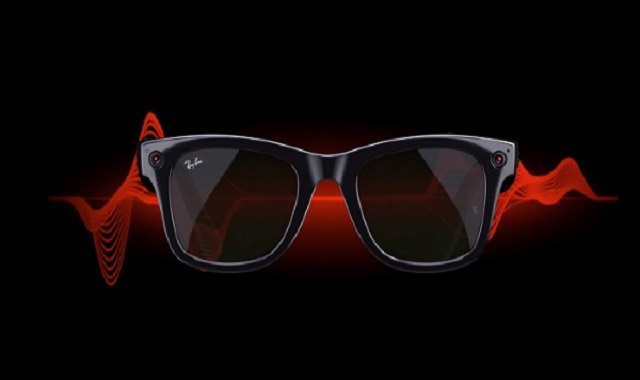
Facebook has partnered with Ray Ban to launch its first ever smart glasses in a variety of trendy styles. They go by the name of “Ran Ban Stories” and are priced at $299.


The glasses are based on three distinct traditional designs of Ray Ban, including the most popular one called Wayfarer. Facebook has built a multi-camera hub into the frame of the glasses, with which users can record or capture anything that they see while wearing them. There is a button on the top of the arm of the device, tapping which starts the recording. It provides a fun and easy way to capture live experiences.


Facebook Launches New Smart Glasses in Collaboration with Ray Ban


Sony just made an announcement about its new mirrorless camera, which happens to be its most advanced one to date. It costs $6,500 and is called Alpha 1. The camera comes with a new 50.1-megapixel full-frame sensor and can shoot continuous photos at 30 images per second. Moreover, it can record 8K video at 30fps. According to Sony, the shipping of its new camera will start from March.


Since Alpha 1 is priced significantly above mirrorless cameras of other companies like Canon and Nikon, Sony assures its customers that Alpha 1 is the most technologically advanced and innovate product of the company.


The camera’s buffer is capable of shooting up to 155 full-frame compressed RAW images or 165 full-frame JPEG images at up to 30 frames per second with its electronic shutter, while maintaining full AF and AE tracking performance. This sounds like a dream come true for sports and action photographers.

Sony Announces its New, Most Technologically Advanced Mirrorless Camera ‘Alpha 1’

A quick look into the statistic of CCTV cameras around the world

Technology has made huge strides in recent years to ensure the best security measures on national and international scales. Even today, anything that is slightly favorable for a country’s security is considered to be of enormous worth. Likewise, CCTV camera security, which is perhaps one of the most popular measures of maintaining security and discipline in the world, is taken into account in the infographic below to learn which places of the world are benefiting from this technology in abundance.

A quick look into the statistic of CCTV cameras around the world #infographic


Google has removed the astrophotography capabilities within the camera lens of Pixel 5 and 4a 5G. The feature has been taken away with Google Camera’s 8.1 update.


This special feature was a selling point of the Pixel 4 and was also available on the regular and telephoto cameras. It was also added to the 4a 5G and 5 with their new wide-angle lenses.


The feature allowed users to take photos of the night sky by pointing their phone up and keeping it still by balancing it on an object or setting it up on a tripod. 

Google’s Wide-Angle Astrophotography Feature is Gone from Pixel Phones’ Camera

World’s first phone with an under-display front camera launched by ZTE

We have seen numerous innovations in smartphones over the past few years. From in-display fingerprint sensor to notched screens, foldable phones to pop-up selfie camera, and a lot more, the manufacturers have been pretty creative with the designs of smartphones. Approaches to achieving the maximum screen-to-body display ratio have also been observed in various smartphones.

The latest advancement in the smartphone’s bezel wars is by ZTE which released a new Axon 20 5G, the first-ever smartphone having an in-display selfie camera. The phone goes live on sale today. In-display fingerprint sensors have become very common now, but integrating the selfie camera into the screen is surely difficult. ZTE beats Oppo and Xiaomi in the race who had been showing the demos for years but have not yet come up with a commercial device.


The cell phone itself is packed with some very impressive specs such as a huge 6.92 inches’ diagonal screen, 90Hz OLED panel, which makes the 1080p resolution looks less sharp than other phones. Talking about camera integration, the area where the camera is placed seems to have a dithering effect than the rest of the screen. If you look closely, you can see a small square with a lower resolution. It is, however, not a very noticeable thing in general use because phones with a punch-hole or notch have a bigger distraction on the notification bar.

World’s first phone with an under-display front camera launched by ZTE

Smartphones take over the entire camera industry

A whopping decrease in the use of cameras was observed in the year 2019 when the camera shipment from popular companies like Nikon, Olympus, and Canon experienced an 87% decrease. The record by CIPA focuses that how the rise of smartphones has affected the growth of cameras. In contrast with the cameras, smartphones have made extravagant advancement in their computational power and features. Ever since smartphones took a striding lead in the technology world, people have immediately switched to this invention. Despite being cost-effective and multi-feature, these devices also help people explore the world right away.

The following chart represents the massive decline in the percentage of shipments that took place between the years 2010 and 2019 in Japan. It is important to note that since the newest models of smartphones are installed with advanced lenses and features that give results equivalent or even better than the cameras, people do not find it necessary to have a smartphone along with a camera.

Smartphones take over the entire camera industry #infographic


Google is bringing a new addition to Maps with which users can now create Street View photos using their phones. Android users who own ARCore-compatible devices can capture these images and then publish them to Google Street View in certain areas.  


This feature is not entirely new because it was available to users in the past too but required a special 360-degree camera. The only difference is that this time, the images can be captured using a standard phone camera. 


Google will be accepting submissions from certain regions initially, including Toronto, New York, Austin, Nigeria, Indonesia, and Costa Rica. The company allow more regions to support the feature in near future. 

You can now Create Street View Photos for Google Maps with your Phone


The right lens for studio photography

Photography is a very vast field. Many things go into the process of photography. There is shutter speed, aperture, ISO speed, and much other photography jargon that play a huge role in the outcome of a single photo. However, the one main thing that remains consistent and plays a really big role is the camera lens.

The right lens for studio photography #infographic


Samsung just announced via a notice shown to users in its Camera app Bixby, that it is discontinuing a bunch of the AR features offered in the app, starting from the end of this month. The features that will no longer be available reportedly include Places, Home Décor, Styling, and Makeup. 


All the different features in Bixby offer a range of AR functionalities. For example, Places help with better navigation through overlaid map icons on Samsung’s camera that highlight local landmarks, stores, restaurants, etc. With Makeup, users can virtually try out a variety of makeup products on their faces, like eyeshadow, lipstick, blush, etc. Similarly, Styling allows for virtually trying out accessories like sunglasses. Home Décor allows users to virtually view the placement of different home appliances and furniture. 


Apart from that, Bixby also offers other helpful features like real-time translation and accessibility tools like Quick Reader, which helps users with visual impairments by reading out text seen by the camera.  

Samsung will Soon Take Down A Bunch of Bixby’s Augmented Reality Features


With the growing use of mobile phone cameras for taking selfies, a variety of fun and unique beauty filters are being introduced in different social apps. Google recently explored the impact of filtered selfies on people's wellbeing by conducting studies and speaking with child and mental health experts. Through the research, the company found out that there is a negative impact of default filters on mental wellbeing. For this reason, Google has created guidelines on control, transparency and design language relating to filtered photos. 


In a blogpost, Google revealed its new people-centered guidelines that will let users choose if and when their appearance is changed in pictures. This means that the face retouching settings will be off by default. 

Google Introduces Guidelines for Control and Transparency for Filtered Selfies


Google recently announced that it is improving its Live View feature in Google Maps and is also making it available in additional transit scenarios. Live View in Maps uses the phone’s camera and GPS to show directions in augmented reality.  


The new addition to Live View in Maps will bring a landmark mode to the AR. By showing nearby landmarks, Maps will allow users to quickly and easily orient themselves and figure out their surroundings. The distance of the landmarks from the user’s current position will also be displayed, along with the directions to guide them to the landmarks. Landmarks will include easily recognizable places like local parks and tourist attractions.  

Google Maps’ Live View is Getting a Landmarks Feature

What Cameras and Settings Do Stock Photographers Use?
Thousands of photographers, millions of files – one infographic to sum up what the top cameras and settings are for stock photography. Photographers are in constant search for the ultimate techniques, the right settings, and the best camera for stock photography. Depositphotos did some serious data analysis to bring you answers to all these questions. One infographic that contains EXIF data from millions of files, revealing top gear and settings for images. Take a look below!

What Cameras and Settings Do Stock Photographers Use? #Infographic

Adorama – Parts Of The Camera
They say that to master any skill, you must know as much about it as possible. You need to know its intricacies to be able to execute that skill to your best abilities. Photography is no different. Knowing the basic parts of a camera and its functions is essential so that you can use them to your advantage and help you maximize the camera’s potential. After all, a camera is only as good as its operator.

To master any art form, you need to know the tools that you will be using. As with cameras, knowing how your camera works lets you control your exposure and depth of field, letting you render beautiful shots and adapt to any situation and environment. If you are looking to become a master photographer, take the time to understand the parts of a camera and their functions.

Adorama – Parts Of The Camera #Infographic

Smartphone Photography Tips

Camera quality for today’s smartphones is being more scrutinized than ever. This is also backed up by consumer statistics - 86% of Americans consider camera quality when buying a new smartphone. But great mobile photography is about more than just the hardware. AI does a lot of the work making your pictures look better.

With AI, you don’t need to know the more technical side of photography. Many AI algorithms are trained to process image data, mimicking human sight. Then, AI adjusts the camera accordingly to get the perfect photo, every time. AI can see and therefore adjust much more than the average person would think of to adjust.

Even with the limitations of your hardware, some AI has been made to work around those restrictions. AI has been programmed to make your otherwise ordinary photos into artistic pictures. A common technique is HDR, or high dynamic range, combines 3 photos with different exposures to get the best lighting possible.

Find some tech and tricks to make your pictures stand out from the rest with AI here.

Smartphone Photography Tips #infographic

Subscribe Our Newsletter