Visualistan: device -->

    Social Items


In commemoration of the Apple Watch’s 10th  debut anniversary, Apple is reportedly working on a major redesign for the upcoming Apple Watch X. The device, however, is not expected to come out this year at least.


As for the next line-up of the Apple Watch series 9 arriving this September alongside the new iPhone, there will be a minor upgrade, possibly a faster processor. For every annual launch of a new Apple Watch, Apple has strictly persisted to introducing minor upgrades only, except when it launched the Apple Watch Ultra.

Apple is Reportedly Preparing a Major Redesign for the Apple Watch


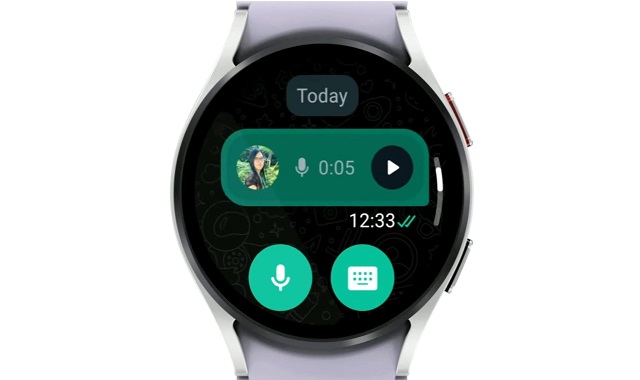
A latest announcement from Meta has revealed that WhatsApp is officially rolling out to Wear OS smartwatches. The news of a potential launch was first shared at the Google I/O event and on Facebook by Meta CEO Mark Zuckerberg back in May.


On their Wear OS smartwatch, users will be able to start new WhatsApp conversations, reply to messages, and take calls, all within the little screen on their smartwatch. Additionally, options to respond with voice messages, emoji, regular text, and quick replies will be available too. Particularly on the Wear OS 3 smartwatch, users will be able to respond to messages without even having their phone nearby.

WhatsApp Rolls Out to All Wear OS 3 Smartwatches


Bloomberg’s Mark Gurman has reported that some of Apple’s AirPods may offer a new ‘hearing health’ feature with support of iOS 17. Additionally, he says that all of Apple’s upcoming headphones will be equipped with USB-C.


“Apple is preparing to give the earbuds a fresh boost. It’s exploring major new hearing health and body-temperature features, and is planning cheaper models and a transition to USB-C charging ports,” states Gurman in a latest Bloomberg newsletter.

Apple is Reportedly Working on a New Hearing Health Functionality in AirPods

Google just announced software updates for its Pixel phones, that also extend to the Pixel Watch and Fitbit devices. The latest feature drop includes camera enhancements, new personal safety options, and updates to haptics and adaptive charging.


Foremost, the most significant camera enhancement feature is the new ‘macro mode,’ that enables enhanced filming of little details. This, however, is exclusively a Pixel 7 Pro feature and not available for all camera apps or modes.


Moreover, phones from Pixel 6 onwards will be equipped with a new hands-free gesture where you show your palm to the viewfinder frame, to enable a timer when taking photos. Upon detecting the gesture, the camera will count down from 3 or 10 seconds, depending on the set number, and then snap a shot.


Another enhancement feature is the ability to create ‘cinematic wallpapers’ that add more depth to your lock screen, as well as a slick parallax effect. Cinematic photos are not a new Google technology as they have been a Google Photos feature for quite some time now. However, until now users didn’t have control over selecting photos for this effect, and will now be able to create cinematic effect for any photo of their choice.

Google’s New Software Updates for Pixel Phones Include Camera Enhancements, New Safety Controls and More


In a recent press release, Apple has announced that AppleTVs with tvOS 17 will have native VPN app support as part of the new OS version. While a native VPN app has been available on iPhone, iPad, and Mac, this is the first time that it will be accessible on AppleTV.


To install a VPN on AppleTV generally requires installing it on your router, which is something that not all routers provide the capability for.


As a result of the native VPN integration, users will be able to stream shows that aren’t available to watch in their country, as well as have access to platforms that are banned in their region; TikTok, for instance.

TvOS 17 will Provide Native VPN App Support in AppleTVs


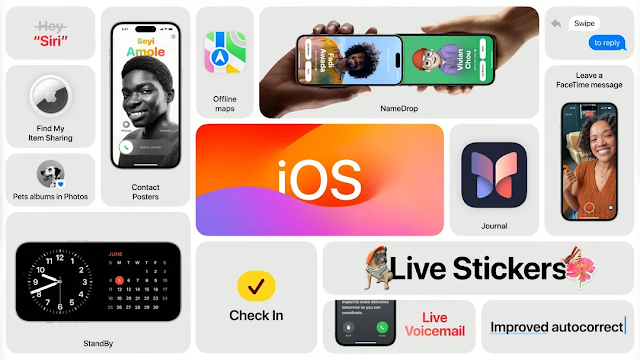
Apple’s latest version of its OS ‘iOS 17’ is being launched with new features including messaging updates, Airdrop updates, enhanced autocorrect, a new app ‘Journal,’ and more.


One of the most significant additions to the Messages app is transcriptions of voice messages that let users view transcripts of the messages that callers leave them, in real time. Another feature called Check In automatically sends a message containing a user’s live location, phone’s battery and cell service status to a friend in case of emergency. Additionally, users will be able to add emojis or photo cutouts as Stickers in messages, convert live photos to animated stickers, as well as add effects to stickers. Other messaging updates include improved search filters and the ability to easily catch up with the most recent chat.


Airdrop in iOS 17 will have a new feature called NameDrop via which, it is possible to send selected email addresses, phone numbers, as well as Photos by simply bringing two iPhones or an iPhone and Apple Watch near each other. In addition to that, users will be able to AirDrop big files while being out of range as the files download.

Apple is Releasing iOS 17 Featuring a New App ‘Journal,’ Improved Autocorrect and More


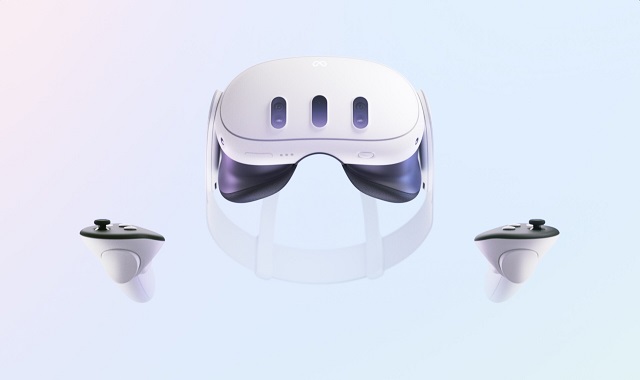
Meta has finally revealed exciting details of its new next-generation virtual and mixed reality headset ‘Quest 3.’ With a starting price of $US499.99 for 128GB, the device will be available for purchase this fall.


The three main technical elements that the Quest 3 will be featuring include a 2x improved processing power, high-fidelity color Passthrough that produces AR experience, and a smaller and sleeker design making the headset more comfortable to wear than the previous model.


According to Meta, the Quest 3 headset features the tech giant’s “highest resolution display and pancake optics.” The increased processing power of the Quest 3 results from a Snapdragon chipset integrated in the device that helps enhance its visual capabilities. “You’ll get smoother performance and incredibly crisp details in immersive games,” Meta claims.

Meta Shares Thrilling Preview of Quest 3 Headset, Announces Lower Prices and Software Upgrades for Quest 2


Google has announced that its $35 streaming stick Chromecast (1st gen) will no longer be receiving software or security updates, as the company is ending support for the device. The notice further warns owners of potential degradation of performance of their Chromecast devices.


Chromecast is a small device that can be plugged into a TV’s HDMI port and enables a user to stream content from their phone, tablet, or laptop on their TV. The latest model of the device, the 2020 Chromecast with Google TV, came with its own remote too.

Google Ends Support for its Streaming Device ‘Chromecast 1st Generation’


After taking into account feedback from members of disability communities, Apple has created new tools for improved accessibility for its devices. These have been designed to specifically facilitate those with speech, hearing, vision, and cognitive impairments. Among the features that Apple has previewed, the one that stands out the most is called Personal Voice, designed for people who may lose their ability to speak. It allows such users to create their own synthesized voice that resembles their own, that they can then use to talk to family and friends.


Users will be able to create their Personal Voice by reading out loud a list of text prompts for 15 minutes on audio on their iPhone or iPad. Together with the Live Speech feature, Personal Voice will be able to communicate with others by reading out the text typed by the user in Live Speech.


Another functionality, called Assistive Access, is created for people with cognitive disabilities. It streamlines Apple’s core apps to provide a non-overwhelming app experience to users by filtering out just the essential features of the apps. For example, it could highlight high contrast buttons or show large text labels. The apps that Assistive Access provides modified versions of include Phone, FaceTime, Messages, Camera, Photos, and Music.

Apple Previews Features for Improved Accessibility for Users with Speech, Hearing, Vision, and Cognitive Impairments


WiZ, the smart lighting company, is launching a new feature for its motion-sensing Wi-Fi smart bulbs. The feature is a Home Monitoring functionality, paired with an indoor security camera, and is designed to alert owners of intrusion attempts.


The new Home Monitoring feature will detect motion using WiZ’s SpaceSensing / Wi-Fi sensing technology that can identify changes in Wi-Fi signal strength caused by movement, and will turn lights on or off. Upon detecting any motion, it will send an alert to the WiZ app where you will be able to view the camera recording that it captures.


The WiZ Home Monitoring Starter kit will be available for sale June 15 onwards. It costs 159.99 Euro and comes with three WiZ A19 full-color smart bulbs and one camera. In case you already own at least two WiZ bulbs or lights, you can purchase the camera separately for 89.99 Euro. You will be able to find the Home Monitoring feature for free in the WiZ V2 app.

WiZ’s Smart Bulbs Can Now be Equipped with its New Home Monitoring System


Google is going to be announcing its first foldable phone ‘Pixel Fold’ at its I/O 2023 event on the 10th of May. The company has also released a small preview clip showcasing the outer specs of the device including a full-size foldable display and camera lenses on the back similar to those of other Pixel phones.


Rumours about the launch of Pixel Fold have been around since last year. While Google had no plans of launching the device then, it had been working on educating Android developers on designing apps in alignment with foldable devices and larger screens.

Google’s First Foldable Phone ‘Pixel Fold’ is Set to be Disclosed at the I/O 2023 Event


People have been experimenting with ChatGPT’s functions and getting creative with their usage of the technology ever since its arrival. In one of such experiments, a designer and blogger named Matt Webb ended up developing a clock that tells the time in two-line poems that it composes using ChatGPT.


Explaining how the product came into being, Webb says that it evolved from a regular text clock that he had created using Inky wHAT screen and a Raspberry Pi. After exploring several of OpenAI’s language models for some time, Matt decided to combine the two creations. As a result, the new AI powered clock uses OpenAI’s API to give a single prompt to ChatGPT, which in turn generates a poem. These poems are not generated from a pre-set catalogue, which means that a new text appears each time.


Designer Matt Webb Develops a ChatGPT-Powered Clock that Tells Time in Poems

Subscribe Our Newsletter