Visualistan: Phone -->

    Social Items


HMD - Nokia’s parent company, is collaborating with Mattel to launch a Barbie-branded flip phone coming July. There is no information about the device’s pricing and features as of yet, but what is certain is that it is going to be the iconic flip phone from the old days, and not a smartphone.


This collaboration is part of HMD’s new project that aims to move away from selling its products under the brand name Nokia, and selling them under its own name instead. As part of this new venture, HMD plans to create multiple partnerships with other companies, and Mattel happens to be the first one.

Nokia’s Parent Company is Launching a New Barbie Flip-Phone this Summer

Google just announced software updates for its Pixel phones, that also extend to the Pixel Watch and Fitbit devices. The latest feature drop includes camera enhancements, new personal safety options, and updates to haptics and adaptive charging.


Foremost, the most significant camera enhancement feature is the new ‘macro mode,’ that enables enhanced filming of little details. This, however, is exclusively a Pixel 7 Pro feature and not available for all camera apps or modes.


Moreover, phones from Pixel 6 onwards will be equipped with a new hands-free gesture where you show your palm to the viewfinder frame, to enable a timer when taking photos. Upon detecting the gesture, the camera will count down from 3 or 10 seconds, depending on the set number, and then snap a shot.


Another enhancement feature is the ability to create ‘cinematic wallpapers’ that add more depth to your lock screen, as well as a slick parallax effect. Cinematic photos are not a new Google technology as they have been a Google Photos feature for quite some time now. However, until now users didn’t have control over selecting photos for this effect, and will now be able to create cinematic effect for any photo of their choice.

Google’s New Software Updates for Pixel Phones Include Camera Enhancements, New Safety Controls and More


A while back, Microsoft launched its Phone Link app for iOS that makes it possible to send and receive messages and calls via iMessage on Windows PC.


The way Phone Link works for iOS is that it sends and receives messages over Bluetooth. Apple then detects these messages and forces them to be sent and received via iMessage. Additionally, iPhone users can view and dismiss notifications on the Phone Link app. The app, however, doesn’t support other functions like mirroring phone display, running other apps, or interacting with group chats.


To set up a connection between an iPhone device and PC, you will be prompted to scan a QR code from your phone which will open an App Clip version of Phone Link and start the Bluetooth pairing process. Once the pairing is complete, you can then enable contact sharing by turning on “show notifications.” This will allow system notifications to be shared to your PC via Bluetooth.

Microsoft’s Phone Link App Can Now be Paired with iPhone on Windows 11

Mobile Phone Statistics

Mobile Phones are central to our lives. People are now spending more time than ever before on smartphones and handheld technology. Mobile phone trade-in site and data specialist SellCell.com have put together a list of interesting statistics related to mobile phone use amongst adults and children.

Mobile Phone Statistics #Infographic

1-in-5 Americans spending 8+ hours on phone daily

Many Americans have a complex relationship with their smartphones. For some it can be an effective communication tool, entertainment center, GPS, and search engine all in one. Yet others find themselves hooked to their phones at all times during the day and are vastly underestimating how much time they spend on their smartphone each day according to data from a new study. 


Solitaired recently surveyed iPhone users from across the country to try and learn more about exactly how much time the average American is spending on their iPhone each day. To gather this data, Solitaired first asked surveyed respondents to estimate the amount of time they spent each day. After that they asked surveyed respondents to go into their usage report screen on their iPhone and send in a picture of the actual amount of time, they spend on average on their phones each day. As you might expect, American’s expectations of their smartphone use varied greatly from the actual amount of time they spent on their smartphone each day. Let’s take a deeper dive into the survey results. 


Smartphone screentime for the average American 


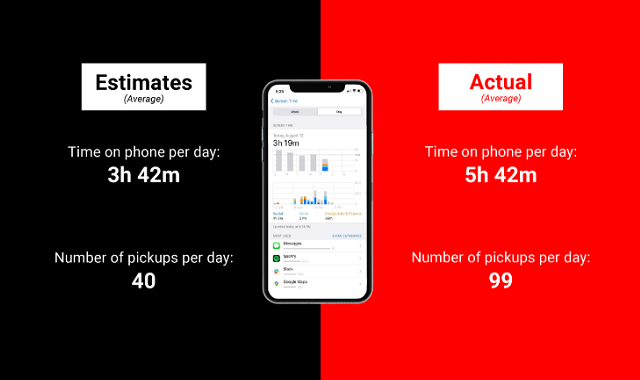
As mentioned above, the first part of the survey asked iPhone users to estimate the amount of time they spend on their phones each day. According to the survey data from Solitaired, the average Americans estimates that they spend on average 3 hours and 42 minutes on their iPhone each day. Solitaired also asked iPhone users to estimate the number of times they pickup their iPhone each day. The estimate for the number of pickups per day was 40 pickups. 


Next let’s compare the estimates of daily iPhone usage to the actual amount of times the average Americans spends on their phone each day. The survey data founds that the average American spends 5 hours and 42 minutes on their iPhone each day. That’s almost 2 hours more each day than most Americans believe they spend. The actual number of pickups per day is 99 which is more than double what the average American estimates each day. As you can see the contrast from estimates vs reality is stark. 


On top of that, the survey found that over 65% of Americans underestimate their daily phone usage by an hour or more each day. 


Surveyed respondents were next asked how they thought their phone usage to compares to other people. 53% of surveyed respondents said they believe their daily phone usage to by normal when compared to other people. Only 18% of surveyed respondents said that their daily phone use is less than others. Amazingly almost 30% of surveyed respondents were brutally honest in saying that they definitely use their phone more than others each day on average. 


The survey also found that 78% of iPhone users underestimate how much time they spend on their iPhone each day. One of the more shocking takeaways from the survey data is that 20% of surveyed respondents report that they spend over 8 hours on their smartphone each and every day. That is a huge chunk of their daily lives that is being used to stay strictly on their smartphone. It’s not surprising to see that many Americans choose to do a digital detox after realizing how much time they are spending on their phones each and every day. 


The Apps that Americans use on their smartphones the most 


They next part of the survey asked surveyed respondents about how they are using their phone each day, specifically in regard to the smartphone apps that they use the most each day. As you can imagine, social media apps dominated the responses from the survey. The survey data found that the average American spends at least 1 our and 23 minutes each and every day checking social media. Although the top social media app used might surprise some (hint. it’s not Facebook, Facebook actually did not crack the 7 list of most popular smartphone apps). 

1-in-5 Americans spending 8+ hours on phone daily #Infographic


Android is making it easier for users to dial emergency numbers. This is a really helpful update, as remembering different emergency numbers and recalling them in an urgent situation can be difficult.


Your Android device will now show a new emergency call screen in place of the Dialpad. There are a few sliders that display different options. On the top one will appear your personal emergency information, and on the ones below it will be picked automatically on the basis of your location/region.

A Recent Android Update is Offering a New, More Convenient Emergency Call Screen


WhatsApp is currently reportedly working on a feature that is similar to WhatsApp's existing feature of Expiring Messages. The new feature is called Expiring Media, and as the name suggests, it is responsible for media files including photos, videos, and GIFs disappearing from the recipient's phone. The content will ''expire'' once the recipient leaves the chat window. The feature is kind of like sending media files over WhatsApp chats that will appear temporarily only. 


The feature could be useful in a way that it would automatically clear media files from a device to prevent the recipient's photo gallery from being stuffed with files that recipients keep collecting without deleting, as we don't frequently clear files from chats, and as a result, they end up occupying storage. It is likely to save users from the hassle of manually deleting unwanted media files. 

WhatsApp is Reported to be Developing an ''Expiring Media'' Feature

The app “Phone” on Play Store has been renamed as “Phone by Google”

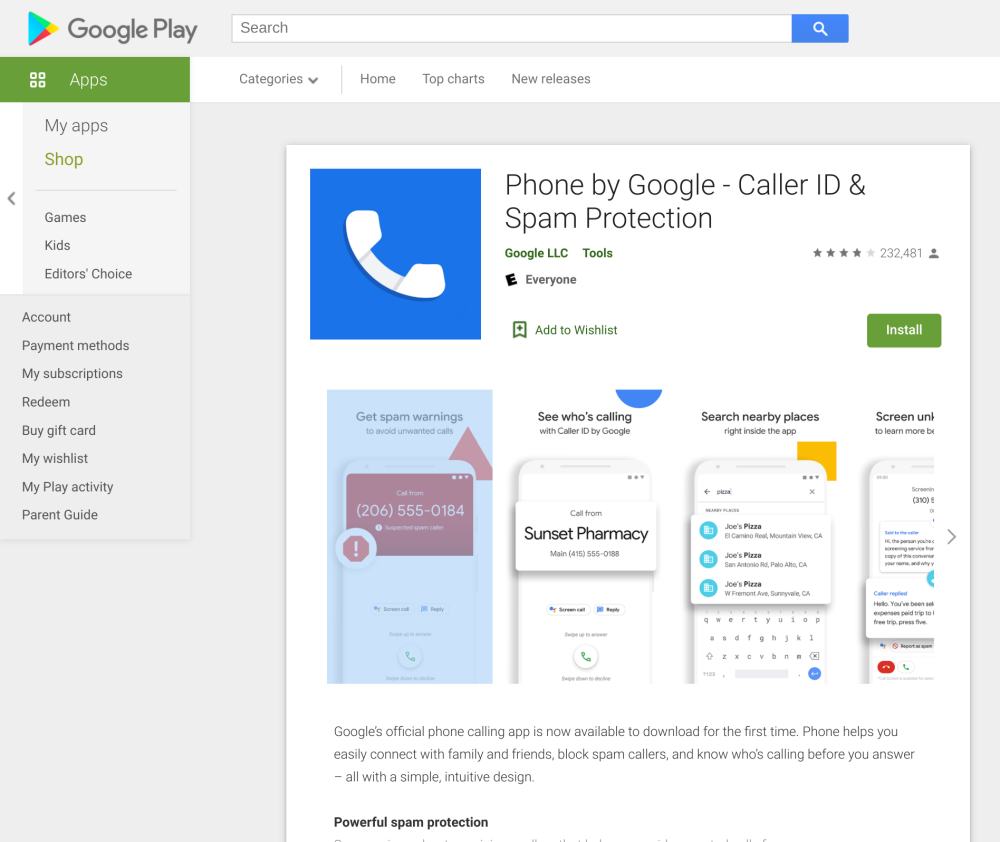
Earlier this month, the Phone app was made available on the Play Stores of non-pixel devices by Google. But, the app has been noticed to be renamed as “Phone by Google,” previously it was named as “Phone” only. Probably because of the launch of Android version 11, this thing came into notice a bit late.


The app was named “Phone” for a long time but is now officially named as “Phone by Google – Caller ID & Spam Protection,” because Google has added a new feature of verified calls that protect the users from getting fake and spam calls. Moreover, the latter portion clearly describes the capabilities of the app and how it will be beneficial for the users.

The app “Phone” on Play Store has been renamed as “Phone by Google”

Huawei announced at its annual developer conference this Thursday that it is planning to launch its Harmony Operating System on smartphones in 2021. The availability of the HarmonyOS phones will depend on the number of apps that Huawei can attract within a short period of time. Huawei's HMS Core currently includes 96,000 apps.


To attract a greater number of apps, Huawei has announced that the company will be launching a beta version of its second generation OS, HarmonyOS 2.0, by the end of 2020. HarmonyOS 2.0 will be available for tabs, car systems, and smartwatches. Huawei's OS currently has a reach of 490 million users and plans to expand it even more. 

Huawei is Launching HarmonyOS for its Smartphones

Cellphone cost comparison #infographic

Cellphones, particularly smartphones have become an integral part of our daily lives. Gone are those days when a phone was used just for sending and receiving calls or text messages. Although you can still do that today, there are so many things that technology has brought to the phones that we are hooked on it.

Every year, we see newer, smarter and more powerful phones. Just when we think, technology can’t be topped, comes another more efficient new technology that trumps the old one. Point being, that technology is evolving at a rapid pace. When integrated with smartphones, that technology skyrockets because of how frequently we use them.

Cellphone cost comparison #infographic


Google just announced a new feature for its Phone app, called Verified Calls. The feature is meant to give users more details of a company when it is calling, such as the company's name, branding, and a small badge that shows that the company is verified. A reason will also be displayed as to why a company is calling. 

Users of all phones that are compatible with the Google Phone app, including Pixel and Android One phones will be able to set the app as their default phone calling app. 


The feature seems to be quite helpful depending on how businesses use it. It will also let users know when it is necessary to drop everything and pick up a business call, depending on the reason behind the call that the app shows. 

Google designed this new feature after it released its Verified SMS feature last year and observed an increase in the level of customer trust. The more businesses provide Google with information about their companies, the more the Verified Calls feature is likely to function better and be of more help to the users. 

Google Updates its Phone App with 'Verified Calls' Feature

Apple's announcement of the new iPhone is rumored to be delayed this year. The company usually launches its iPhones in September, but this year, the September event that it has revealed is called 'Time Flies', which suggests that it could be for the launch of the new Apple Watch. 


The event is scheduled for 15 September, which is later than the usual time of September that Apple chooses for its products' launch in fall. The delay is apparently due to the Covid pandemic. Apple had also confirmed that it won't be shipping its new phones in September.


There are, as usual, no details given about the event in terms of the products that will be announced. However, it is rumored that the company has a full lineup of hardware for this year, including four new iPhones, the Apple Watch Series 6, an updated iPad Air, a smaller HomePod, and perhaps even a pair of over-ear headphones. The 'Time Flies' event seems to be focusing on the Apple Watch, though.


The Apple Watch Series 6 is rumored to feature blood oxygen level monitoring and improved sleep tracking and could have a faster processor. 

Apple's September Event 'Time Flies' Hints at Launch of the New Apple Watch

Subscribe Our Newsletter