Visualistan: Google Maps -->

    Social Items


Google is bringing a major change to Maps – users’ location history will now be stored locally on their devices instead of in the cloud. This is to prevent personal data from being accessible to law enforcement.


Law enforcement can collect data from tech companies on mobile phones that have passed through a certain area during a specific time, as a result of ‘geoface warrants.’ This makes anyone present at an alleged crime scene a potential suspect and puts all such people’s privacy at risk, hence the controversy around these warrants.


The update in Maps is specifically being applied within the Timeline feature, that keeps track of users’ location history and this information is stored in the Cloud. After the change, the data will instead be stored in users’ devices. Both Android and iOS users of Google Maps will receive a notification informing them about the update as it gradually rolls out.

Google to Prevent Users’ Data in Maps from Being Accessed by Law Enforcement


A set of new AI-powered features are coming to Maps, that mostly add to a more immersive navigation experience and improved search results in the app.


With these AI additions, Maps looks more like Google Search now, where users can enter a range of queries to search for spots and experiences they want to explore. Since Search also uses a number of AI features, it only makes sense why Maps is starting to follow the same path.


One of the ways that Maps is assisting in searching for places, experiences, or services with the help of AI is using the technology to analyze, in real-time, billions of existing photos uploaded by other users. People can ask the app specific questions, similar to the process in Search, and in return get a list of results for nearby places and services that match their queries.


Another generative AI integration in Maps is called ‘neural radiance fields,’ which filters through billions of images, including aerial photos, street imagery, and indoor snaps to create a 360-degree experience. This enables users to estimate the best time to reach their destination with the least amount of traffic.

Google is Bringing New AI-Powered Features to Maps, Including More Immersive Navigation


Google is releasing the Immersive View feature within Google Maps that it first launched in May of 2021, in five cities including London, Los Angeles, New York City, San Francisco, and Tokyo.


Immersive View covers 250 landmarks around the world. Its technology is similar to Google Earth, except that it provides more in-detail exploration using a combination of Street View and aerial images.

Immersive View in Google Maps is Rolling Out to Five Cities Around the Globe


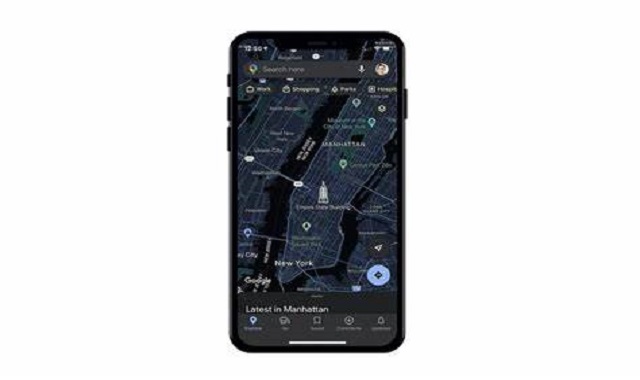
Google had announced back in August that it would soon bring the Dark Mode to Maps’ iOS app and has finally launched it.


To enable Dark Mode, you will need to tap your profile picture in the top right of the screen and from the menu, select Settings and then select Dark Mode. It will display three options: On, Off, and Same as device setting. Choosing the third option will automatically turn dark mode on or off depending on your phone’s OS level settings.

Dark Mode for Google Maps on iOS has Finally Arrived


Google has announced a bunch of new updates for Maps, that are going to make navigation and exploration on the app easier for users.


Using machine learning and navigation information, Google Maps will now ensure reduced chances of hard-braking. By calculating multiple route options to a user’s destination based on factors like the number of lanes of a road and how direct a route is, Maps will offer faster route options. On the basis of that, users can identify which route would reduce their chances of encountering a hard-braking moment. Google claims that this feature will help prevent 100 million hard-braking events in routes driven with Google Maps every year.


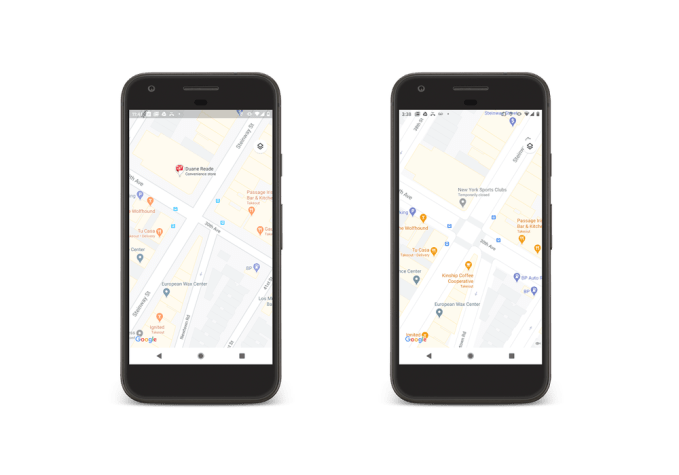
In addition to that, Google is rolling out the Detailed Street Maps feature, that it had introduced last August, to 50 more cities by the end of this year. With the help of this feature, users can see where sidewalks, crosswalks and pedestrian islands are, along with the shape and width of a road to scale. As a result, it will be easier to plan the most accommodating route.


Google Releases New AI Updates for Maps

Google Maps introduces in-app parking payment services

Since Google Maps is the go-to application for almost every smartphone user around the globe, this new integration of payment services within the application will surely be the best feature for the users. From paying for your parked car to buying a train ticket, it will all be included in the app and just a click away.

The payment services that Google Maps is introducing includes, ParkMobile and Passport. Besides, you won’t only be able to pay for the tickets or parking but the services will also help you in finding the available space for parking or seats on the train and fill up the parking meters’ fees via the app.

Google Maps introduces in-app parking payment services

Apple announces the addition of incident features to Apple Maps

Apple has finally decided to add an accident, hazard, and speedup check features to the application of Apple Maps. Ever since Waze has launched its user-reporting feature, popular apps like Google Maps have also taken the inspiration to follow in the same footsteps. According to the million-dollar company, an iOS version of only 14.5 beta can avail this feature as Apple has recently launched it for the maps.
 

Apple announces the addition of incident features to Apple Maps

Businesses Ranked by Number of Physical Locations

It is highly likely that every time you leave your home you pass many popular franchises along the way to your destination. In any town in the USA you are likely to see prominent fast-food chains like Burger King, McDonalds or Taco Bell. Drive further into town and you may run into a CVS pharmacy right next to your neighborhood Walmart. Maybe you need to pick up a new part for your car at the NAPA across the way. If you are in a bustling hub like New York City you may be tempted to stop and get a coffee at any of the 241 Starbucks locations throughout the city. These brands become so ingrained in our lives that I bet you could recall the colors, mascots or slogans of many. What you may not know is, these brands have locations all over the world. 

Businesses Ranked by Number of Physical Locations #Infographic


It is important to keep in touch with the maintenance pointers of your company because as time is passing, people are getting more and more accustomed to their expeditious routines. To help customers stay engaged with the services offered by your company, Google has come forth with a plan that will not save your customer’s time but will also get you quality remarks for your prompt services.

The most common questions asked by the customers before reaching a place always have something to do with their reassurance of the place. For instance, questions like “Is there any parking spot available?” or “How much gluten do you add to your cakes?” need to be answered as soon as possible, or the chances are the customer will lose interest and walk away, which is exactly what a business does not want! 

What is better than Google Maps connecting your business with your customers?


Google is bringing a new addition to Maps with which users can now create Street View photos using their phones. Android users who own ARCore-compatible devices can capture these images and then publish them to Google Street View in certain areas.  


This feature is not entirely new because it was available to users in the past too but required a special 360-degree camera. The only difference is that this time, the images can be captured using a standard phone camera. 


Google will be accepting submissions from certain regions initially, including Toronto, New York, Austin, Nigeria, Indonesia, and Costa Rica. The company allow more regions to support the feature in near future. 

You can now Create Street View Photos for Google Maps with your Phone


Google just updated Maps with a bunch of useful tools, including an updated Covid overlay, takeout ordering features, and information of real-time crowdedness for public transport. In addition to that, a preview of the Google Assistant Driving Mode is launching in the U.S.  


The Covid overlay for Google Maps was first introduced in September and Google has now added multiple features to it for both Android and iOS users. The overlay will provide information such as details about the number of cases detected in total in an area and links to COVID information provided by local authorities. The features would assist users in finding information about local rules and regulations during their travel. 


Maps will also now display information regarding the crowdedness of public transport in real time, which would help you avoid a certain public transport route to maintain social distancing. The feature will roll out to both Android and iOS users around the world. 

Google has Updated Maps with More Covid Related Tools


Google Maps Platform is the developer side of Google Maps, which is launching a new service that will cater to on-demand rides and delivery companies. The service will offer functionalities like finding nearby drivers, and sharing trip and order progress information with customers. 


Providing delivery solutions is something that Google Maps Platform had never focused on before, but because of the coronavirus pandemic, deliveries have become more widely used than before. Back in 2018, Google Maps Platform did offer a similar functionality, though: in-app navigation for ridesharing companies.  


The aim behind providing on-demand rides and delivery solutions is to help businesses improve their operations, and help drivers and customers transform their journey from booking to arrival or delivery, according to Google.  


Predictable pricing per completed trip will be shown to the user, Google senior product manager Eli Danziger added in the announcement. 

Google Maps is Providing Delivery Solutions with Google Maps Platform


Google just announced that it will be discontinuing its Trusted Contact service that it launched back in 2016. The service offered users the ability to share their location with their trusted contacts in case of an unsafe or emergency situation. Other information like the user’s device’s battery life could also be shared with their trusted contacts.  


The Trusted Contact Service is already being removed from the App Store and Google Play Store, and for users who have already downloaded the app, it will be taken down on 1st of December, according to Google. Users of the app can also download its data until 1st December.  

Google Announces Discontinuation of its Trusted Contact Service


Google recently announced that it is improving its Live View feature in Google Maps and is also making it available in additional transit scenarios. Live View in Maps uses the phone’s camera and GPS to show directions in augmented reality.  


The new addition to Live View in Maps will bring a landmark mode to the AR. By showing nearby landmarks, Maps will allow users to quickly and easily orient themselves and figure out their surroundings. The distance of the landmarks from the user’s current position will also be displayed, along with the directions to guide them to the landmarks. Landmarks will include easily recognizable places like local parks and tourist attractions.  

Google Maps’ Live View is Getting a Landmarks Feature

Covid-19 data added to Google Maps for safer navigation

Google Maps is the go-to application for billions of users who want to find the fastest routes for their desired destinations. Traveling had been put to a halt during the Covid-19 pandemic; however, lockdowns have been eased in many parts of the world, but safety and precautionary measures are still the top priority of everyone. Amongst all, safer traveling is one of the main concerns; the company launched new features in the Google Maps app for safer and secure traveling.

Features including live busyness, Covid-19 checkpoints, and alerts in transit are there to guide the users throughout were introduced earlier, and now, Covid-19 layers have also been released. The Covid-19 layers will show important real-time information regarding Covid-19 cases in different areas so that you can make decisions accordingly.

Covid-19 data added to Google Maps for safer navigation

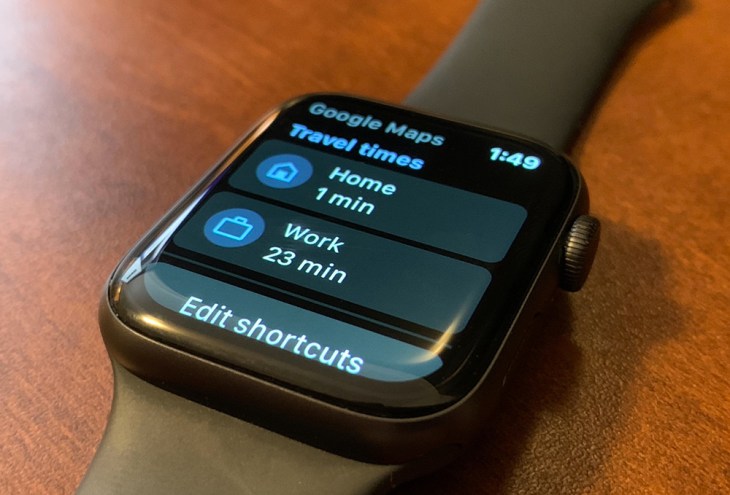
Google released Apple Watch support for Maps in 2015 and put an end to it in 2017, while assuring that the feature would make an appearance in the future. The tech giant did not give details about why it chose to discontinue the feature or how long it would take to bring it back. Now, three years later, Maps' Watch Support has come back and is available on Apple's App Store. 

google maps watch

The comeback of Watch support for Maps was hinted in August when Google said that it would be making an appearance in the coming weeks.

Google Maps Returns to Apple Watch after Three Years

Google Maps published a a blogpost on Thursday on traffic and routing to explain to people how it identifies a massive traffic jam or determines the best route for a trip. 


While Maps can easily identify traffic conditions using the aggregate location data, the data still is not sufficient to predict what traffic will look like 10, 20, or 50 minutes into a user's journey. According to Google Maps, that's where technology really comes into play. To make such predictions, Maps analyzes historical traffic patterns for roads over time. The combined database of historical traffic patterns with live traffic conditions using machine learning helps generate predictions. 


Google Maps revealed that it recently partnered with DeepMind, an Alphabet AI research lab, to improve the accuracy of its traffic prediction capabilities. Maps also states that its predictions have been ''consistently accurate for over 97% of trips.''. By working with DeepMind, Maps has been able to cut the inaccuracy percentage even more and for that, it has used Graph Neural Networks, a machine learning architecture. The technology has helped make significant improvements in places like Berlin, Jakarta, São Paulo, Sydney, Tokyo, and Washington D.C.


Moreover, with the recent significant changes in traffic patterns around the world that the Coronavirus pandemic has brought, Google Maps has had to update its models to become more agile. 

Google Maps Explains its Technology Used to Predict Traffic and Determine Routes


Google is adding some small, new features to Maps that are focused on the app's Saved Tab. The Saved Tab lets users bookmark their favourite locations and categorize them into Favourites, Want To Go, Starred Places and custom lists. 


The updated Saved Tab will make it easier to sort locations if too many of them are saved. The Saved Tab will now sort recently saved places and locations that you are close to. Turning on the Google History in Maps will also make it easier to add places to the Saved Tab based on places you have previously been to. Moreover, all the locations that a user visits will now be saved on the Timeline feature. 

According to Google, the Maps insights are now organized by time, city, region or country. 

Google Maps' Saved Tab Gets New Features

Google Maps will now show wildfire boundaries

The world has experienced thousands of wildfires, millions of acres have been burnt, and an enormous number of casualties have occurred. It has become extremely important to keep a track on such disasters in order to stay safe. Google has stepped forward and worked on this concern. Google Maps have been everyone’s great guide from all over the world, from indicating traffic, blocked roads, shortest routes and much more, it has now updated to show boundaries of real-time wildfires.

Type an ongoing wildfire name on Google search bar, and there you will have a map showing real-time wildfire boundary. The feature was initially piloted in California previous year but will now be made available all across the United States.

Google Maps will now show wildfire boundaries


Google is updating Maps with new updates that include both natural features and city-level details. The visual reference will be made easier in the natural features as Google's computer vision techniques will color code the natural features after analyzing them from the satellite imagery. Moreover, certain cities including NYC, SF, and London will display more detailed street information, such as location of sidewalks, crosswalks, pedestrian islands, etc. 


The supported cities will also display the exact shape and width of a road to help users better analyze how wide or narrow a road or street is. All these enhanced details will make it easier for users to navigate cities on foot or modes of solo transportation like bikes and scooters. 

The updated city maps will not be making an appearance on Maps immediately, but Google says that the feature will be available for New York, London, and San Francisco in the coming months. Google also added that once the detailed city maps are made available to the three cities, the company will start rolling out this feature for other cities, including those out of the U.S.

Google Maps is being Updated with Detailed City-Level and Natural Features

Subscribe Our Newsletter