The cyber threats that businesses face today are deceptive, destructive, and targeted. They target large and small companies, exposing customers to financial damage and data theft. Nearly 88% of small business owners think their data is vulnerable to a cyberattack. With so many threats from all corners, the team at Ooma released a graphic packed with data on cybersecurity and tips on best practices.
Ooma’s collection of data breach facts and statistics exposes the human element of these cyberattacks. According to their graphic, 55% of data breaches were targeted malicious attacks by humans, while only 22% were due to human error, and 23% were due to system failure. Studies show that Microsoft Office applications suffered 69.1% of app attacks between 2021 and 2023. The software usually became vulnerable after employees clicked suspicious links or opened malicious attachments.
Microsoft is officially rolling out Passkeys to users of Windows,
Android, and iOS. The functionality, a replacement of traditional password,
was first launched by Microsoft for Windows last year.
Passkeys have been readily adopted by companies like Apple, Google,
and others with the purpose of making it easy to sign into Gmail, iCloud, and
other services. With Microsoft’s Passkeys, you can sign into a Microsoft
account on an app or website, without having to type out a password.
To sign in with a Microsoft Passkey using a device, you can choose your personal authentication method like your face, fingerprint, PIN, or a security key. When you create your Passkey, two different keys are generated: one that is stored by the Microsoft website / app, and another being a private key that is stored on your device used for the authentication.
To help users understand the purpose and usage of all the
security and safety tools in the app in one place and enhance their in-app
experience, WhatsApp has created a new Security Hub mini site. The hub provides
an overview of WhatsApp’s default safety and security features, as well as
control options that significantly contribute to users’ account and data
security.
Some of WhatsApp’s integral security features include
default privacy, automatic spam detection, and proactive security alerts.
The mini site educates users on how to avoid scamming, spamming, and malicious acts like data theft that commonly occur across the platform. “Malicious actors and hostile states routinely challenge the security of our critical infrastructure,” says the company.
Google recently equipped its Authenticator app with the
ability to sync codes as part of the two-factor authentication process. Soon after,
people began raising concerns over insufficient security, since the update
could make it easy for hackers to gain access to Google accounts. In response,
Google product manager Christiaan Brand revealed that the company plans to
add end-to-end encryption in Authenticator.
(3/4) To make sure we’re offering users a full set of options, we’ve started rolling out optional E2E encryption in some of our products, and we have plans to offer E2EE for Google Authenticator down the line.
— Christiaan Brand (@christiaanbrand) April 26, 2023
Google has finally updated Google Authenticator with support
for cloud syncing for both Android and iOS devices. The platform’s latest
policy allows users to sync their two-factor authentication codes to Google
accounts. This is meant to make the process of logging into a Google account easier
when setting up a new phone or retrieving an account from another device in
case of losing a phone.
The tech giant decided to add cloud syncing to Authenticator after receiving feedback from users that suggested “complexity in dealing with lost or stolen devices that had Google Authenticator installed.” Up until now, users have had to deal with losing their ability to sign in to a service where they had set up 2FA via Authenticator, in case of losing their device.
PayPal announced a new log-in system ‘Passkeys’ some time
back, and is now rolling it out on its website for Android users. The company
also launched passkey support for Apple devices last year. To access Passkeys
on PayPal’s website, users must have Chrome on Android 9 or above.
Switching your log-in system to Passkeys will not result in your password being removed from PayPal, as it would still be required to log in on unsupported devices.
Reverse engineers Simon Aaarons and David Buchanan discovered
a security flaw within the Google Pixel’s default screenshot editing tool ‘Markup’,
which has been found to have first appeared five years back when the tool was
first launched. The bug, which has been named “aCropalypse,” has caused screenshot
images to become partially “unedited,” which has also resulted in hidden
personal information being exposed online.
According to Aaarons and Buchanan, the occurrence of the flaw was possible because Markup doesn’t delete the original versions of the screenshots and saves them in the same file location as the edited ones. Moreover, if the edited screenshot file is smaller than the original, it causes the trailing portion of the original file being left behind, after the new file is supposed to have ended.
Mental health platform Cerebral claims to have accidentally
shared its user data with third-party advertisers including big companies like
Meta, Google, TikTok and others. The leaked data contains significant details
of Cerebral’s users, including their names, phone numbers, insurance
information, email addresses, IP addresses, birth dates, appointment dates,
treatment information, and more.
Cerebral further revealed that the accident could have possibly resulted from the tracking tools that it has been using, and more specifically the bits of code embedded in its app from the third party advertisers. These have allowed Cerebral to measure how its users engage with ads on its platform, while giving advertising platforms access to user information.
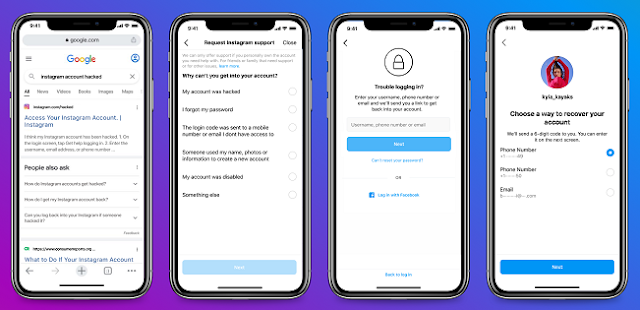
Instagram has launched a new recovery center that is aimed
at helping users retrieve their profiles after being logged out of their accounts
due to hacking, forgetting password, losing access to two-factor authentication
or account being disabled.
The recovery center can be accessed from https://www.instagram.com/hacked/,
which provides a step-by-step guide of the process of getting an account back. In
addition to that, users will also be able to refer to any two of their Instagram
friends, so as to confirm their identity in case of being locked out of their
account.
Google had been testing a new password-free secure login
feature ‘Passkeys’ since October and launched it earlier this week to its Chrome
Stable M108. Passkeys are a form of unique identity of a user without involving
passwords. They can be stored on computers, phones or even USB security keys.
Chrome users can now access Passkeys within the browser on both desktop and mobile devices that have Windows 11, macOS, or Android installed. Additionally, Android users can sync their Passkeys between their Android device and another device via a password manager directly or with support from a third-party, such as 1Password or Dashlane. Passkeys are designed using public key cryptography, which is what creates the cross-platform feature.
The Cyber Crime Magazine defines Cybercrime as the “damage and destruction of data, stolen money, lost productivity, theft of intellectual property, theft of personal and financial data, embezzlement, fraud, and post-attack disruption to the normal course of business, forensic investigation, restoration and deletion of hacked data and systems, and reputational harm.”
iPhone is the new icon in the mobile phone industry. Since it
was launched back in 2007 at the Macworld conference in San Francisco, iPhone
has gotten an image of a global phenomenon. The number of iPhone sales is over
1.2 billion units all over the world. Today, the smartphone market is a
fiercely competitive space. On global level, iPhone has a share of 16% of the
smartphone market. However, in the United States, iPhone has managed to win the
minds and hearts of more customers. New data from Counterpoint Research via FT
notes that iPhones now make up 50% of the overall installed user base in the
United States. With a number of brands of smartphones available to American
consumers, with different price ranges, what is it that makes iPhone so popular
and loved?
Twitter has reported an unfortunate error in its security
systems that occurred back in January of 2022, as a result of which, an
important piece of users’ private information had leaked and was sold online by
hackers. This information was about whether a phone number or email address was
connected to an existing Twitter account.
Twitter explained, “As a result of the vulnerability, if someone submitted an email address or phone number to Twitter’s systems, Twitter’s systems would tell the person what Twitter account the submitted email addresses or phone number was associated with, if any.” The company further assured users that it had looked into and fixed the issue right after learning about it.
Instagram is
releasing a new live-stream moderator option that it has been working on for
the past few months. Using the option, users can assign moderators within their
live-streams. The moderator will be given control options like being able to
report comments, remove viewers from a stream and turn off comments for a
specific viewer.
Having a
moderator in Instagram live-streams could help users manage the flow of content.
It could also be helpful in addressing concerns such as inappropriate actions
from viewers, since harassment and bullying during live-streams is quite common
and can get difficult to control, as it happens in real time.
Twitter had been testing a new Safety Mode feature and is
making it available to more users after collecting sufficient feedback through the
beta test. The feature has been designed using automated system detection and
can be used for autoblocking potentially problematic accounts.
Remember when we began testing a new feature called Safety Mode? After months of feedback from beta users, we’re excited to expand this to some of you in several new English-speaking markets to gain more feedback and insights. https://t.co/8TM7S5Zfuj pic.twitter.com/AqVOUwyNQv
— Twitter Safety (@TwitterSafety) February 15, 2022
Safety Mode can be accessed from the Privacy and Safety settings in the app. The autoblocking functionality will be activated for 7 days to target accounts that have been engaging in unwanted interaction with you, such as sending repetitive replies or @mentions your way.
Meta is working on providing end-to-end encryption across
all of its messaging apps. Since last year, the company has been testing end-to-end
encryption for group chats, including voice and video calls. Mark Zuckerberg
recently announced that all Messenger users will now be able to implement
encryption in all group chats in the app.
This step towards improved security and privacy on Messenger
is part of Meta’s broader plan of cross-communication among its messaging apps
WhatsApp, Messenger and IG Direct. The inboxes in each app will be synchronized
and the same data protections will be applied to each.
While Meta is ensuring better security with these updates, it is also a concern among people as the approach may be against law enforcement policies that are responsible for tracking potential criminal activity. Increased security in the form of encryption limits the capacity to track perpetrators of crimes, hence becoming a hinderance in investigative processes. Nevertheless, Meta persistently believes in providing more freedom to users in terms of choosing whom they share their data with and to what extent.
Snapchat is introducing new restrictions to limit adults on
the platform from sending messages to young users below the age of 18. This is
an update to the Quick Add friend suggestion option.
Older users will be allowed to add users aged under 18 only on the condition that a certain number of friends are in common between the two users.
Facebook, now known as Meta, is providing a new Privacy
Center tool to users that consists of a comprehensive overview of the platform’s
various data tracking aspects.
There are five main elements in the Privacy Center, including
Security, Sharing, Collection, Use, and Ads. All of them explain how Meta
collects data in each of them and provide the options to turn tracking off for each
of the elements.
Security offers tools like two-factor authentication with which
users can strengthen account security. It further explains how Meta combats
data scraping.
The Sharing tab shows users who can view their posts. It offers
tools like Manage Activity that can help users delete old posts that they no
longer want to be on their profiles.
Collection shows different types of data that Meta collects
and offers users the ability to view this data through tools like Access Your
Information.
The Use section explains how and why Meta collects users’ data. It further offers control tools that help manage the information that a user wants to or doesn’t want to share.