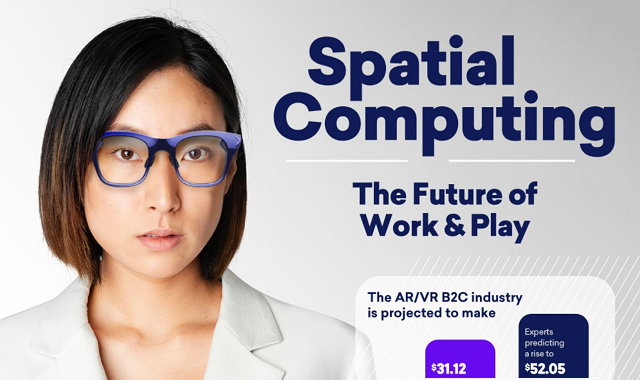
The realm of spatial computing, as championed by Lumus, is rapidly revolutionizing our daily experiences. Forecasts show a staggering projection for the AR/VR B2C industry: $31.12 billion by 2023, with an impressive leap to $52.05 billion by 2027. This technological marvel spans from pure reality to virtual reality, encompassing augmented and mixed reality in between.
Meta is reportedly going to be launching the mobile version
of Horizon Worlds soon, according to a Lowpass newsletter by Janko
Roettgers. The platform is currently available on Meta’s Quest VR headsets
only. While Meta did complete the development of a mobile version last year, the
company revealed that it could not ship it at the time.
While Meta has not confirmed the news of a release happening soon, Metaverse VP at Meta, Vishal Shah, did disclose to Roettgers that with the release of the mobile version of Horizon Worlds, one of the first games that will be tested on the platform will be Super Rumble.

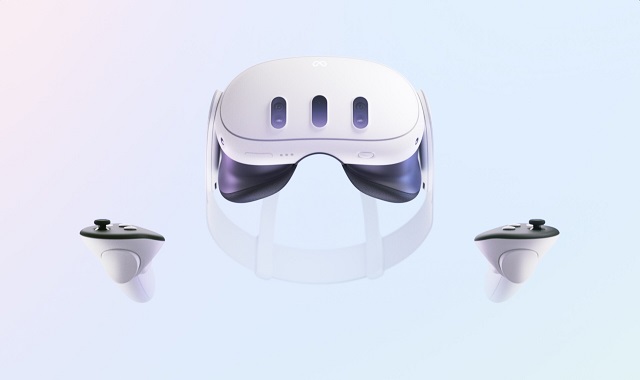
Meta has finally revealed exciting details of its new next-generation
virtual and mixed reality headset ‘Quest 3.’ With a starting price of $US499.99
for 128GB, the device will be available for purchase this fall.
The three main technical elements that the Quest 3 will be
featuring include a 2x improved processing power, high-fidelity color
Passthrough that produces AR experience, and a smaller and sleeker design
making the headset more comfortable to wear than the previous model.
According to Meta, the Quest 3 headset features the tech giant’s “highest resolution display and pancake optics.” The increased processing power of the Quest 3 results from a Snapdragon chipset integrated in the device that helps enhance its visual capabilities. “You’ll get smoother performance and incredibly crisp details in immersive games,” Meta claims.
Microsoft first launched the 3D avatar feature for Teams in 2021 and has been privately testing it since. The company has now officially announced the integration of avatars in Teams, which will enable users to have their 3D avatars represent them without having to appear on the camera.
Primarily, the feature has been designed to facilitate video call interactions when a user doesn’t want to appear on video. In such moments, users can select their animated 3D avatars to appear in their place and interact with other members based on the vocal cues interpreted to them. Users can choose their avatar from a variety of customized options that best suits their own appearance.
The latest update of Meta’s v50 Quest headsets will feature Direct
Touch as an improvement to the device’s hand tracking technology. It enables the
wearer to use their hands to “touch” the menu buttons or virtual keyboards,
hence allowing more natural hand gestures.
The previous version of hand tracking in the Quest headsets was limited to the pinch motion to click something or scroll through text. The new hand tracking is designed to create a more interactive virtual experience, similar to using touchscreen on a phone.
Google announced 360-degree virtual backgrounds for video
calls in Google Meet last month and is now rolling it out to mobile phone users
of both iOS and Android.
The specialty of these backgrounds is that they move using
the device’s gyroscope. During video calls, the background will change
according to the position and movement of the device, hence making the scenery
appear more realistic.
In a limited alpha test, Meta is introducing the ability to
form curated communities on its Horizon Worlds platform. These are known as ‘Members-Only’
Worlds that are limited to 150 members and 25 concurrent visitors.
Within these spaces, users of Horizon Worlds can create groups
based on shared interests, such as book clubs, gaming groups, VIP creator
supporters, or just hangout spots for friends. In other words, it’s like a
Facebook Groups experience but in VR.
Creators of Members-Only worlds will have complete control over these Worlds, including who can access them and what goes on inside them. In Meta’s words, the goal is “to put design in the creators’ hands so that they can fully craft the experience they want to offer others.”
A new Bloomberg report revealed that Apple could be announcing
its mixed reality headset this spring, ahead of the Worldwide Developers
Conference that is to be held in June.
The prediction has also been confirmed, in a way, by a recent tweet shared by Apple analyst Ming-Chi Kuo, who provided an update on the development progress of the headset. He stated that due to issues involving the mechanical component drop testing as well as the availability of software development tools, the headset would most likely not be revealed in the January media event. Ming-Chi Kuo further confirmed that the headset would most likely be announced in the spring.
Meta hosted its Connect conference for 2022 just now to
reveal its latest VR products and tools. These include a new version of the Quest
headset, new professional integrations with Microsoft, updated interaction
tools, and control devices.
Meta’s new Quest headset is priced at $US1,499 and called ‘Quest
Pro’, which the company describes as its first entry in its new “high-end line”
of devices. Meta has redesigned the headset in its appearance, which is more
sleek-looking, and has developed it with innovative features including high-resolution
sensors for mixed reality experiences, a more realistic display with more pixels,
crisp LCD displays for sharp visuals, and an eye-tracking system.
Additionally, the Quest Pro facilitates multi-screen display, as well as Meta’s new VR feature called ‘Magic Rooms’, which is a combination of VR and the display of participants in a video conference.
Meta prepares to host the 2022 Meta Connect Conference on
the 11th of October, where it aims to showcase a range of its new AR
and VR creations, along with a virtual design of the Metaverse. “Industry
leaders will share the latest technologies and developer sessions will cover
how to use them. Our goal is to bring the world closer together and deepen
human connection through new experiences,” says Meta.
One of the major exhibits in the conference will be Meta’s latest ‘Cambria’ VR headset that it had first previewed last October. The headset features advanced, high-end technology, including higher resolution image quality and outward-facing cameras, hence enabling the wearer to experience a unique mixed-reality. The only drawback of the Cambria headset, it seems like, is its price, which is around $1000 and would likely result in lower take-up.
To enhance its AR and VR experiences further, Meta is now developing
new spatial audio tools. With the help of this integration, people will be able
to live moments of immersive graphics and sounds when they put on their AR
glasses.
Spatial audio is one of Meta’s key drivers for the Metaverse,
and the company has already introduced a bit of the spatial audio experience in
its Ray-Ban Stories glasses that feature open air speakers to deliver sound
directly into the wearer’s ears, without an earpiece.
Currently, Meta is creating three new models for audio-visual understanding and inviting developers and audio experts to contribute to its research. According to Meta, the models “focus on human speech and sounds in video.”