The United States recently began legalizing many substances, both for recreational and medical use that were previously considered taboo on a federal level. Now with these decisions up to the states, positive marijuana tests are up by almost 50% and each part of the country upholds a different standard for drug use. Drug testing laws also differ by state, and specifically employment drug testing laws have garnered attention in recent years. This uptick in marijuana usage poses a risk for vulnerable workers and creates a more dangerous work environment.
A new rule released by The Federal Communications Commission
is enabling state attorneys general to take action against illegal robocalls
that use AI voice cloning technology.
FCC Chairwoman Jessica Rosenworcel expressed concern over the misuse of AI-generated voices in robocalls. The practices, she said, are being used to “extort vulnerable family members, imitate celebrities, and misinform voters.”
A bill formed on the ‘AI Foundation Model Transparency Act’
has been issued by two lawmakers, that demands that creators of foundation
AI models disclose sources of their training data for clarification of
copyright.
The bill is developed in alignment with the Biden
administration’s AI executive order. It has been released after recognizing the
importance of training data transparency around copyright as an increase in
lawsuits accusing AI companies of copyright infringement has been observed.
Several concerns about inaccuracy, imprecision, and biased information have
been raised against AI foundation models.
The lawmakers: Reps Anna Eshoo (D-CA) and Don Beyer (D-VA), would oversee the Federal Trade Commission (FTC) as it works with the National Institute of Standards and Technology (NIST) to determine rules around training data transparency.
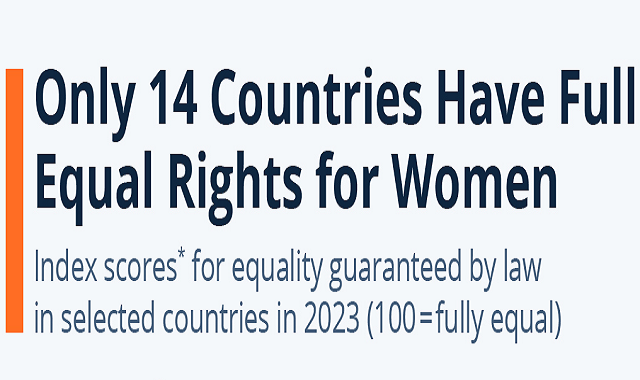
According to the report Women, Business and the Law 2023, recently published by the World Bank, there are only 14 countries in the world which agree on full legal protections to women. Among them are Belgium, Canada, Denmark, France, Greece, Iceland, Ireland, Latvia, Luxembourg, Portugal, Spain and Sweden, as well as Germany and the Netherlands are the nations offering full equal rights for men and women, at least from a legal perspective.
As per the EU’s Digital Markets Act (DMA), a new rule will
require digital gatekeepers to ensure open markets in Europe. What this means
for tech giant Apple is that it will begin allowing its users to install
alternative app stores on iOS in the region; which is something that Apple has
never before done, as it has only allowed access to its native App store on its
devices.
If similar laws are passed in additional countries, Apple’s project could lay the groundwork for other regions. But the company’s changes are designed initially to just go into effect in Europe.
— Mark Gurman (@markgurman) December 13, 2022
Passing of the EU’s DMA law would also mean that Apple will have to allow installing of software downloaded from the web as well, which is what the company’s executives have previously termed as “a cybercriminal’s best friend.”
Germany's Federal Cartel Office is carrying out proceedings against
Apple over anti-competitive behavior related to its App Store, and other
services and products. It will be decided in the proceedings if Apple’s
ecosystem holds enough power to make it difficult for other companies to challenge
it.
President of Germany's Federal Cartel Office, Andreas Mundt,
explained that the focus of the investigations will be on examining Apple’s “extensive
integration across several market levels, the magnitude of its technological
and financial resources and its access to data.” He continued to say that the
operation of the App Store will also be assessed, since it “enables Apple in
many ways to influence the business activities of third parties.”
The main goal of the investigation is to prohibit the company from "engaging in anti-competitive practices" in case it is found to be of significance across markets.
Bloomberg posted an updated article, which clarifies that
the antitrust legislation prohibits Apple from preventing users from removing
Apple-created apps on their Apple devices. While Apple does allow users to
delete many of its own apps, it doesn’t allow the deletion of core apps like
Messages, Photos, and Phone.
According to the proposed U.S. antitrust legislation
released last week, Apple would not be allowed to sell its iPhones with its own
apps installed. Instead, the company would offer other app options for users to
install. The free Apple-created apps on iPhones currently include Messages, FaceTime,
Calendar, Notes, and a few others.
Under the proposed antitrust legislation, this requirement would lead to a substantial change in Apple’s iPhone's setup process, which would become more complicated, less streamlined, and perhaps even more expensive if users were cued to purchase or subscribe to third-party apps and services to replicate Apple’s services at no cost.
Facebook has been involved in the ongoing battle between
Apple and Epic Games, and the social media company has been arguing with Apple over
document requests as Facebook executive Vivek Sharma is set to testify on
behalf of Epic.
Sharma plans to testify about Apple's restrictions on iOS
app distribution, the App Store process, and Facebook's interactions with Apple.
Apple, on the other hand, is asking for a "limited set of documents" required
for a fair cross examination in relation to the procedure. Facebook has,
however, refused to comply.
According to Facebook, producing tens of thousands of documents is an "untimely, unfair, and unjustified request to redo fact discovery," as Apple requires over 17,000 documents that it finds relevant to the case. Even though Facebook has already provided Apple with a total of more than 1,600 documents, 200 out of which are apparently relevant to Sharma, the tech giant has objected that they are not sufficient.
Following the Australian Government’s action towards making
changes to its proposed Media Bargaining Code, Facebook has announced its
agreement to restore the Pages of Australian news publishers on its platform. The company is getting more time to negotiate separate deals with
publishers and as a result, it would be able to launch Facebook News in the
region.
“After further discussions, we are satisfied that the government has agreed to a number of changes and guarantees that address our core concerns about allowing commercial deals that recognize the value our platform provides to publishers relative to the value we receive from them," Facebook said in a statement about the new agreement.
A total of four amendments have been made to the Australian Government’s proposed code, among which, the main addition suggests that "A decision to designate a platform under the code must take into account whether a digital platform has made a significant contribution to the sustainability of the Australian news industry through reaching commercial agreements with news media businesses."
Australia proposed a new law, according to which Google is
required to pay news publishers for their content. Google responded saying that
it would take down its search engine from the country if the law goes into
effect.
VP of Google Australia and New Zealand Mel Silva told
Australia’s Senate Economics Legislation Committee that the company would have
no choice but to “stop making Google Search available in Australia.”
Google has been lobbying against Australia’s plan for months and argues that Australia’s new law would set an “untenable precedent” for its business as well as the digital economy. “It’s not compatible with how search engines work,” the company argued.
Australian Prime Minister didn’t sit back and immediately responded with a straightforward statement. “Australia makes our rules for things you can do in Australia. That’s done in our Parliament. It’s done by our government. And that’s how things work here in Australia,” said the Prime Minister.
Ankara had generated a new social media law under which
social media companies were required to appoint local representatives in Turkey.
However, Twitter, Pinterest, and Periscope failed to comply with the policy, leading
to Ankara imposing advertising bans on these companies.
The law states that social media companies that do not
appoint local representatives are liable for a series of penalties and allows
authorities to remove content from platforms, instead of blocking access as
they did previously.
The US government announced a major change for drone law last
week, according to which, almost every drone in US airspace will need to
broadcast their locations, along with the location of their pilots. The purpose
behind this rule is to “address safety, national security, and law enforcement
concerns regarding the further integration of these aircraft into the airspace
of the United States”.
Google has responded to the law update and isn’t too happy with the decision. Google’s drone delivery subsidiary Wing published a post that says that the broadcast-only remote identification of drones may have unintended consequences for American consumers, such as letting observers track people’s movements, accessing information such as where they go and live, where and when they receive packages, etc. It further added that this type of surveillance would not be acceptable for American communities.

Facebook is moving its UK users’ agreements out from under
the privacy protections of EU to US. Users of Facebook, Instagram and WhatsApp
in the UK will be required to sign new terms of service agreement in the coming
months with Facebook’s headquarters in California, instead of its European
branch in the Republic of Ireland. This means that the users will no longer be
covered by data policies created under the strict regime of the EU.
The reason Facebook is doing so is because it wants to avoid a situation where UK citizens are no longer citizens of the EU, but their agreements are based in an EU country, where Facebook is subject to the EU’s data protection laws.
The U.K. government planned to phase out the Huawei 5G technology and as part of that plan, it is banning the installation of the new Huawei 5G equipment from September of next year. The government announced back in July that it would be barring firms from buying new equipment form Huawei starting from January 2021, due to the national security concerns revolving around the Chinese tech company.
This means that any telecoms companies that have stockpiled Huawei equipment ahead of January 2021 will not be able to use them for long-term 5G rollouts. Reports suggest that several companies have been stockpiling the equipment since summer. However, firms possessing old Huawei equipment will still be able to maintain it after September.
On the other hand, matters of the ban enforcement and the laws regarding it will be set by a new legislation in the Parliament this week. Furthermore, telecoms companies could be fined up to 10 percent of turnover or £100,000 per day if they fail to comply with the new security standards, according to the Telecommunications Security Bill requirements.
Google has just been faced with one of the largest antitrust cases in the U.S. history after the Justice Department filed a suit against the tech giant for illegal monopolization of the search and ad markets.
The complaint stated that countless advertisers must pay a toll to Google’s search advertising and general search text advertising monopolies and that American consumers are forced to accept the company’s policies, privacy practices, and use of personal data. The complaint further argued that new companies with innovative business models can not emerge from Google’s ‘'long shadow’'.
Justice Department officials demanded that google stop its illegal conduct which is against the traditional antitrust principles. Their main focus was on the magnitude and power of Google’s control over the search market - the fact that the company controls search distribution channels accounting for about 80% of general search queries in the U.S.
Uber has been granted a license by the UK court, which had been denied for renewal. The duration of the renewal is 18 months only, however. The judge took the decision after being assured of the improvements made by Uber, especially those relating to its communication with London's transport regulator, TfL.
There are 21 conditions stated in the new license, suggested by both Uber and TfL to the Magistrate.
While the judge still isn't a hundred percent satisfied with Uber's performance, he still believes that the company is doing a ''reasonable business'', as expected.
Uber has been struggling to have its license reinstated for several years ever since TfL announced to the company in 2007 that it would not renew its license, due to safety concerns and considering that Uber was not fit to hold a private hire operator license.
Uber did manage to win a provisional appeal in 2018 after being granted a 15-month license by a U.K. court, while it was given the chance to work on meeting TfL's requirements. Last November, TfL denied a full license renewal to the company once again and highlighted new safety concerns.
Divorce is undoubtedly extremely traumatizing and tough to deal with for both the husband and the wife. No matter how long both have lived with each other, there are always some things that trouble both the parties after divorce as they have to struggle hard in order to get past the myriad of emotions. Some unavoidable arguments or issues can lead to the decision of ending up the marriage. As per the Australian Institute of Family Studies, one out of every 500 Australian gets divorced. However, with the term ‘divorce’ all that people focus on and think about are the women and their children, whereas, men are mostly overlooked in the matter. This infographic will explain how men in Australia deal with divorce.
Rights of men in divorce
Divorce rights of men and women mostly depend on the laws of the region. If we talk about Australia specifically, the rights of men and women in divorce are pretty similar. Divorce rights are not categorized on the basis of gender; however, the only rights that the state consider are children’s rights.
Do the fathers get child support, and how do they deal with it?
Well, in most of the cases, men are the ones to pay child support after divorce; however, any of the two parents can do so. Usually, the non-custodial parent is likely to pay for child support to the custodial parent. Child support is neither categorized as a man’s right or woman’s right, in fact, it is the child’s right hence if the mother is the non-custodial parent then she is required to pay child support to the custodial parent, i.e., her ex-husband.
Who would want to lose their kid? Every good parent wants to take the best care of their child. Children get extremely troubled with the divorce of their parents which is why there are strict laws of children’s right that helps the children to have a good relationship with both of their parents unless the situation is extreme. Australian law gives the custody of the child to the parent that has a better and stronger bond with the child but, better communication is highly important among both parties even after divorce for a safer future of their kid.
Facebook just blocked access to its platform within Thailand to a Group consisting of 1 million members that had been criticizing Thailand's king. The group had been protesting daily against the Thai government, hence the government's order to Facebook to block the group.
The group was officially named Royalist Marketplace and was formed in April by a self-exiled academic and critic of the monarchy named Pavin Chachavalpongpun.
The group's page on Facebook had a message for it on Monday, that read "Access to this group has been restricted within Thailand pursuant to a legal request from the Ministry of Digital Economy and Society.".
Pavin responded saying that Facebook had bowed to the pressure from the military-dominant government. He complained that the group is part of a democratization process and is a space for freedom of expression.
According to Pavin, Facebook's move to block the group shows that the company is ''cooperating with the authoritarian regime to obstruct democracy and cultivating authoritarianism in Thailand.".