Visualistan: Shopify -->

    Social Items


With a new partnership with Shopify, YouTube is taking its next steps towards eCommerce integration. The video viewing platform is enabling Shopify merchants to showcase their products via their YouTube channels.


Merchants can activate YouTube shopping by connecting their YouTube channels via the Google Channel app within the Shopify add-on tools.


As stated by YouTube, “Creators who link their stores can display their products across their channel and benefit from Shopify’s real-time inventory syncing.” YouTube further announced that onsite checkout is available for US users specifically, hence allowing the viewers to complete their purchases without leaving YouTube.


YouTube has highlighted three ways in which merchants can choose to display their products: Livestreams, Videos, and Store Tabs. In a livestream, merchants can tag and pin their products at key points to showcase them. Moreover, customers will be able to make purchases while watching the livestreams, thanks to the picture-in-picture playback. In regular videos, merchants can create curated lists of products in a product shelf. Lastly, the Store tab will be exclusively added to merchants’ YouTube channels, where they can easily display their selection of products.


Shopify Merchants Can Now Feature their Products on YouTube

TikTok plans to introduce a dedicated Shopify Shop Tab

TikTok just keeps on growing to ensure the best ever user experience. The short-video giant has recently announced that the company is planning to add a dedicated Shop Tab as a result of expanding its relationship with Shopify.

However, the Tab won’t be available for everyone, in fact, only for the approved merchant profiles. These Shopify Merchants will be able to showcase their products in the Tab so that the audience on the platform can view the products directly within the app.

Though it won’t become the direct mode of shopping and the interested buyers when proceeding with shopping, will be referred back to the merchant’s Shopify store. Despite being an indirect source, it is surely a big step in the eCommerce push of the platform.

TikTok plans to introduce a dedicated Shopify Shop Tab

Is ecommerce industry worth investing?


Ecommerce industry has had second wind during the coronavirus pandemic. The ecommerce market was already rising before we were plunged into the pandemic. However, with the recent progress of the market and more awareness by businesses, the success is inevitable. 

Is ecommerce industry worth investing? #infographic

The 25 Companies That Grew the Most During the COVID-19 Pandemic

The coronavirus pandemic has not only caused massive devastation to many families and individuals, it has also been severely detrimental to the global economy. Many companies and industries are struggling to stay afloat as the world has experienced an unprecedented shift in how people live their lives. Small businesses are especially impacted, with many of them being forced to shut down permanently due to closures and lack of customers. Data from Yelp shows that 60% of business closures due to the pandemic are now permanent. 

The 25 Companies That Grew the Most During the COVID-19 Pandemic #Infographic


TikTok just announced a new global partnership with Shopify, the aim of which is to provide convenience for Shopify’s over 1 million merchants to reach TikTok’s younger audience and drive sales. The companies have also revealed that other in-app shopping features will also become part of the partnership in the future. 


The partnership agreement would allow Shopify customers to create, run, and optimize their TikTok marketing campaigns directly from the Shopify dashboard. Merchants will be able to do so by simply installing the new TikTok channel app for the Shopify App store. This will give them access to the key functions from the TikTok for Business Ads Manager at their disposal.  


The Shopify ad tools would let merchants create shareable content in the form of in-feed video ads of their products that would attract the TikTok community. Specifically designed ad templates will be provided to create the video ads. Audiences can be targeted across gender, age, user behavior, and video category. The campaign’s performance over time would also be trackable.  


Merchants would also be able to track user actions, such as browsing of their page, registration on a website, items being added to the cart, order placements, and payment completions. These features are accessible to all merchants across the U.S.  


The cost of the campaigns would vary on the basis of the merchants’ business objectives and the amount they want to spend. Merchants will be offered a $300 ad credit to get started with their first TikTok campaign. 

TikTok and Shopify Launch a New Partnership for Social Commerce

Magento to Shopify Plus: Best Practices for Data Migration
Both Magento and Shopify are popular ecommerce solutions. Although Magento and Shopify Plus (the larger-business version of Shopify) fill similar roles in the market, one or the other may be more appropriate for certain types of businesses. Companies may choose to migrate from Magento to Shopify Plus for a variety of reasons: less maintenance, the larger Shopify ecosystem, and easy cloud hosting are all reasons for selecting Shopify.

Is Migrating to Shopify Plus the Right Choice?

Although new business owners debating between Magento and Shopify might choose the easiest option to start up their business, companies considering migrating from Magento to Shopify Plus are likely to be more established. This means that they have more data to migrate and more integrations that must be replicated on the new platform. For this reason, even if a company would realize significant cost savings by migrating, the migration itself might be expensive. The cost and benefits of any ecommerce platform migration should be carefully considered before embarking on the process.

For more information on the pros and cons of each platform, take a look at our Magento vs. Shopify article.

Step 1: Keep Your Magento Store Running For Now

Although it might be tempting to switch off the old store as soon as the new one appears to be working, it’s best to keep the Magento store running as usual during the migration process. This way, there will be no downtime or other issues caused by the switch.

Step 2: Make a Backup of Your Magento Store

Even with every precaution, data loss is still possible during the migration process. It’s possible that an important piece of information is found missing from the Shopify Plus store long after shutting down the Magento instance. In this case, it’s very valuable to have a complete backup of the Magento store. Also, if a company chooses to migrate back to its old configuration, having a complete backup is essential.

Step 3: Take Inventory of Your Data

After making a backup of the entire server, the next step is to figure out what information needs to be migrated. Aside from obvious data like catalog information, check to see what kinds of Magento settings will need to be moved over to Shopify Plus. Some Magento-specific features don’t have direct equivalents in Shopify Plus, so be sure that stakeholders know which ecommerce site elements will not be able to transfer.

Step 4: Get Shopify Ready

Before importing data from Magento into Shopify Plus, companies should perform basic setup tasks on their Shopify stores to make sure that the migration goes smoothly.
Verify that the following tasks are completed before proceeding to import data:

  • Create your Shopify Plus account with accurate store settings and contact information 
  • Check billing information and store addresses 
  • Add staff accounts to securely delegate permissions to other users with separate login information

Next, determine a plan for transferring information into Shopify. Options include manual transfer, migration apps from the Shopify App Store, a custom app using the Shopify Admin API, and the Shopify Transporter app.

Step 5: Migrate Most Information Automatically

The easiest way to migrate customer data from Magento into Shopify is through the official Transporter app, which is only available for Shopify Plus customers. Transporter takes data exported in CSV files and imports it into Shopify.

Magento to Shopify Plus: Best Practices for Data Migration

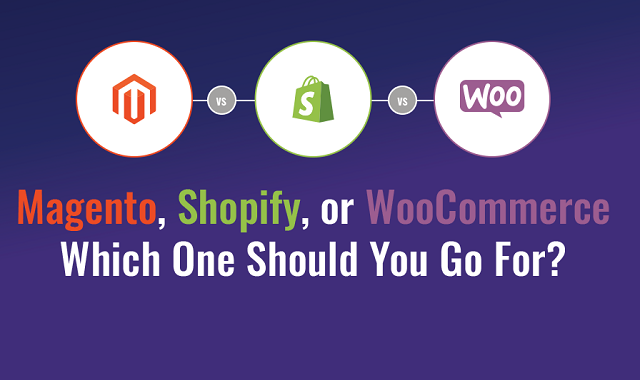
What would you choose between Magento, Shopify and WooCommerce?

Online shopping has become the new trend of the 20th century. The three most popular online shopping platforms called Magento, Shopify, and WooCommerce have taken the entire state by storm because of their promising features and positive reviews. Delivering quality products at the right time with no delays and malfunction is a quality only a few platforms offer.

This infographic will help you to make your decision wisely. Depending on your priorities, you can easily choose one of these platforms on the basis of their mentioned features. For instance, if you wish to install an online store on your device for free, then WooCommerce would be your best choice. You can also opt for Magento, but you will need to install the premium version, which will require you to buy it for better features. The only difference between free and purchasable stores is that free stores only provide you with a limited number of features. Still, premium stores allow you to access new and better features every now and then easily.

What would you choose between Magento, Shopify and WooCommerce? #infographic

Shopify to Launch New Products and Updates

To meet the demands of users during the COVID-19 pandemic, Shopify has decided to add some new features and functionalities to its products as well as launch new ones. Shopify in a virtual event called 'Shopify Reunite' confirmed that it will be launching new products and updates for its e-commerce platform.

All eyes are on 'Shopify Balance', business account, debit card, and rewards combo that will comprise a new area found among the Shopify merchant admin workspace. The product will enable merchants to get a clear insight into their cash flows as well as allow them to pay bills, keep track of their spendings, and make changes to their business' direction. The service will be released in the US in the second half of 2020 and will come with no monthly charges or minimum balance requirements.

Shopify to Launch New Products and Updates

Subscribe Our Newsletter