Visualistan: Pollution -->

    Social Items

Air Pollution Has Become a Global Health Threat


Air pollution is considered to be extreme environmental health hazard to humankind, becoming a reason for over six million deaths a year and an economic cost that is equal to over $8 trillion dollars. This analysis is according to the World Air Quality Report 2022 released on Tuesday by IQAir, a Swiss air quality technology company. The analysis revealed that out of a surveyed 131 countries, regions and territories, only 13 resulted in meeting World Health Organization air guidelines of annual PM2.5 concentrations at or below 5 μg/m3 in 2022, many of which were in Oceania.

Air Pollution Has Become a Global Health Threat #Infographic

The Top 10 Most Littered Plastic Items in the United States


Plastic when first appeared, it attracted attention as the miracle material. Plastics made it possible for man to reach moon, it modernized medicine, and helped make computers and cellphones possible.


Other than these benefits, plastic has a darker side. The world generates over 350 million tons of plastic waste every year, and over one-fifth of that is mishandled. As a result, plastic waste can now be found everywhere on Earth, from the highest peaks to the deepest seas. There is also proof that plastics at the Nano scale can pass through cell walls.


This infographic takes data from Keeping America Beautiful’s 2020 National Litter Study and asks the question: what is the most littered single-use plastic item in the United States?


The Top 10 Most Littered Plastic Items in the United States #Infographic

Delhi’s air quality reaches hazardous levels

Air pollution is one of the most common problems faced by the people of India especially in the country’s capital, New Delhi. According to the Environmental Protection Agency (EPA), the air quality in New Delhi is currently ‘very unhealthy’ which means the citizens must wear masks and carry out precautionary measures to stay safe.

Whereas people with respiratory issues must avoid going outdoors, and even if they do, they must cover their mouth and nose properly. What added to the already poor quality of the city is the outlawed firework celebration on Diwali last week.

Indian government however has been addressing the issue and used deploying water tankers that work based on a sprinkler system. These tankers are likely supposed to minimize the pollutants present in the air. Apart from this, the government also ordered the industries that lead to excessive air pollution to minimize or even put their production on halt for some time.

Delhi’s air quality reaches hazardous levels #infographic

What are the possible contaminants of the floodwater?

Floodwaters might not seem as contaminated as these actually are. From E. coli to livestock waste, there could be way more pathogenic organisms beyond our imagination. Floodwaters are considered as a toxic soup of contaminants with terrible ratings.

According to the reports, in the previous year, around 59 people lost their lives due to the consumption of floodwater. Floodwaters can’t only drown a person but have several other threats.

What are the possible contaminants of the floodwater? #infographic

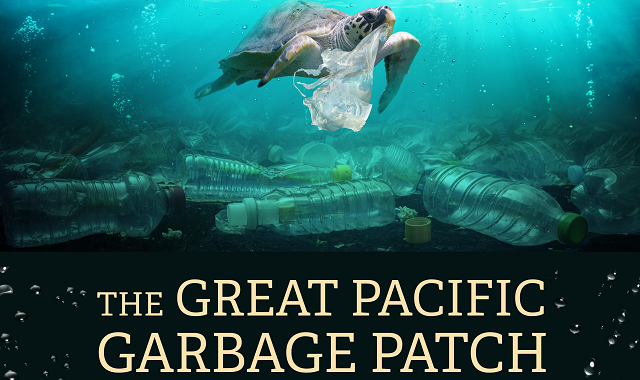
What does the Great Pacific Ocean have except for water?

We all are aware of the increased pollution in every part of the world. The garbage on the streets can be cleared up, the polluted air can be purified, the contaminated water can be cleaned from contamination but, what about the surface deep beneath the ocean?

The infographic below reveals the Great Pacific Garbage Patch (GPGB) that is located between California and Hawaii. The name has been given because of a huge amount of plastic accumulation because of the intensified fishing in the Pacific Ocean.

What does the Great Pacific Ocean have except for water? #infographic

Climate change is making each year warmer than the previous one

Global warming has been an issue for decades, which is giving shape to more hazardous weather conditions in various parts of the world. The most common causes responsible for the rise in climate change include increased carbon footprint due to human activities such as burning down fossil fuels, deforestation, vehicle pollution, industrial pollution, disrupting marine life, and several more. As per the National Oceanic and Atmospheric Administration report, 2020 has been declared as the warmest year in history after 2016.

The infographic below shows how the planet’s temperature is inching up with time, causing hotter years and extreme weather conditions. According to the chart, since 1951, the world’s weather has increased by +0.82 degrees Celsius. Each decade since 1981, the temperature has increased by 0.18 degrees Celsius.

Climate change is making each year warmer than the previous one #infographic

Countries with the worst air quality

Who doesn’t love blue skies with fluffy white scattered clouds? Unfortunately, these heavenly skies have become a rare sight in many parts of the world due to the air pollution caused every day. The main contributors to the bad air are industries that release enormous amounts of unhealthy gases in the air, and the other one is the vehicles that cause smog in the cities. The whole world is pretty much aware of air pollution, but sadly, no one is doing anything about it. Have you wondered to what extent air pollution is impacting the entire ecosystem and increasing global warming? Well, the impacts are extremely adverse and way beyond our imagination.

The infographic shows a cartogram that reveals the countries with the worst air quality by shading them in different colors. The cartogram has resized the countries based on their population, and according to it, every single square symbolizes 500,000 people. Mostly, countries with a higher population seem to have the worst air pollution, such as China and India. On the other hand, the least populous countries like Australia and Canada are invisible from the map.

On the cartogram, India is represented by 800 dark brown squares (a PM2.5 concentration of 50 μg/m³). This reveals that around 400 million in India are exposed to hazardous air every day in the country at levels that are five times more than the standard threshold set by the WHO.

Countries with the worst air quality #infographic

Which companies are polluting the world with their plastic waste?

Climate change has become a topic that cannot be neglected now. As the world is progressing, the climate has been affecting due to various activities of the industries. From plastic waste to harmful gases, everything is contributing to global warming. In order to aware the world of the disastrous climate change that we are heading to, a lot of campaigns have been initiated. People are trying to find alternate ways to reduce pollution and save nature. Similarly, many industries have opted for the techniques and created eco-friendly policies and don’t cause harm to our planet. According to the latest reports of 2020, there are still some industries that do not care about climate change; in fact, their plastic waste has doubled with time.

Which companies are polluting the world with their plastic waste? #infographic

How the Internet is Contributing to the Carbon Footprint


We're online all the time, and we are using the Internet regularly for all kinds of purposes. And while it may seem like that it's causing no harm to the environment, the opposite is true. Our use of the Internet is indirectly causing more carbon dioxide emission into the environment, ultimately increasing the carbon footprint. Let's have a look at how this is happening.


This carbon emission is actually linked to use of Google and the immense use of social media. While these apps and technologies are completely digital, there are servers and networks that are controlling these. With every second, the need for more servers is increasing due to the big data. 


How the Internet is Contributing to the Carbon Footprint #Infographic


The sudden rise in noise pollution

Pollution is destroying our environment quite literally. With pollution, it doesn’t necessarily means the garbage or cutting down trees but there are also other types of pollutions such as noise pollution. In this 21st century, which is being dubbed as the digital era, the hustle and bustle is of the common accord. The big cities are getting bigger as more people look move in them for better opportunities and an even better lifestyle but what is it doing to our environment?

The sudden rise in noise pollution #infographic

Oceans with 12.7 million tonnes of plastic

A human is not only responsible for the lands where he dwells but being an intelligent being; he is given the responsibility to make the environment better and safer for both humans and other species. Having said that, an issue has been brewing for decades, but no one has done anything to find its upright or permanent solution as yet. The contamination of oceans caused by plastic has not only subjected the entire marine life to danger but also caused the water to lose its strength.

Oceans with 12.7 million tonnes of plastic #infographic

The Most Polluted Major Cities in America

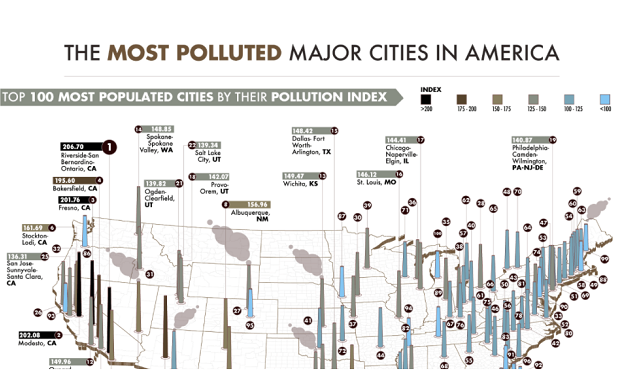
Drinking clean water and breathing clean air are two things that Americans can certainly take for granted. However, the air and tap water isn't great everywhere in the country. 


From TitleMax, this infographic analyzes which cities across the United States are the most polluted. The 100 most populated cities in America are included and ranked by the pollution index. Riverside, California ranks as the most polluted city in the country, and California itself makes up the entire top four of the list, also including Modesto, Fresno, and Bakersfield. 

The Most Polluted Major Cities in America #Infographic

How particles of various sizes have the power to make a huge impact

Did you know that coronavirus still stands at the third position in terms of size? Today we will talk about the different particles and their sizes and how. Over the years, scientists and researchers have been able to deduce many distinct theories about each of these particles and how some of them have the capability to pose extensive damage to the world. Whether it is the Zika virus with the size of 45nm or a Dust particle comprising the size of 2.5µm, the effects are always far greater and deadlier than estimated. For instance, a human body is prone to any particle that has a size lesser than 10 microns which, in this case, could be salt, pollen, spectrum, fine beach sand, etc. Similarly, dust particles, bacterium, coronavirus, T4 Bacteriophage, and Zika virus are widely known to be the particles that could easily find a way into your body and corrupt in a matter of days.

How particles of various sizes have the power to make a huge impact #infographic


The Fall of Carbon Gas Emissions

The only good thing 2020 has brought humanity is the reduction in carbon emission. Don’t get me wrong, there must have been a lot of things that may have gone your way this year, but in a generalized way, this year has not been a good one. From the Australian wildfires to the outbreak of a global pandemic, we all got shook at an alarming rate. Panic spread throughout the world, and ultimately it was put on lockdown.


Since then, the economic activities and traveling have been reduced to a bare minimum. To this day, ten months into the pandemic, we are being cautious and facing serious threats to human health. However, with the traveling being almost shut down, the carbon emissions in the atmosphere have also been reduced. The air is now fresher and healthier. It is clear that the reduction of carbon emissions is the only thing positive about this year.

The Fall of Carbon Gas Emissions #infographic

Getting to Know How Air Quality is Measured

The talks about air quality have been making the rounds even more ever since COVID-19 has taken the world by storm. Air pollution has been a consistent issue, ever since the industrial revolution. But it has increased drastically in the twenty-first century, as the world population and the number of vehicles continue to rise too. 

Ever since lockdown was implemented worldwide, almost all countries have signified air quality becoming better. Of course, this is related to less human intervention and lesser traffic on the roads. With the emission of smoke and harmful chemicals going down, the air quality is bound to go up. But how is air quality actually measured?

Getting to Know How Air Quality is Measured #Infographic


Apple just made an important announcement that it is aiming to become carbon neutral by 2030. The company plans to cut off its greenhouse gas pollution by 75% and eliminate the remaining 25% by working on its heat trap emissions.

Apple released a 2020 Environmental Report that states that last year, it had managed to cut its carbon dioxide emissions by 4.3 million metric tons. This was a remarkable initiative as it represented a 35% drop in carbon dioxide emissions since 2015, which was the year of the company’s peak. However, looking solely at the amount of its carbon dioxide emissions in 2019, it still pumped out an enormous 25.1 million metric tons of the gas.

The good news is that Apple has focused on using recycled materials and improving the energy efficiency of its products, hence causing a reduction in its planet heating pollution. Compared to the energy efficiency of Apple’s products 11 years ago, its products now use 75% less energy on average.

According to Apple, its operations became carbon neutral in April of this year, in relation to emissions from its facilities and business travels. The company is now focused on purchasing enough renewable energy to get its global operations started.

Apple is Planning to become Carbon Neutral by 2030

Plastic: A Sensitive Case For Our Planet

To much extent, we are all aware of the environmental problems the Earth is going through. The growing heat, the major changes in climate and pollution of all kind, is effecting not only the quality of human life, but is also shortening the life span of our dear planet and all the creatures that inhabit it. Amongst these environmental factors, the drastically increasing production of plastic and its consumption plays an important role unlike any other material.

Plastic is known to have a very durable life. If there are no humans left on Earth and all our devices and belongings are slowly left to decompose, plastic is one of those materials which will exhibit the most decomposition time - as much as a millennia! Since we are overusing the Earth's resources, the production rate across every industry has only increased. We have been entangled in this really strange race of mass production and consumption. This too has been a rising factor, as it has resulted in a lot of plastic being prepared to package all kinds of goods and products.

Plastic: A Sensitive Case For Our Planet #Infographic

The impacts of food waste

Global food waste per year is 1.3 billion tons, which is almost one-third of the total food produced to be consumed by humans. Tremendous economic loss and global warming are also interconnected to food waste. Apart from this, millions of people are starving to death because of the unavailability of food whereas, many developed countries are wasting several tons of food. The annual food waste costs approximately $990 billion, which is more than enough to feed every undernourished and hungry human on this planet.

The impacts of food waste #infographic

The drastic effect of human activities on marine life and its economy

Most of the earth comprises of water, which obviously puts emphasis on the significance of the ocean as well as its economy. From trade to numerous other activities, the ocean has always played an enormous role in the economic growth of a country. The ocean is considered to be an excellent asset worth over $24 trillion. This fact reveals that there are several different methods involved in calculating the total asset of an ocean. These methods include trade and transport, adjacent assets, and direct output. Having such invaluable assets at disposal, no country dares to make a move to put dirt on it, right? But our research says otherwise.

The drastic effect of human activities on marine life and its economy #infographic


We are living in a world where the primary source of affordable, energy-dense, and transportable fuel is fossil fuels. However, when this fuel is burnt, it creates several harmful pollutants that adversely affect our dear motherland. The emission of gases when fossil fuels are burnt also reduces the air quality of the particular area hence, making the environment unhealthy for every resident.

How could Hydrogen and fuel cells lead to clean energy? #infographic

Subscribe Our Newsletter