Have you ever wondered if your city is cleaner or dirtier than other cities? Thanks to a new graphic from Oxi Fresh, you can now see an official cleanliness score. They used seven criteria to give each city a score out of 100. These included population density, rodent and cockroach infestations, vandalism, litter, and air and water quality. Their graphic allows us to see specific scores in each category. The cleanest cities overall were these:
Waste management and recycling are a worldwide concern. Reducing waste, keeping the environment free of garbage and pollution, and creating sanitary communities are important for a healthy lifestyle and culture. To help create a cleaner planet, we need to reduce the amount of garbage produced. This map from Paper Boss shows us the countries with the most garbage per person.
The team at Student Choice decided to collect data on which college majors students are declaring and arranged their results on pie graphs. We can examine the distribution of majors each year from 2016 to 2023. The results show us a lot about how the college major landscape is shifting (and the ways it remains the same.)
The Environmental Protection Agency (EPA) has introduced new
and stricter standards for greenhouse gas emissions in the US from heavy-duty
vehicles of model year 2027-2032.
In the US, transportation makes up the largest portion of the country’s carbon footprint. Heavy duty vehicles like big rigs and buses are considered a major source of pollution and contribute to a quarter of the US’ transportation-related greenhouse gas emissions – hence greatly impacting the climate.
In a survey carried out by Statista Consumer Insights of 38 countries, only between 20 and 45 percent of respondents said that they considered environmental protection a major issue for their country. Respondents who belonged to Brazil were the most concerned about the environment, with those in Mexico, Peru and Colombia also rating environmental protection as more essential compared to most countries in the survey.
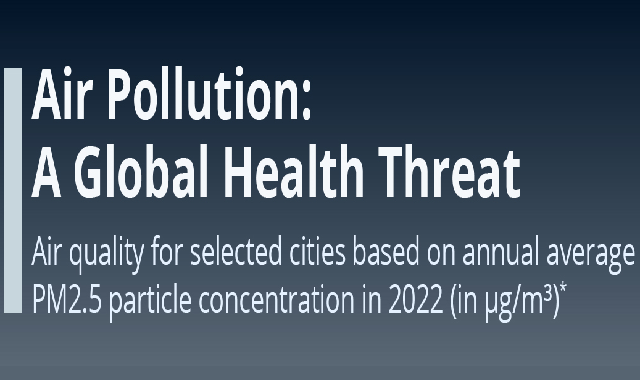
Air pollution is considered to be extreme environmental health hazard to humankind, becoming a reason for over six million deaths a year and an economic cost that is equal to over $8 trillion dollars. This analysis is according to the World Air Quality Report 2022 released on Tuesday by IQAir, a Swiss air quality technology company. The analysis revealed that out of a surveyed 131 countries, regions and territories, only 13 resulted in meeting World Health Organization air guidelines of annual PM2.5 concentrations at or below 5 μg/m3 in 2022, many of which were in Oceania.
Plastic when first appeared, it attracted attention as the
miracle material. Plastics made it possible for man to reach moon, it
modernized medicine, and helped make computers and cellphones possible.
Other than these benefits, plastic has a darker side. The
world generates over 350 million tons of plastic waste every year, and over
one-fifth of that is mishandled. As a result, plastic waste can now be found
everywhere on Earth, from the highest peaks to the deepest seas. There is also proof
that plastics at the Nano scale can pass through cell walls.
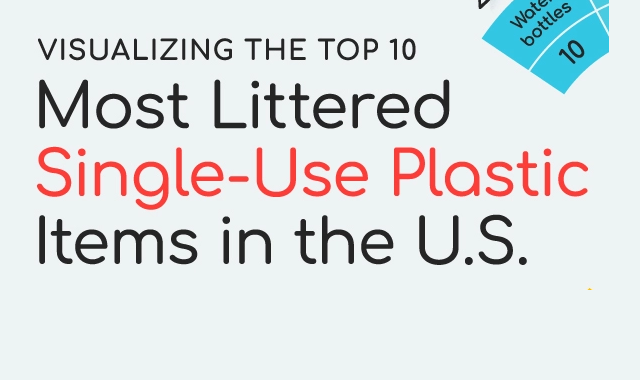
This infographic takes data from Keeping America Beautiful’s
2020 National Litter Study and asks the question: what is the most littered single-use
plastic item in the United States?
The Art of Snow
Looking at snow up close will probably make you notice that
it is formed from thousands of little flakes which have stunningly complex
designs.
These snowflakes are actually ice crystals. They are formed
in the atmosphere, up in the clouds, and transform along their journey to Earth,
all thanks to different factors and forces that are involved in the process.
Let’s look at the facts on how snowflakes are formed, and
what atmospheric conditions are involved that contribute to the stunning
details we have come to know them for.
Wallace Stegner, novelist and environmentalist, once said that National Parks were, 'The best idea we ever had. Absolutely American, they reflect us at our best rather than our worst.' I for one would agree. National Parks let us explore the uninterrupted world. They let us connect with nature in the raw and tune into our most basic instincts. Being among the trees and being immersed in the sweet woodsy smell of the earth immediately calms the mind. You slow down, you revel in the sounds of the wind in the trees, the birds and the bugs.
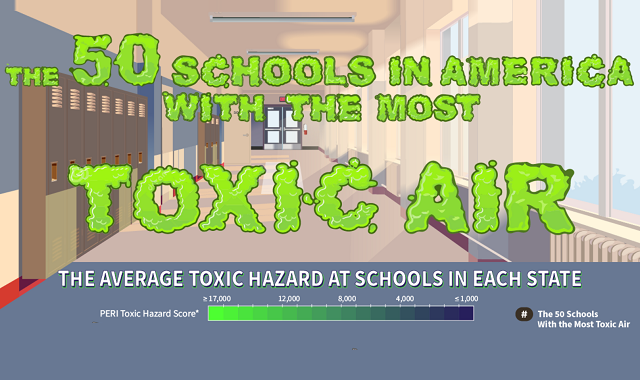
Which public schools across the United States were found to have the most toxic air? According to this map visual that was created by the team at AAAStateofPlay.com, one school in Missouri earned a toxic hazard score far greater than any other public schools in the country. While the national average toxic hazard score is 4,515; the elementary and high school buildings in Verona, MO were found to have toxic hazard levels so high they earned a score of 2.998 million! The toxicity of the air in schools is scored by the Political Economy Research Institute (PERI) through their Air Toxics at School interactive tool.
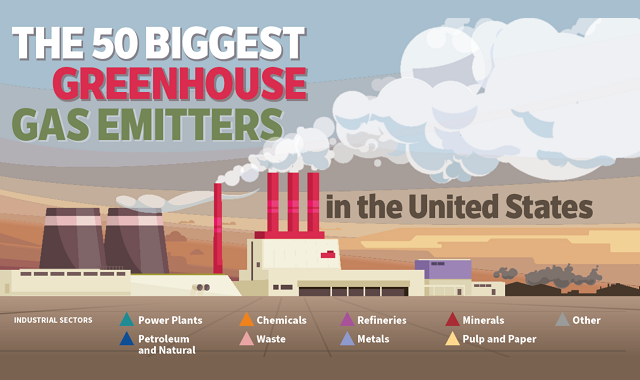
Who are the United States top polluters when it comes to green gas emissions? According to a report from the Greenhouse 100 Polluters Index, emissions in 2019 were recorded and ranked by CO2 metric tons. There are ten different categories of industrial sectors that include power plants, petroleum and natural gas manufacturers, chemicals, waste, refineries, metals, minerals, and pulp and paper.

Climate change has been a major issue for decades and unfortunately, very little is done about it. the infographic below reveals some brutal realities of the effects of climate change. The report under the title of Climate Change 2021: The Physical Science Basis shares the updates regarding climate change consensus on global warming in 2021. The main highlight of this report is that by 2030, a 1.5-degrees Celsius change could be reached which can bring a lot of extreme consequences to the weather events.
Extreme weather events such as wildfires, cloudburst conditions, drought, cyclones, earthquakes, etc. are some of the most common effects of climate change. The number of these rare weather events is increasing drastically all around the world.