Visualistan: Plastic -->

    Social Items

The Top 10 Most Littered Plastic Items in the United States


Plastic when first appeared, it attracted attention as the miracle material. Plastics made it possible for man to reach moon, it modernized medicine, and helped make computers and cellphones possible.


Other than these benefits, plastic has a darker side. The world generates over 350 million tons of plastic waste every year, and over one-fifth of that is mishandled. As a result, plastic waste can now be found everywhere on Earth, from the highest peaks to the deepest seas. There is also proof that plastics at the Nano scale can pass through cell walls.


This infographic takes data from Keeping America Beautiful’s 2020 National Litter Study and asks the question: what is the most littered single-use plastic item in the United States?
 

The Top 10 Most Littered Plastic Items in the United States #Infographic

A Visualization of Mismanaged Plastic Waste by Country


Although plastic is one of the most useful materials in today’s date, but its increasing has created an expanding layer of plastic waste. An approximate of more than 350 million tons of plastic waste is generated each year.


About one-fifth of plastic is mishandled which means it is disposed of without proper waste management practices, and only a portion of plastic waste goes for recycling. The mishandled plastic waste is dangerous to the land and marine life. The biggest threat is that the most of it does not decompose thus, polluting the environment for hundreds of years.


This infographic illustrates the biggest contributors of mismanaged plastic waste in 2019, based on data from a study by Meijer et al. published in the Science Advances journal.


A Visualization of Mismanaged Plastic Waste by Country #Infographic

Which companies are polluting the world with their plastic waste?

Climate change has become a topic that cannot be neglected now. As the world is progressing, the climate has been affecting due to various activities of the industries. From plastic waste to harmful gases, everything is contributing to global warming. In order to aware the world of the disastrous climate change that we are heading to, a lot of campaigns have been initiated. People are trying to find alternate ways to reduce pollution and save nature. Similarly, many industries have opted for the techniques and created eco-friendly policies and don’t cause harm to our planet. According to the latest reports of 2020, there are still some industries that do not care about climate change; in fact, their plastic waste has doubled with time.

Which companies are polluting the world with their plastic waste? #infographic

Oceans with 12.7 million tonnes of plastic

A human is not only responsible for the lands where he dwells but being an intelligent being; he is given the responsibility to make the environment better and safer for both humans and other species. Having said that, an issue has been brewing for decades, but no one has done anything to find its upright or permanent solution as yet. The contamination of oceans caused by plastic has not only subjected the entire marine life to danger but also caused the water to lose its strength.

Oceans with 12.7 million tonnes of plastic #infographic

Plastic Waste: Countries that are Importing and Exporting

Mass production and consumption of all kinds of materials have led to disastrous results. Among these materials, plastic remains the most problematic. This is mainly due to its decomposition rate, and the variety of ways in which it is harming not only the environment but also the marine life. The countries where mass production takes place on a huge scale, is currently producing tonnes of plastic waste.

Not all countries are capable of handling plastic waste though. Among the major exporters of plastic waste are countries that are also considered global economic leaders; namely the United States, Germany and Japan. Following them on ranks fourth and fifth are France and Italy respectively. All these countries have been giving out massive plastic exports to countries that are not fully equipped with dealing with plastic waste on such a huge scale.

Plastic Waste: Countries that are Importing and Exporting #Infographic

How China's Plastic Ban is Disrupting Global Recycling

All the way from the 10th century until now, plastic has become almost inherent in our lives. Its common use is due to being inexpensive and versatile, so from packaging to the water bottles in our fridge, we can find plastic products almost everywhere. For instance, plastic bags also have a very high consumption rate worldwide, although many governments have started banning them.

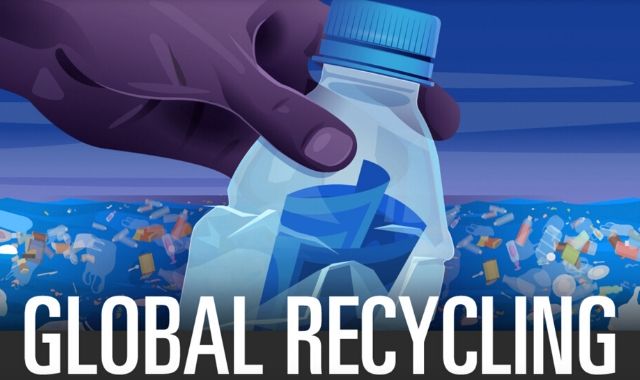
In light of the negative impact of plastic on our environment, many organisations have started calling out against its use. The marine life has been disturbed by dumps of waste, especially plastic material that is killing our marine friends in millions. Even in the long run, plastic is extremely harmful to our planet due to its super slow decomposition speed that can take as much as a millennium, that is a thousand years or even more.

How China's Plastic Ban is Disrupting Global Recycling #Infographic

Plastic: A Sensitive Case For Our Planet

To much extent, we are all aware of the environmental problems the Earth is going through. The growing heat, the major changes in climate and pollution of all kind, is effecting not only the quality of human life, but is also shortening the life span of our dear planet and all the creatures that inhabit it. Amongst these environmental factors, the drastically increasing production of plastic and its consumption plays an important role unlike any other material.

Plastic is known to have a very durable life. If there are no humans left on Earth and all our devices and belongings are slowly left to decompose, plastic is one of those materials which will exhibit the most decomposition time - as much as a millennia! Since we are overusing the Earth's resources, the production rate across every industry has only increased. We have been entangled in this really strange race of mass production and consumption. This too has been a rising factor, as it has resulted in a lot of plastic being prepared to package all kinds of goods and products.

Plastic: A Sensitive Case For Our Planet #Infographic

The 7 Types of Plastics: Their Toxicity and What They are Most Commonly Used For

Plastic is used to create so many of the products that we all use in our daily lives, ranging from everything from the containers that we use for our food to the packages that hold our medicine, and then even down to very common household materials. Yet, did you know that plastic toxicity is becoming a rising concern?

It makes you think just how safe we actually are when it comes to the plastic products that we're using each and every day. In this infographic from Alan's Factory Outlet, you'll learn all about the seven different types of plastic, ranging from Polyethylene Terephthalate to Polystyrene and everything in between. Polyethylene Terephthalate (known as PET or PETE), for example, is commonly used to make things like soda bottles, beer bottles, water bottles, peanut butter jars, rope, and even tote bags. It mainly consists of the most commonly recycled plastic.

The 7 Types of Plastics: Their Toxicity and What They are Most Commonly Used For #infographic


The Country Most Responsible For Ocean Pollution
A group of researchers from the United States and Australia along with Jenna Jambeck, an environmental engineer at the University of Georgia conducted a study of the plastic waste levels in the world’s ocean. According to their findings, China and Indonesia were the biggest culprits of ocean pollution. In fact, TheWall Street Journal reports that both the countries combined are responsible for more than a third of plastic litter in the global waters.

In the year 2010, researchers reported China to eradicate almost 8.8 million metric tons of mismanaged plastic waste. It was also estimated that approximately 3.53 million metric tons of waste ended in the ocean.

Similarly, Indonesia was responsible for 3.2 million metric tons of mismanaged plastic waste, from which 1.29 million metric tons became plastic marine debris.

The Country Most Responsible For Ocean Pollution #Infographic

Plastic Bottle Consumption and Recycling

To be honest, the fact that plastic does not cover every square foot of the planet is quite surprising. Research has estimated that 6,300 metric tons of waste have been created by humans since 1950, of which only 9% have been recycled. The same report projects that if the trends in waste management continue at this staggering rate, it will double the amount of waste by 2050. Scientists also argue that plastic is highly likely not to break down at all.

No matter how you view the current picture, it only shows one thing: Plastic suffocates Earth. CitiGPS's report estimates that single-use plastic bottles constitute 15% of ocean waste. The greatest plastics problem is the fact that they don't break down. Degrading plastic into smaller pieces called microplastics takes about 500 years.

Plastic Bottle Consumption and Recycling #infographic

The Last Straw
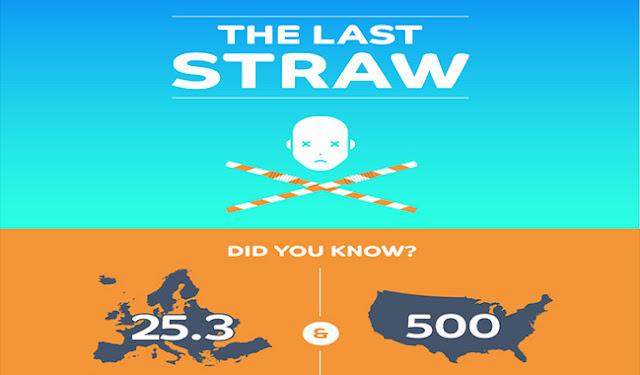
Plastic straws get a bad rap. These ever-present modern-day tools serve a simple function, helping us suck our drinks down without putting cups to our mouths. Arguably totally un-essential (except those that may require them due to physical limitations) we use them once and throw them away. But times are changing. Companies are choosing to replace them with paper straws or other eco-friendly alternatives. Consumers are saying no. Governments are working towards banning plastic straws. Is it all but time for the last straw? Check out our plastic straws infographic below.

The Last Straw #infographic

Plastics Waste in Our Oceans

Around the world, we use over 320 million metric tons of plastic each year, 2.41 million metric tons of which ends up in oceans The Great Pacific Garbage Patch In 1997, Charles Moore first reported the Great Pacific Garbage Patch (GPGP) By 2009, plastics could be found on seabeds throughout the oceans By 2013, microplastics.

Plastics Waste in Our Oceans #infographic

Subscribe Our Newsletter