Visualistan: Hiring -->

    Social Items

Rethink How You Employ

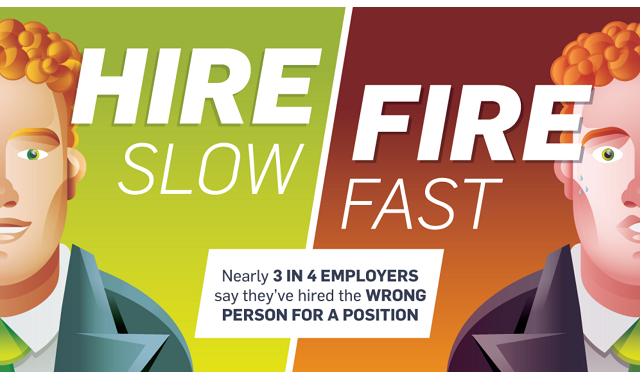
Though employers are often counseled to hire slow and fire fast, the minority apply this advice. By joining the few, you too can see the abundant difference it produces. 


The hiring process indicates more than just replacement or fulfillment of roles. It entails a thorough process of reflection, alignment, and recruitment. To start, employers must devote time and energy to reflecting on the specific credentials required for optimal employee performance. Then, job descriptions can be drafted but should be strategically written in the framework of company goals, outlining how onboarders will contribute to goals outside of their position. In the revision process, employers should detail how future employees can find success within the company, defining the attributes and abilities needed for promotion and the assignment of additional responsibilities. Finally, a brief description of how optimal employees can nurture the work environment ensures that candidates with attitudes in check are the ones who walk through your door.
Rethink How You Employ #Infographic

LinkedIn upgrades its job applicant matching systems

The number of profiles reached 690 million on LinkedIn due to the unmatched career and education database. Now is the time when LinkedIn should update its job applicant matchings so that the right individual is hired for the right job. This will enhance the recruitment outcomes for the interested candidates as well as for the recruiters.

With the use of the dataset, LinkedIn is likely to contrive the accurate candidate recommendations for the job based on similar opportunities and companies. However, it could also lead to an unintentional biasness and put forward men instead of women for a certain role due to the inferred algorithm that gives suggestions based on companies recruiting history. This is the point where LinkedIn has to deal with super stride.

LinkedIn upgrades its job applicant matching systems


Employees are one of the most significant assets of a company because they are the workforce behind its success. Finding the right employee and recruiting them is a tough task that, if done wrong, can also be disastrous for a company. Job recruiters hire people who are best for the job – pretty simple, right? Wrong. There is a lot more in the recruiting process than what meets the eye.

Secrets shared by recruiting experts #infographic


Available Jobs during the Pandemic
As a result of the COVID-19, many employers are forced to discharge their workers – either temporary or permanently, leaving many people jobless during these testing times. However, there are some industries that are hiring. And not only for limited vacant positions but employing for hundreds and even thousands of positions.

With a majority of the world facing some intensity of lockdown in their regions for indefinite periods, the people are scrambling to fill their homes with the necessary groceries and other household supplies. This has left grocers and those dealing with food delivery with multiple openings.

According to a report by NPR and Market Watch, there are many retail and delivery companies looking to fill open positions during the ongoing coronavirus. In fact, Grocery delivery company Instacart has an opportunity for almost 300,000 gig workers while Walmart and Amazon are looking to add at least 150,000 and 100,000 workers respectively.

Moreover, the food joints that are open for take-out and delivery are also seeing a surge in their business and have open positions for interested workers. This includes Pizza Hut and Papa John’s Pizza, which have more 20,000 vacant positions – for temporary and part-time workers.

Available Jobs during the Pandemic #Infographic

How To Find and Hire The Best Candidates

It is just as important for the employer to be prepared during a job interview as the applicant. Nearly 7 in 10 hiring managers struggle to fill crucial positions and end up with a bad fit. The cliche ”describe a time when…” line of interview questions have become standard, but you can’t find the perfect fit for your company by asking the same questions everyone else does.

Ask questions along the lines of “What do you know about us and why do you want to work here?” Open-ended questions such as “Could you tell me about a time when you were bored at work” make people think about their real answer rather than the sought-for response. For applicants, take the time to stand out before your interview.

 Research the company you’re interviewing with, have a strong LinkedIn presence, and connect with others by creating and engaging with content Finding the perfect new hire starts with asking the right questions.

This infographic exemplifies strong interview questions to ask while on the hunt for strong candidates.

How To Find and Hire The Best Candidates #infographic

10 red flags to watch out for when hiring your next employee
Nearly three fourths (74 percent) of employers say they’ve hired the wrong person for a position. That’s bad news: Employers have a lot to lose when an employee doesn’t work out.

The hiring process takes an average of 42 days and may involve hours of face-to-face meetings, testing, paperwork, contacting references, and performing background checks. Companies spend an average of $14,900 per bad hire. Want to make sure you hire the right person for your next job opening? Check out the infographic below to discover 10 common red flags to look out during the hiring process.

10 red flags to watch out for when hiring your next employee #infographic

The Dos and Don’ts of Interviewing
Unemployment is back down to a low 3.9%, but American are switching jobs more frequently. Whether their looking for a step up on the career ladder and more pay, or just a better work environment and more work-life balance, millennials are more switching jobs at twice the rate of those just a few years older. That means more time job hunting and more competition for work.

There are some things that everyone knows, or at least should know, about going to a job interview: be on time, dress professionally, talk about your strengths. But the job market is changing, and nearly half of job seekers think it’s getting harder to find work. In order to land that job you’ve always dreamed of you’ll have to find a way to stand out in the crowd and show you can be a doer. Check-out this infographic for tips and tricks for your next interview:

The Dos and Don’ts of Interviewing #infographic

25 Incredible First Impression Biases When Hiring
You only get one chance to make a first impression. We’ve all heard this a million times, and research definitely supports it. A psychologist at Princeton conducted a study that found our brains need only milliseconds to form opinions of new people. That’s pretty disconcerting if you are nervously walking into a job interview. There is a large amount of research that implies first impression biases affect hiring. Employers make decisions on applicants while reading their resume, or from non-verbal cues like clothing or the firmness of a handshake.

25 Incredible First Impression Biases When Hiring #Infographic

On-Brand Interviews Do's and Don'ts
Successful interviews are crucial in hiring the right candidates. 70% of job seekers say the application process experience impacts their decision to accept a company's position or not. Make sure your team is putting the right foot forward throughout the hiring process.

On-Brand Interviews Do's and Don'ts #infographic

Top 5 ​Interview Questions to Ask
Interviews can be stressful, but doing your research and being prepared can make it a positive experience. By having well-through-out questions at the ready, you'll determine if a job is a good fit for you, and you'll stand out from the competition. Not sure which questions you should be asking? Here's a simple guide to help.

Top 5 ​Interview Questions to Ask #infographic

Interviews Are An Important Part Of The Employee Vetting Process
If a recruiter is on the fence about whether a candidate could be a good fit for a role, they rely on asking the right questions during the interview process. Going past the basic interview questions, such as “What was your biggest failure and how did you overcome it?”, these more in-depth questions can give interviewers a better idea of how the candidate will react under pressure or in certain situations.

Recruiters ask questions that delve into the company’s core values and specific needs, as well as the candidate’s priorities for their career and work. Jeff Haden recommends asking questions like, “What things do you not like to do?” as a way to gauge if they would enjoy some of the mundane tasks you know will be a part of the role. Recruiters can also get a better view of a candidate’s personality by asking something like, “What animal best describes who you are?” to learn which traits they value.

Interviews Are An Important Part Of The Employee Vetting Process #Infographic

DIY Vs Hiring a Pro: When to Do It Yourself, When to Hire a Pro
When something needs to be fixed at home, it can sometimes be hard to decide if you can tackle it yourself or if you’ll need to get a professional in. This often depends on your skill-set but generally there are some jobs best left to the professionals. You also don’t want to waste money if it’s a job you can do yourself. Find out more in the infographic.

DIY Vs Hiring a Pro: When to Do It Yourself, When to Hire a Pro #Infographic

Hiring Statistics You Need To Know For 2017
Hiring a new employee can affect everything from company culture to company profits. So, it’s no wonder the interview process can take about a month and almost two months to give an official offer to an applicant.

With more and more millennials entering the workforce and older generations retiring, hiring expectations are constantly evolving. Each group is very different in what it wants and needs at a job, causing a major shift in the industry.

Hiring Statistics You Need To Know For 2017 #Infographic

Why Grades Aren't Enough
It turns out that 4.0 GPA you earned in college means bupkis. Sure, you needed to do it to keep your scholarships and make your parents proud, but in the real world grades just don’t matter. What matters much more than your college transcript, where you went to school, or your major is your personality.

Why Grades Aren't Enough #Infographic

Hiring the Right People
Regardless of the type or size of a business, hiring the right candidates is imperative to achieving growth. It takes more than a quick glance at a resume to know if a candidate is going to be the right fit. Once you have attracted and hired the right candidate, it is important that mangers know how to retain them.

Hiring the Right People #Infographic

How Non-Techies Can Find the Right Tech Talent
Finding a job is a difficult process. It is so stressful and hard that you can even consider it a job itself. But, that is something we need to live with. While finding a job is not easy, finding the perfect employee is even harder. How would you manage to find a perfect person for a job? Can you even imagine how stressful would it be to have such a great responsibility? The process of hiring takes a lot of effort, knowledge and understanding of the job requirements. But, how can you find a perfect person if you don’t have enough knowledge about the job? For example, finding tech talent is hard and it gets even harder if you don’t have tech expertise. But, luckily that is not impossible, not if you have the help. With the help of this useful infographic you will get all the help you need to find tech talent even if you are not-techie.

How Non-Techies Can Find the Right Tech Talent #infographic

Facebook Recruiting
If you are a recruiter, or if your company is recruiting, should you look for potential employees on Facebook? You might want to just because of Facebook’s enormous membership base. It has certainly got LinkedIn beat when it comes to number of users. Indeed, 85% of Internet users have Facebook accounts.

Facebook Recruiting #infographic

Recruiting the Millennial Generation: How it Differs and Where to Start
For years, companies have labeled Millennials as entitled and narcissistic. But as savvy employers can tell you, this simply isn’t true. Millennials, also known as Generation Y, are just different. As a generation, they’re more confident, tech savvy, optimistic, and connected than previous generations. But they also differ in what they want, the skills they bring to the table, and how they communicate. While some companies are slowly adapting their recruiting methods to appeal to this new generation of employees, others refuse to change. Those companies that are slow to adapt may ultimately hurt their own bottom line—especially since Millennials will represent 40 percent of the workforce by 2020.

Recruiting the Millennial Generation: How it Differs and Where to Start #infographic

Subscribe Our Newsletter