In 2017, 39% of high school students taking the ACT lacked the English skills necessary to successfully complete a college course. After college, 44% of hiring managers say recent grads still lack writing proficiency.Present a balanced analysis of the topic Use facts, statistics, and examples ã„§ avoid emotional appeals Persuasive: Convinces the reader to believe or do somethingPresent a balanced analysis of the topic Use facts, statistics, and examples ã„§ avoid emotional appeals Persuasive: Convinces the reader to believe or do something.
There is a prevailing wisdom that says the stereotypical American consumer can be defined by certain characteristics. Based on what popular culture tells us, as well as years of experiences and data, we all have an idea of what the average consumer might look for in a house, car, restaurant, or shopping center.
But as circumstances change, so do consumer tastes – and according to a recent report by Deloitte, the modern consumer is becoming increasingly distinct from those of years past. For us to truly understand how these changes will affect the marketplace and our investments, we need to rethink and update our image of the modern consumer.
We are living longer and retiring later, which means that up to five generations of employees now have to learn how to work together under one roof. In most workplaces, this is realistically limited to four generations, with people born shortly after the Second World War having to adapt to the working styles of their digitally savvy colleagues, and those younger employees having to respect the experience and traditional ways of working of their older peers. But how do working patterns of these very distinct generations differ and how are businesses adapting to this new norm?
How would you describe your management style? So much emphasis is put on what divides ‘good managers’ from ‘great leaders’ that we often fail to notice how one-sided both of these terms can sound in the workplace. Instead, managers are discovering that ‘coaching-style’ leadership brings out the strengths in a team by focusing on constructive feedback and asking questions instead of giving orders.
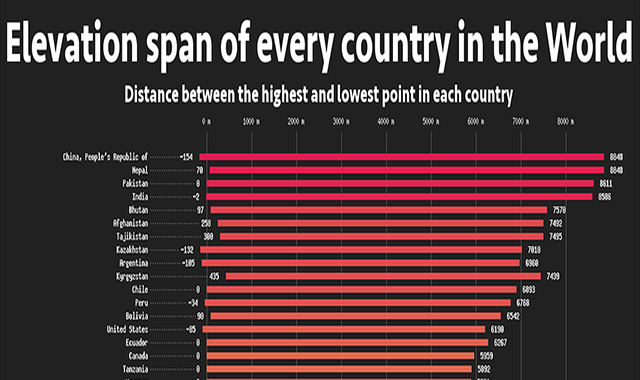
These countries are those in the world with the highest average topographical elevation of all of the landmasses within their respective borders. Though Himalayan countries top the list, it includes countries from Asia, Europe, Africa, Antarctica, and South America alike.
The Tibetan Plateau, also referred to as the ‘Roof of the World’ is the highest part of China with elevations more than 5,000 feet above sea level. The world’s tallest peak above sea level, the Mount Everest (pictured), also lies at the Sino-Nepal border. Besides these well-known topographical regions, China has high elevations over much of its topography with the average elevation of the country being 6,035 feet above sea level.
We live in a time of air travel and global exploration. We’re free to roam the planet and discover new countries and cultures. But how much do you know about the people who lived and explored these destinations in times past? Learning the etymology – the origin of words – of countries around the world offers us fascinating insight into the origins of some of our favorite travel destinations and the people who first lived there.
Many people could tell you what the stars and stripes represent on the flag of the USA, or why the Canadian flag is emblazoned with a maple leaf. But most of these people could not be as confident in clarifying the reasons for the unusual shape of the Nepalese flag and would struggle to explain the reasons behind the curious presence of an AK-47 on the flag of Mozambique.
There is huge variety in the colours and designs of national flags, but there is much more to consider than first meets the eye. A flag is not simply designed to look good flying in the wind, but often symbolises the culture, history and ideals of a nation. Just The Flight has explored the stories behind some of the world’s most interesting and recognisable national flags in the fascinating infographic below.
Whether you seek to explore distant lands, or you just want to sit on a remote island beach with a margarita, your passport can be your biggest travel asset. The right document grants you visa-free access to over 150+ countries, and makes applying for entry to the other places a short and easy afterthought.
But a passport can also be your biggest liability. Having a passport from the wrong place means travel is extremely restricted to just a few countries – and these are generally not the places travelers want to go, anyways.
Artificial Intelligence is transforming the way we live, and the tech giants are racing to stay ahead of the curve. AI-related funding totaled an estimated $15.2 billion in 2017, a 144% increase over the previous year. The U.S. tech industry leads with a 50% share of those investments, even with China swiftly closing the gap in terms of patents and AI research.
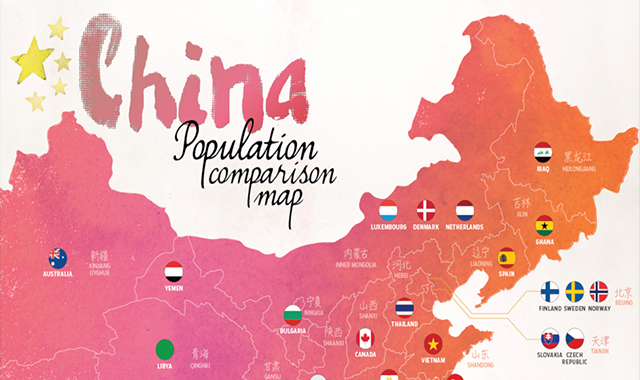
The very mention of China triggers both awe and anxiety in the mainstream media. With the globe’s largest GDP (PPP) at $23.12 trillion, China is indisputably a close contender for the title of world’s largest economic superpower along with the United States. But what makes this possible in the first place? The country’s economic clout arguably stems from its human capital: a 1.4 billion-strong population.
The Life Sciences industry is carrying out some of the most vital research in the world – but there’s now evidence to suggest that some of its methods are becoming outdated. For pharmaceutical companies and clinical research organisations, the ever-increasing focus on improving trial outcomes and data quality, combined with growing demand for more diverse research, means that across the board, emphasis is shifting from volume to value.
Patient experiences lie at the heart of great, quality research. If providers want to meet demand for higher-quality, higher-value research, they need to work on making their processes and trials more patient-centric.
There is no more need for an expensive satellite or huge television to participate in a live event that is happening on the other side of the country! Live streaming is an accessible tool for communication through various platforms such as Facebook, Youtube, Linkedin, and more.
Whether it be not being able to attend a business conference or simply preferring to watch a concert from the comfort of your home, live video is an effective step towards higher engagement, further reach, and speedy conversion. Use live video to educate your audience, build a community around your brand, or give your followers a sneak peek inside the company! When learning about a new brand or company, 69% of users prefer video to text.
Live video is not only a simpler way to provide content that is easy to share and is cost effective, but also encourages trust and transparency. You don’t want to get left behind as video is predicted to make up 82% of all internet traffic by 2022. Learn more about what people watch and tips to get started with live video here.
Subscribe to:
Posts (Atom)