Curious researchers at Irish Dual Citizenship created a map indicating how many international tourists every country in the world receives. The map shows us which countries tourists flock to and which are largely undiscovered by the rest of the world. The countries that tourists skip over are often very small, difficult to get to, or unsafe.
A strong passport allows holders wide access to many countries without the hassle and inconvenience of a Visa. Other countries may require a Visa upon arrival, making it easy to initially enter the country. When Visas are required for entry, travelers can get caught up in a lot of red tape, fees, and the possibility they won’t be allowed past the border. The team at Italian Dual Citizenship determined which countries have the greatest access to Visa-free travel and the most restrictions.
Airports can be the most crowded and stressful places in
the world because of the slow-moving queues and bustling gates. Regardless of
the negative aspects associated with commercial air travel, on a general note,
it is an impressive system, with the biggest air transit hubs recording
passenger traffic numbers that rival the populations of large countries.
The Infographic used here has data from Airports Council International (ACI) to rank the top 10 busiest airports in the world, looking at total passengers enplaned and deplaned, with passengers in transit counted once.
When we talk about visa openness and easy travel for African
citizens, the most open countries in Africa to list are The Gambia, Benin, and
Seychelles. According to the 2022 Africa Visa Openness Report, the three countries
do not require a visa from citizens from any country on the continent. In contrast
to these countries are Egypt and Sudan, as they rank on the last spots of the
list and require a visa from citizens from all other countries.
Out of 54, 36 of African countries have improved or
maintained their visa openness score since 2016 making Intra-continental travel
an ease for African citizens. Partial appreciation is for the start of acceptance
of e-visas, growing from 9 countries offering the service in 2016 (when the
first report was published) to 24 nations, including South Africa and Morocco,
according to last years’ list.

Covid-19 has not yet left the world, in fact, is gaining strength in the form of new variants. The entire situation has forced the world to once again imply the lockdown in several countries. Speaking of the travel bans, Asia has been pretty cautious to open its borders throughout the Covid-19 pandemic.
However, with the spike in more cases, the differences between Asia and other continents are increasing. According to the infographic, since June 1 nearly 70 percent of Asian countries had restricted people to travel from or to their nation. This accounts for a 9 percent increase in the closure of the borders since September 2020.

We know that the industries that were hit the hardest by the Covid-19 pandemic include the travel industry and entertainment industry. The World Travel and Tourism Council released the latest data that shows how drastically the pandemic has impacted the tourism industries around the globe in 2020. According to the infographic, the travel and tourism industry had a setback of an unimaginable $4.5 trillion and therefore its contribution to the global GDP declined by an incredible 49.1 percent in 2020.

World Tourism Day is celebrated on 27th of September on which the world appreciates the ability of tourism as how it positively impacts the lives of people across different regions. Tourism also supports and protects different religions, cultures, rituals and traditions all over the world.
2020 has not been a great year for tourism and interrupted plans of every tourist. Hence, Google partnered with the World Tourism Organization (UNWTO) and agreed with their statement, i.e., “we stay home today so we can travel tomorrow”.
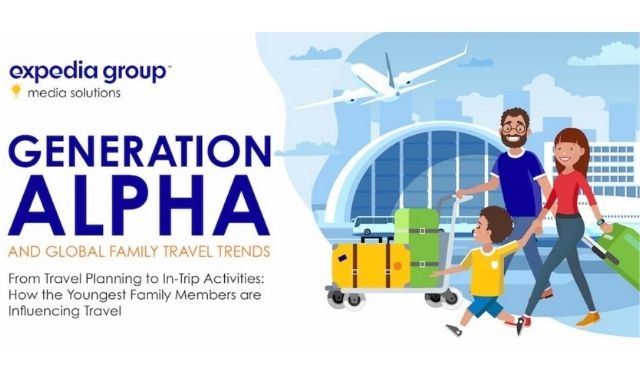
Generation Alpha is the term used for people between the period that defines the beginning of the 2010s, up till the mid-2020s. Since these are kids born after 2010, their maximum age right now would be 9 years old. Now we can all only imagine and if you have a kid that falls in the Generation Alpha category, then you know how technology has completely taken over these kids. It's not like the old times, where technology was at the basic level and far out of reach of children.
Talks about travel and tourism have been around even in the wake of the global pandemic. For humans, nothing can quench the thirst for adventure. There are a few names that always come at the top when we consider travelling. These cities have held prestige for being the ultimate tourist attraction over the years. Yet the fact cannot be changed that each city around the world brings something special to the table with its distinct culture.
London gives the classic England vibes and it is known for its mostly cloudy weather. Or the fresh Renaissance spirit and vibes that generate from Florence, Italy. If we come a bit toward the East, then Agra in India reminds us of the legacy of Mughals— one of the many Indian cities to do so, due to the magnificent Taj Mahal, a marvel and one of the seven wonders of the world. Every city within a country has its own specialities to explore.
It goes without saying that the nature of COVID-19 has affected the travel and tourism industry the most. Airlines, hotels, and local modes of transit such as taxis and trains have all suffered equally at the hands of the global pandemic. Many businesses have adapted to the changes caused by the coronavirus impact, and the trends in travelling have also changed.
Not just from the business end, but plans at the traveller's end have also changed. This has affected travellers from all across the globe. As per a recently conducted study, travellers have responded as to how they changed their plans in the wake of the COVID-19 crisis. This is an important learning element for those who are working in the travel and tourism sector, as understanding the evolving changes can help make better marketing decisions and in turn, gain more customers.
Earlier in 2020, the UN’s World Tourism Organization published an estimate that predicted how Coronavirus pandemic could affect tourism rate this year. Three scenarios were published out of which only one was positive. The one published in May predicted that travel restrictions would be eased by July. With this scenario, which was surely too optimistic and early for the international flights to resume estimated a tourist drop by 58% in comparison to the tourist rate in 2019.
How many types of travel brands are there? It's not just about hotels and airlines. But how much money do the brands in these categories make? Decisions for each category are made easier with the help of websites like TravelAdvisor, that offer ratings to clear up the travellers' minds. In fact, TripAdvisor itself is included in one of these categories and it earns through ads on the website and commissions via customers' bookings.
Definitely, when the tourism industry is mentioned, airlines and hotels are the first one to cross our minds. Although travelling by land is popular within a country and adjoining countries, but flights remain the top choice for travellers for cross-country travelling. It's not just the seat via which airlines run and make money, but additional fees for extra luggage, entertainment onboard, hosting services and much more. Not all airlines are at the top though, for example, Air Canada has faced massive revenue decline.