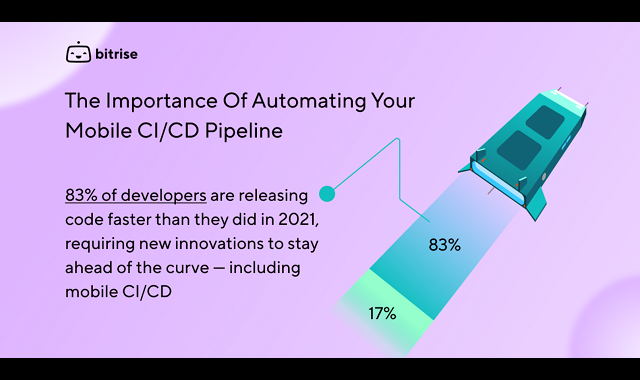
In the modern world, both technology and the market for mobile apps have been growing quickly. Every day, billions of people rely on mobile devices for their everyday needs. Mobile continuous integration and continuous delivery (CI/CD) techniques are being used by developers to fulfill the growing demand and hasten the process of creating and releasing apps.
Twitter is revamping its TweetDeck platform, that provides
an easy-to-read format of lists and feeds. The TweetDeck app was launched 12
years ago and Twitter acquired it in 2011, and ever since, the app has never
received any major changes in its features or design. After all these years, it
seems like Twitter is finally focusing on bringing some updates to the app.
According to Twitter’s product chief Kayvon Beykpour, he and the product team is actively working on updating the TweetDeck project, that they intend to show off later this year. “We’ve been working on a pretty big overhaul from the ground up of TweetDeck, and it’s something that we’re excited to share publicly sometime this year,” Beykpour said.
Apple’s latest OS for iPhone, iOS 14, allows users to create personalized home screens. Users can even create custom app icons using the Shortcuts app, which serves as an intermediary between themed icons that can be created and the apps linked to them. Designer Doney Den Ouden has launched a collection of unique custom app icons called Bold, which is giving a fresh, new look to the iPhone app icons.
Hey! 👋 Today I'm launching 𝗕𝗼𝗹𝗱: a beautiful set of friendly and balanced icons for iOS 14.
— Doney den Ouden (@doney) October 8, 2020
Most iOS stock icons are now 7 years old 😳 Bold reimagines these icons in the design language of iOS today ✨
🎨 https://t.co/1gj1wTVzb8
Enjoy 🤗 pic.twitter.com/I44a0XR3Di
Majority of the stock icons in iOS 14 were last updated 7 years ago with iOS 7, and their design has therefore become outdated as the latest design language of iOS is completely different, with bolder typography and rounded icons that give off a more aesthetically pleasing look.
Instagram is testing some new layouts for its homescreen with sections designed for Shopping and Reels that it shared with the public. There are three designs in total that the company has created, which, according to the company, represent the way users are using the Instagram app.
*Testing, testing* different versions of the home screen. ✨
— Instagram (@instagram) September 9, 2020
Open Instagram and you’ll soon see a Reels and Shop tab in one of these layouts.
These updates represent how people are using the app and giving extra love to creators, videos and shopping. 🤳📹🛍 pic.twitter.com/Rnyf37ddQb
Each design has focused on the Reels and Shopping sections. For instance, Reels can be seen replacing the Explore tab, while the Activity section is replaced by Shopping in another design with Explore and Activity moved to the top right corner. In the third layout, all six shortcuts, Home, Explore, Reels, Shop, Activity, and Profile are crammed in the bottom, while the shortcut to create a post is moved to the top right.
Mobile apps are gaining immense popularity in all spheres of life in an age when the world is heading towards digitalization and are becoming an integral part of the digital ecosystem. During the past few years, several tech companies have seen a massive investment in the mobile device development industry. Small businesses also slowly understand and integrate the importance of mobile apps into business processes.
Mobile apps help companies create brand awareness, offer custom content, increasing customer engagement, cut costs, and increase sales. The success of mobile apps can be demonstrated by the fact that there are 1.96 million applications on the App Store and 2.46 million apps on the Google Play (as of the second quarter of 2019).
The introduction of advanced technologies–the Internet of Things, Chatbots, Artificial Intelligence, Machine Learning, Blockchain, Augmented and Virtual Reality, etc. –has greatly impacted the mobile app development industry. Such innovations will continue to take the growth of the mobile app by storm in 2020.
Have you ever noticed how fun and enjoyable our world is when different types of mobile apps have arrived? By connectivity, education, banking, etc., these devices make the world a smaller place. At the same time, they work in different ways to make them even closer to people.
Today, in different fields like safety, education, sports betting, banking, real estate, etc, you can access blockchain apps. But the question arises here is, are they safe? Which action are they taking to protect our data?
In the modern world, more and more companies face the need to create a mobile app to solve various business issues and reach long-term development goals. A mobile app not only opens up new development opportunities but is also extremely necessary in high-competition conditions.
If you have decided to create a mobile app, your first question will be where to start and how not to miss important points. You can find a lot of info on what has to be taken into account from the development point of view. However, if you are just a beginner, you are most likely interested in the app development algorithm and specific steps you have to take to start the development.
The number of app development steps depends on the project size and existing input data to it. In any case, you have to comprehend that we are talking about fully-fledged product creation. Consequently, you should take this task extremely seriously.
This infographic shows how a successful stepwise mobile app development process should look like in practice.
Customer retention is a crucial aspect for companies to focus on. Acquiring a customer is a hefty task, but so is retaining them and building long-time professional relationships. This infographic reveals some important tips to retain mobile app customers and nurture relationships with them, along with some cool facts!