Visualistan: Virus -->

    Social Items

The Global HIV Problem


World AIDS day was found in 1988 with the purpose of raising awareness for AIDS and HIV diseases, showing support to people who live with HIV and remembering those whose have died from illnesses related to AIDS. It takes place on 1st December each year, which was also the first global health day.


According to an estimate, nearly 650,000 people were killed last year due to HIV, particularly in under developed regions of the world. This shows that HIV is still a global health burden.


The Global HIV Problem #Infographic

Japan detects a Coronavirus strain similar to that of UK

As per the announcement by Japan’s Health Ministry, a new strain of Coronavirus has been detected in four passengers that arrived from Brazil on 2nd January. The passengers include males and females both with an age range between teens to 40s. One male in his 40s was positive, but asymptomatic upon arrival was admitted into the hospital because his respiratory system started weakening. The National Institute of Infectious Diseases (NIID) told on Sunday that the new variant exhibits similarities to those found in the UK and South Africa.

Japan detects a Coronavirus strain similar to that of UK

New South African variant of Coronavirus has bigger risks

The different variants of the Covid-19 virus possess different risks. We all were familiar with the UK variant of the virus, which had greater risks to human health. However, according to Matt Hancock, the British Health Secretary, the recently identified variant of the Coronavirus in South Africa is far riskier and likely to cause even more serious health infections in humans than the UK variant.

New South African variant of Coronavirus has bigger risks

Number of COVID-19 vaccine doses bought by countries

The world has been fighting with the COVID-19 for almost a year. As many as 1.77 million people have lost their lives to the deadly virus, and millions are still battling against it. With the development of COVID-19 vaccines, the entire world has started to see the light of hope on the other side of the tunnel. As soon as the success of vaccines was announced, several countries pre-ordered a huge amount of doses to be delivered as soon as possible. The bulk purchases of vaccine doses have also contributed to the global share, which is revealed in the infographic.

The news of the COVID-19 vaccine rolled out in November, which excited the world, and since then, around 7.25 billion vaccine doses have been pre-ordered. Every country has bought the number of doses depending on the severity of Coronavirus cases in their nation. For example, the European Union has bought the largest number of doses, i.e., nearly 1.6 billion, which accounts for 21.86% global share. Followed by India on the second, where a number of COVID-19 cases are not showing any sign of slowing down, the country has miserably been hit by the virus and in desperate need of the vaccine urgently. India has pre-purchased 1.5 billion doses that make a global share of 20.7%. Since India is a low-income state, it made manufacturing agreements with the developers of vaccines to be able to get the desired number of doses for the nation.

High-income companies don't face any trouble in buying multiple batches of billion doses because of their stable economy; however, low-income countries will have to struggle for it. The lower-wage states are advised to leverage other ways of acquiring the vaccines, for example, provide volunteered services in exchange for the vaccines, as done in Peru.

Number of COVID-19 vaccine doses bought by countries #infographic


The cost of a computer virus

Computer viruses have been around for a long time. They are a piece malware or a spyware that malicious people put in your computer. Getting a virus on your computer is really annoying and you have to take a quick action to remove it before it causes any damage. Sometimes, these viruses are an easy fix but sometimes they aren’t. If you have had a virus get out of your hands and infect your computer then you are one of the 16 million Americans who have had the same problem in the last two years.


The cost of a computer virus #infographic

Why has it suddenly become important to keep your hands off your face? A guide:

Do you happen to know the fastest way to let the germs invade your body? Well, it happens to be your face, which is exactly why you need to learn how to manage the least possible interaction between your hands and face. Be it your home or a workplace; you must always stay prepared for a bacterial encounter at any time. A workplace is easily susceptible to germs, bacteria, and whatnot. It can only be battled with proper care and precaution. You must be a hundred times more cautious in public places where hundreds of people come and go, each may or may not be the carrier of germs.

Why has it suddenly become important to keep your hands off your face? A guide: #infographic

The battle of Africa against the deadly Poliovirus

It is no news that Africa has undergone many disasters, including famine and several widespread polio cases all over the African region. The spread of polio cases first began in the year 2000. The rate of these cases kept soaring by every passing year, and by the time, it entered 2005, the cases took a massive spike and reached around 1200. The continent of Africa has now become completely free of this virus after extreme measures.

The battle of Africa against the deadly Poliovirus #infographic

What makes health a priority in the age of Covid-19 pandemic?

One thing that every individual must have learned in this pandemic is the importance of one’s health, regardless of their age. The history of coronavirus cases reflects how strictly important it is to always maintain good health for nobody knows which wrath falls upon the earth. The infographic below has repeatedly emphasized the importance of good health, especially in the age of pandemic and isolation.

What makes health a priority in the age of Covid-19 pandemic? #infographic

Underlying conditions can lead to severe Covid-19

Have you ever wondered that if 98% of Coronavirus patients are likely to recover successfully, then why is the death rate extremely high in the United States? Well, the reason is the underlying conditions in adults. Many people recover from Coronavirus even with home-quarantine, but many are hospitalized, get admitted into the ICUs, end up on a ventilator but still lose their fight against life. The sole reason of increased severe cases and the death toll of Covid-19 patients is their underlying condition.

If we talk about the U.S. specifically, according to one of the recent studies of the Centers for Disease Control and Prevention (CDC), the majority of the Americans are suffering from some underlying conditions that have made them vulnerable to a variety of severe virus attacks. As per the U.S. census data, and study of Behavioral Risk Factor Surveillance System (BRFSS) from 2018 has shown that as huge as 40.7% of the American adults (commonly aged 18 and above) have underlying conditions.

Underlying conditions can lead to severe Covid-19 #infographic

All about Measles

Measles is caused by virus Rubeola belonging to the Paramyxovirus family; hence, also known as ‘Rubeola’. While most of the people believe that measles is a childhood disease, we are here to bust this myth. Measles can be caused at any age. This disease, however, has an effective vaccine against it but can become severe or even fatal in some cases. Measles is an extremely contagious skin disease that has the ability to become an epidemic. But, effective vaccines would work fine in containing the disease in a shorter time.

Measles is likely to go on its own within 7-10 days, but it is better to get vaccinated for it. Once a person suffers measles, he/she will gain immunity against it for the rest of their lives and won’t encounter the disease for the second time.

All about Measles #infographic

Most lethal viruses in the world

Viruses are microscopic yet extremely dangerous organisms on this planet. Many viruses cause mild infections; however, several others are known as the deadliest ones. Viruses are obligate parasites, which means that they require a host body to replicate and reproduce as they are completely inactive outside the host cell. Once these viruses enter a host body, they target the vulnerable cells and causes diseases. Viruses have the ability to cause neural, respiratory, cardiovascular, gastroenteritis, pharyngitis, sexually transmitted diseases, eye infections, skin infections and much more. 

Most lethal viruses in the world #infographic

All about Zika Virus

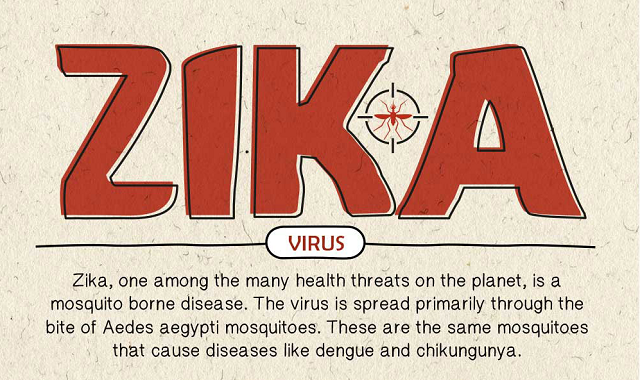
The discovery of the Zika virus dates back to 1947. It is a mosquito-borne virus that was initially found in the monkeys, but later in 1952, it was identified in humans as well. Uganda and Tanzania were the first two countries where the Zika virus attacked. Later the virus started to spread in various parts of the world.

Symptoms


Studies have found that the majority of the patients suffering from the Zika virus do not experience any symptoms at all. However, its symptoms usually are mild fever, red eyes, muscle, and joint ache, rash, and headache. People with the Zika virus experience the symptoms for about 2 to 7 days. The incubation time of this virus is 2 to 7 days in general.

Transmission


The leading cause of the Zika virus is the bite of a mosquito belonging to the Aedes genus. The peak biting time of this mosquito is early morning and late afternoon. Aedes mosquito is also responsible for transmitting chikungunya, dengue, and yellow fever. Some other modes of transmission include, from a virally infected mother to its fetus, blood transfusion, sexual contact, and organ transplant.

Diagnosis


This virus can be diagnosed by performing laboratory tests of suspected individual’s blood, urine, or semen.

All about Zika Virus #infographic

A New Android Bug Might Steal Your Data

Attention Android users! A new bug called Strandhogg 2.0 has the ability to attack all Android devices operating on Android 9.0 and earlier.

According to the Norwegian security firm Promon, this bug is an 'evil twin' of another bug that has the same name. Strandhogg 2.0 works by tricking the victim into entering their passwords on a genuine app with a malicious overlay. It can also take over other app permissions to hijack other sensitive data like your contacts, photos, etc., and even your real-time location.

It is also found to be more dangerous than the one that came before it because detecting it is hard. However, there's no proof so far about it being used in any active hacking campaigns. There are no effective ways to detect its attack yet and with the bug being capable of being abused by hackers, Promon has not released any more details about the bug and awaits Google to fix the vulnerability of its OS regarding this.

A New Android Bug Might Steal Your Data

History’s Deadliest Viruses Illustrated to Scale

Pandemics are nothing new, there have been quite a few times throughout history when a virus has ended up being deadly enough to induce panic on a worldwide scale. The Ebolavirus is a big one that comes to mind for many but what about other lesser known viruses that are just as deadly? The Dengue virus has a death toll of 22,000 people around the world every year, or the Rotavirus which kills an unbelievable 450,000 children annually!

This infographic from CEUFast.com ranks the deadliest viruses in history based on their mortality rate, with rabies sitting at the top of the list with a 100% rate if the disease is not immediately treated. Thankfully the rabies virus has a vaccine, but the same can’t be said for many of these deadly viruses which claim thousands of lives every year. How does the new Coronavirus that’s currently causing a worldwide pandemic compare to other viruses in terms of how deadly it really is?

History’s Deadliest Viruses Illustrated to Scale #infographic

Subscribe Our Newsletter