Will robots take your job? It depends on what career field you're currently in, as shown in this new infographic from the team at U.S. Career Institute, which looks at 65 jobs with the lowest risk of robot automation. All of the jobs listed as part of this study have an automation risk probability of a comfortable 0.0%, due to the fact that to perform these roles at a high level, an individual needs particular skills, knowledge, and abilities that a robot simply can't replicate.
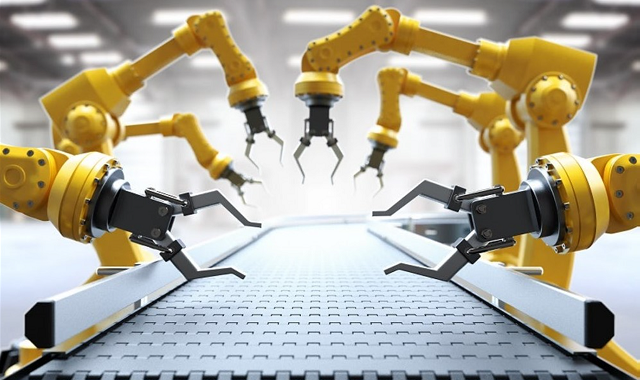
The word robot isn't native to the English language. The language from which the word was borrowed means forced labor. Robots work in different industries, working for hours, performing difficult and dangerous tasks that most people can't do. So in that sense, the phrase force labor fits. However, another description for a robot is a machine that performs specific tasks with accuracy, precision, efficiency, and speed.


What is RPA?
Robotic process automation (RPA) is a technology through which business processes are being changed in order to increase the productivity of the organization. RPA revolutionizes the way a company operates, streamlines the manual processes, and reduces the workload from human employees. Through RPA, companies gather digital workforce or “robots,” which are highly efficient and causes no errors at all. The RPA robots are created to interpret, manipulate data, trigger response, and perform various repetitive tasks with the same efficiency and accuracy.
Why RPA robots are important?
RPA software is embraced by almost every organization. From healthcare to IT companies and human resources to call centre automation, RPA is no less than a blessing. The technology is capable of automating tasks that require immense human efforts and is extremely time-consuming. For example, call centre support to data management, invoice processing, claim processing, and a lot more. If these tasks are not integrated with RPA technology, the chances of human errors would be incredibly high, and as a matter of fact, any organization couldn’t stand errors in such sensitive areas.
The future is here and the future is now. The humans’
reliability on technology these days is a proof that technology is dominating. This
is a digital era we are living in where everything is connected in some way,
shape or form. Robotics have also advanced with the technology and the rise of
machines has well and truly started.
Its not only the little gadgets that you keep on you that
count as robot workers but the larger, more powerful machines that are used to
carry out bigger tasks that are dominating a few countries. The industrial
automation is rapidly increasing across many developed countries. The numbers
indicate that there are 74 installed industrial robots per 10000 employees globally
in 2016. In 2020, the number has increased to 113 in the manufacturing sector.
Technology is taking huge strides into the future and planning to bring even bigger projects to the table. It is no news that most of our lives have already been blended with so much technology that it is hard to survive one day without it. The near future is all set to launch its most powerful automated smart and people-centric systems. This technology trend emphasizes the digital devices that will provide more insight and enhancement to the lives of the people.
Robotic Process Automation is a system designed to perform automated, basic tasks. The robot follows complex algorithms to achieve its goal and the workflow can be taught through Machine Learning. RPA software has various uses, such as managing customer requests, sending marketing emails, data analysis, order processing, etc. RPA software has a lot of benefits like it saves a lot of time, it can work 24 hours, it's error-free and it's secure. We will see a lot of companies implementing RPA in the future, and it will make our lives easier. So let's use this Diagram to represent RPA.
Robot vacuums are pretty awesome for the most part. They also have fatal flaws—some models more than others. I didn’t set out to be a robot vacuum expert, but I sort of fell into the role on accident. I reviewed the Ry dis H68 Pro robot vacuum, and that opened the flood gates that led to me subsequently reviewing the Neato Bot Vac 80, a couple models of Dee-bot robot vacuums.
The Samsung Power Bot VR 9000—and even the Dyson DC 59 Motor head because Dyson wanted in on the action but didn’t yet have a robot vacuum to share with me. I just received a b Obi robot vacuum and a Neato Bot Vac Connected to review, and I expect Dyson to share a 360 Eye robot vacuum with me as well.
While some advance that 70% of our jobs will be automatized by the end of the century, how do things really stand? Will we be replaced by robots? Of course, robotization is a little bit more complicated than at first sight. Explore the Robolution infographic and learn about the threats and benefits of industrial robots.