Although agentic AI was previously less than 1% of enterprise software in healthcare, usage is expected to surge to 33% by 2028. This is largely because of advancements in agentic AI, now able to autonomously complete tasks and work without human input. In healthcare, this means that these agents are able to take care of back-end operations such as insurance verification, prescription refill orders or indexing inbound documents.
The Necessity of Payer Gateway Connection Redundancy
The market for health insurance faces many obstacles. One of their biggest financial challenges is the $71 billion in claims that are rejected each year because of mistakes made while registering patients. A lot of this is due to human error, because it can be difficult to locate the required information such as insurance payer, payerID, and details about claims submission. It is not readily available on insurance cards, which drives the 19.3% error rate on submitted insurance information.
It is well-known that the pharmaceutical industry makes colossal profits across the globe, hence the ominous nickname of ”Big Pharma”. Worldwide pharmaceutical market revenue reached a jaw-dropping $1.4 trillion in 2022. So which pharmaceutical companies were the most profitable? The most profitable pharmaceutical company in the world in 2022 was Pfizer, which raked in $31.37 billion, or $994.80 per second! A significant portion of these profits likely came from Pfizer’s COVID-19 vaccine as well as Paxlovid, a medication used for the treatment of COVID-19. There are several reasons why big pharma is so profitable.
Even before the pandemic, there were substantial concerns about shortages in healthcare personnel, particularly in roles such as primary care providers, psychiatrists, dentists, nurses, and behavioral health support staff. The challenges that healthcare workers confronted while navigating the pandemic deserve profound recognition. As we transition into a new era, numerous uncertainties hover around the future of healthcare.
A variant of the language model behind Google’s AI chatbot
Bard, was designed and launched for the purpose of answering health and medical
questions. An improved version of the model, named Med-PaLM 2, is currently being tested at medical
hospitals, including the Mayo Clinic research hospital.
Med-PaLM became the first AI system to exceed the US medical licensing exam’s pass mark of 60%. While Med-PaLM has not been capable of generating comprehensive answers as compared to clinicians, the technology has been found to maintain accuracy and safety in its responses. “We are still learning,” Google quoted about the system’s efficiency.
What would be the most significant characteristic of retirement planning?
If the answer given is “finances”, it is probably the right
answer. The next question to put forth is what is the best place is to retire
in? Being strategic about location can make a big impact on the quality of
life, and perhaps help the savings go just a bit further.
To help break it down, data from personal finance platform,
WalletHub, is visualized, which illustrates and ranks the best U.S. states for
retirement as of 2023.
Founder of Spotify Daniel Ek has been reported to have
cofounded a new health and fitness startup based in Sweden, called Neko Health.
The company relies on artificial intelligence to help people detect health
problems using non-invasive body scans.
Neko Health’s 360-degree body scan technology has been primarily developed to help prevent diseases with early detection of symptoms. It is equipped with over 70 sensors that gather information from more than “50 million data points on skin, heart, vessels, respiration, microcirculation and more.” Its self-learning AI-powered system then analyses the gathered information and provides results for clients.
Are you pursuing a career in dentistry, either as a dentist or a dental hygienist? It can be a lucrative field with steady and constant growth. The median salary for a dentist in the United States is $155,600, with an unemployment rate of .2%. The Bureau of Labor Statistics projects that there will be a 2.8% employment growth for dentists between 2019 and 2029. For dental hygienists, the median annual age is $77,090 with a projected growth of 11% from 2020-2030, which is faster than average. Of course, the pay dentists and dental hygienists receive depends entirely on the location where they practice.
Sunglasses add a lot to your overall look and choosing the right pair for yourself sometimes could be pretty challenging. Most of the people believe that sunglasses are all about style however, the sole purpose of sunglasses is to protect your eyes against the sharp UV rays.
So, how can you determine if the pair of shades you are interested to buy can protect your eyes? This is when you need to dig a little deep into the details.
Polarization basically is a treatment that is used in the lenses of a glass that significantly reduces the glares on the glasses. Light reflected from water, snow, ice, glass or any other surface can easily be prevented if the lenses are treated with polarization.


As we all know, global warming is impacting the overall world’s climate in drastic ways. As a result, the hot regions are experiencing record-breaking heatwaves. This heat is easily prevented by relaxing in chilled air-conditioned rooms but, those who are exposed to direct environmental heat and have to work there face serious issues.
The human body relies on homeostasis in order to adjust to environmental conditions and maintain a healthy body temperature. However, if this mechanism fails to cope with the rising temperature of the environment, the body temperature rather than cooling down starts rising which results in heat stress.
On July 12th, Emmanuel Macron, the French President made vaccinated mandatory for healthcare workers during a speech. This new measure to prevent the spread of this deadly virus is expected to impact nearly 70,000 people. The country has also seen a surge in the new cases of the Delta variant, which provoked the government to take strict actions in order to curb the pandemic.

The global pandemic of Covid-19 has shown us a lot. Be it economic crisis or healthcare system management of different countries, we have learned a lot. During the tough times, people have seen their healthcare workers giving their best to save the lives of as many people as possible.
Many countries have been declared to have the best healthcare systems all around the world but, do their people trust them? Can they rely on their system if anything like this happens ever again?
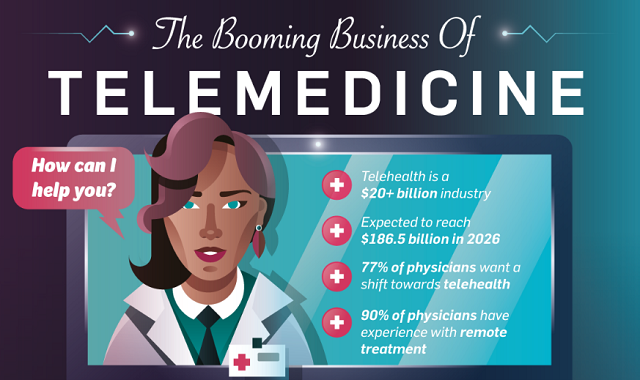
The future of medicine is just a few taps away. Online medical services have become the new normal. In 2019, more than 75% of U.S.-based hospitals use video to connect with their patients, and telemedicine will continue to boom. COVID-19 spurred many to try telehealth for the first time; 61% of Americans have now had at least one telehealth appointment - a 3x increase since March of 2020. Now that they’ve tried it, most Americans want to continue.

There is no surprise that technology has advanced in unimaginable ways and reshaped our lifestyle. As far as the healthcare sector is concerned, emerging technologies have the capability to reshape the management of human health and the entire industry as well. Don’t worry, it will be changed for good. The infographic below explores the top ways of how artificial intelligence is improving the healthcare industry.
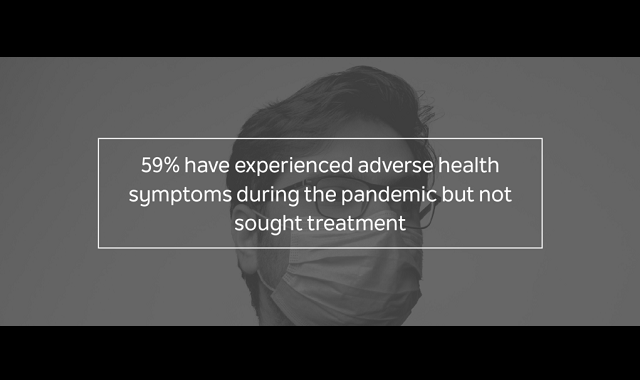
Many health experts having a growing concern about the types of healthcare and preventative care that Americans have been neglecting for fear of safety during the COVID-19 pandemic. Now that we are over a year into the COVID-19 pandemic experts are starting to see a clearer picture. Many Americans have neglected things like routine healthcare appointments for many different reasons.
To try and understand why Americans are neglecting healthcare during the COVID-19 pandemic, Tempus recently surveyed 1,078 Americans to better understand how many people have neglected healthcare, what the status of their health has been, and what motivated their choices.

Job search fatigue is a major issue on which you don’t see people talking about. It is like having a non-stop boxing match with Floyd Mayweather where you wait for ages to get an opportunity and once you do, you get knocked out with disappointment. The continuous disappointment of unemployment can lead to depression and other mental issues.

After comparing the survey results from that held in Jan 2021, it has been revealed that more people are trusting the vaccines developed for immunity against the deadly pandemic. The United Arab Emirates and Singapore are the two countries that saw an incredible increase in the people trusting Covid-19 vaccines. Both the countries are having extremely successful Covid-19 vaccination campaigns as well.
80% of people want to communicate with their healthcare providers through their phone, using texting or mobile messaging apps. Even more want the opportunity to communicate with a loved one’s care team in this way. But digital communication isn’t just a matter of patient preference.
Healthcare organizations lose money every year to communication problems, and patient care can suffer as a result. Every year, hospitals lose $12 million to communication problems. And 30% of malpractice cases are the result of a communication failure. Digital communication can save money and improve healthcare outcomes at the same time.