Visualistan: Moon -->

    Social Items

SpaceX to bring more opportunities for NASA?
SPACE X’s Falcon 9 rocket and Crew Dragon blasted off from the Kennedy Space Center on June 13, 2020 – relaunching American space flight after NASA was forced to retire its Space Shuttle in 2011.

The Crew Dragon’s flight marks a special milestone in the history of America for being the first that takes astronauts into the orbit. It is also the first privately built spacecraft to take a successful flight. The two crewmembers of Crew Dragon – Bon Behnken and Doug Hurley have safely reached the orbit and later docked with the ISS on May 31.

NASA also benefited from the overall expenditure of Crew Dragon. According to the news report, NASA paid both SpaceX and Boeing contracts worth $3.1 billion and $4.8 billion respectively. This is deemed as the cheapest spaceflight development effort in close to 60 years. A NASA audit also concluded that the price per seat on SpaceX is significantly more cost-effective than their previous programs.

In fact, the Apollo program had a cost per seat of $390 million and the figures for Space Shuttle come in at $170 million. However, SpaceX Crew Dragon will cost NASA around $55 million per seat, while Boeing’s Starliner adds up to $90 million.

SpaceX to bring more opportunities for NASA? #Infographic

A Map of Every Object in Our Solar System
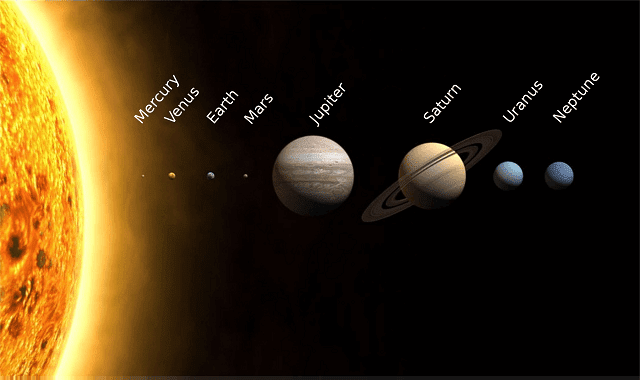
The path through the solar system is a rocky road. Asteroids, comets, planets and moons and all kinds of small bodies of rock, metals, minerals and ice are continually moving as they orbit the sun. In contrast to the simple diagrams we’re used to seeing, our solar system is a surprisingly crowded place.

In this stunning visualization, biologist Eleanor Lutz painstakingly mapped out every known object in Earth’s solar system (>10km in diameter), hopefully helping you on your next journey through space.

A Map of Every Object in Our Solar System #Infographic

Neil Armstrong’s Resume: The Man so Introverted He Flew to the Moon to Get Away

At the end of Apollo 11, there's a scene in which Neil Armstrong, Buzz Aldrin and Mike Collins make a TV broadcast.

"We would like to thank all those Americans who designed the spacecraft, who did the fabrication, the design, the testing, and put their heart and all their talents into the crafts," Armstrong says.

His gratitude is well deserved. Back on Earth, 400,000 men and women worked tirelessly to back the Moon landing. We tend to forget about them-but never did Neil Armstrong. He redirected all attention and applause over the years to those unidentified leaders of the Apollo Programme.

Notwithstanding this, he was launched into instant stardom by the Moon landing. But unlike Buzz Aldrin, Armstrong never took it upon himself. He firmly believed that he was not worthy of the fame.

Then what was he doing? While Aldrin was enjoying his time at the spotlight, Armstrong resigned from NASA and moved to an Ohio farm to get away from it all. Ultimately he stopped almost entirely giving interviews or making public appearances.

That gave him the reputation of being "private, nearly to a fault" and "painfully shy." Some even thought he was standoffish, rude, or even ungrateful.

Neil Armstrong’s Resume: The Man so Introverted He Flew to the Moon to Get Away #infographic

Home On the Moon: How to Build a Lunar Colony
An outpost on the Earth’s moon has been a staple of science fiction since the 20th century. One of the earliest practical proposals was the U.S. Army’s 1959 design for a nuclear powered fortress, built to establish a military presence on the moon before the Soviet Union could do the same. A 1961 U.S. Air Force plan called for a 21-man underground lunar base, to be built by 1968. Current arguments for establishing a lunar colony include these potential uses: Resource mining (oxygen, rocket fuel, construction materials), energy (solar power, helium 3 mining for nuclear fusion), astronomical observations from the moon's far side, tourism.

Home On the Moon: How to Build a Lunar Colony #infographic

How Moon Mining Could Work
Across history, human development has relied upon the finite resources available on Earth. But the moon – a seemingly barren rock – may actually be a treasure trove of rare resources vital to Earth’s future. And now, nations are looking upwards to a potential lunar gold rush…

How Moon Mining Could Work #infographic

Mining the Moon
Mineral-rich hotspot on the near side of the moon with high concentrations of potassium (K), phosphorous (P), iron-oxide, thorium and rare earth elements (REE). Relying on rock samples from the Apollo mission and on remotely-sensed data, scientists have found REE's in higher concentrations in the KREEP basalt than in the bulk Earth crust. But do these lunar resources beat those of the best REE mines on Earth? Hardly.

Mining the Moon Fact Sheet #infographic

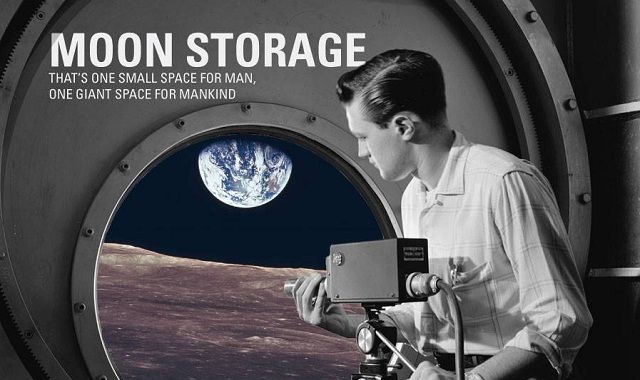
Image: Moon Storage #infographic
The moon is full of unused space, but is there a way to use it? Perhaps instead of turning it into a vast garbage dump we could build a lunar resort and collect solar power. Check out this infographic for more.

Moon Storage #infographic

Subscribe Our Newsletter