Visualistan -->

    Social Items

Yesterday’s Concept Cars

When we look back at the past generations’ views of tomorrow, people generally end up having the same conversation: “We were supposed to have hoverboards by now.” But the zany, fictional hoverboard in 1989’s Back to the Future doesn’t compare to the real vehicles clunking around in the imaginations of car producers in the 1940s and ’50s.

Concept cars of yesteryear were exciting, zooming, on-land space vehicles that were meant to propel us, wild dreams and all, into a happier, more regulated, more consistent, more resourceful future than the current one.
Yesterday’s Concept Cars #infographic

Self Driving Cars In Our Future

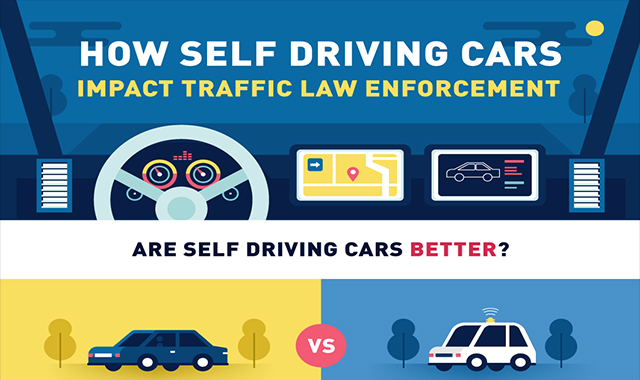
Concept cars are becoming reality. If you own a self-driving car in the future how will it affect your safety, your auto insurance, and state governments that depend on traffic citation revenue? These are all very important questions that are starting to become a growing concern for law enforcement and daily commuters. Did you know 800,000 drivers are pulled over every day?

Self Driving Cars In Our Future #infographic

Are You Ready for the Storm?

Whether the incoming storm is considered a hurricane, tropical storm, or cyclone, or if it’s level 1 or level 5, the common denominator is high winds and heavy rain and with that often damage and sometimes unexpected injury. Much of this can be avoided with some preparation. It pays to be ready for the storm before you find out it may hit landfall in a week and definitely before the “hurricane warning” is in effect.

 Your region’s storm-season rolls back around at the same time each year. Start preparing before that season starts. When “Hurricane Un-Named” gets here it may be too late, more will come, and there is no better time than when the sun is shining to get started.

Are You Ready for the Storm? #infographic

The Highest Risk Places For Your Car

It’s very import to not only drive safely but park safely! When your car is sitting around in parking lots or driveways, it’s good to use smart tactics to avoid having your stuff being broken into, from locking your doors to checking your alarms to hiding your valuables under your seat. If you’re living in one of these cities where car theft is common, you might want to take it a step further and purchase a lock for your steering wheel or perhaps even take your steering wheel with you!

 With this graphic below, discover the cities where taking the proper safety precautions could help lower your risk substantially. A few simple steps could help save you from being the next victim of car theft.

The Highest Risk Places For Your Car #infographic

Easy Ways to Lower Your Energy Bills

Most of our energy demands in the US are for the maintenance of things we need; necessities like heating, air conditioning, lighting, and refrigeration demand up to 63% of our electricity usage. While we scale back on the essentials, we may still be overlooking some simple and easy ways to save. When the monthly bills begin to creep too high, many households find themselves skimping on necessities as one in ten keeps their homes at unhealthy temperatures to save money, especially in the winter and summer months.

Unused appliances can still suck up energy if they remain plugged in and include offenders like printers, gaming consoles, TVs, and other appliances. Poor indoor insulation can make a furnace and central air conditioner work too hard and end up costing hundreds of extra dollars every year even as warm or cool air slips through the cracks.

 Nearly three in 20 households receive an energy disconnection notice every year - break the cycle with electricity hacks that not only help your wallet but also the economy and environment as well. Check out this infographic for more on easy ways to save even as energy costs continue to increase.

How to Recession Proof Your Budget #infographic

History’s Wealthiest & How Much They Would Be Worth Today

Who was the richest person of all time? It’s hard to say, but here are some best guesses based on historian estimates, adjusted to today’s dollars. From emperors to moguls to humble merchants, these wealthiest people of history have more money than even Bill Gates can dream of. There are people like Mansa Musa I, whose wealth was unimaginable by his contemporaries, who allegedly would toss gold to crowds. Then, there are lesser-known people like Jakob Fugger, whose wealth from textile trading would be equivalent to roughly $500 billion in today’s dollars. See how modern wealthy people compare, like Jeff Bezos, whose truly outstanding wealth is a fraction of that of Augustus Caesar, who personally owned about 30% of the whole world’s economic output. Then, there are those whose wealth is purely speculative. For instance, there’s King Solomon, who allegedly took 25 tons of gold from the people ever year, and may have been worth as much as $2 trillion. These riches are enough to make anyone feel like a peasant by comparison! Check out the rest of these super-wealthy historical figures on this infographic that was created by TitleMax.

The Wealthiest Historical Figures in Today's Dollars #infographic

The Most-Searched Tourist Destination in Every State in 2018

Travel is a popular pastime for many Americans. With so much to see throughout the United States, you can’t go wrong no matter which of the 50 states you choose to explore. But with so much to see, where do you start? How about starting with the tourist destinations that everyone seems to be the most curious about? This infographic from TitleMax shares the most-searched tourist destinations, as well as the fastest-rising tourist destinations, for each of the U.S states in 2018. Some of the most-searched destinations may even surprise you.

 Take Florida for example where Universal Studios came in as the most-searched destination over Walt Disney World, as many would expect. Amusement parks were a popular search, with them landing in the top results for 12 of the 50 states. One of the more interesting results for the fastest-rising tourist destinations is Hawaii’s, with “lava” coming out on top. Which two tourist destinations were people most actively searching for in your state last year?

The Most-Searched Tourist Destination in Every State in 2018 #infographic

27 Foods and the Plants They Come From #infographic

When was the last time you thought about where your favorite plant-based foods come from? Sure – most people know that some types of nuts, and popular fruits like avocado, grow on trees. However, did you know that pineapples grow in the ground, or that cinnamon is tree bark? We’ll bet you didn’t know that vanilla is an orchid, or that peanuts are not nuts at all, but legumes! This infographic is a fun look at 27 different types of foods and the plants they come from.

Readers will be able to learn how some of their favorite foods would appear growing in the wild. From cashews to capers, from pineapples to peanuts, and from coffee to artichokes, you’ll discover facts about your favorites that you may never have considered before. Which food grow on trees that seems like it shouldn’t? How about vice versa? Take a deep dive into this infographic from AlansFactoryOutlet and find out.

27 Foods and the Plants They Come From #infographic

The Poorest ZIP Codes in America

This infographic from TitleMax uses United States census data to visualize the poorest ZIP codes in the United States. It factors in both mean income and median income for each ZIP code. The poorest zip code in America for both median and mean income is 16501 in Erie, Pennsylvania. According to the 2017 U.S. Census data, the population is 1,419 households, with a median income of $10,873 and a mean income is $14,780. To put that into perspective, the U.S. Department of Health and Human Services determined that the federal poverty level for a family of four is $25,100.

The median income of Erie is less than half of that. For individuals, the federal poverty level is $12,140, and yet, 16501 is below even that. Another surprising addition to the bottom 10 zip codes is in Los Angeles, California. 90021 is the fourth poorest zip code in the United States with a median income of $12,864. The mean income is $47,393, which indicates that there is a major wealth discrepancy in this area.

The Poorest ZIP Codes in America #infographic

Can AI Replace Your Manager?

For small businesses, striking the right personnel balance can be a challenge and when positions aren’t filled by the right people, the responsibilities fall back on managers and business leaders. When the right staff isn’t there, AI and automation can help.

AI tech is sweeping businesses, both large and small, offering reliable solutions to everyday needs. From payroll managers to administrative services, the risk of AI overhaul is growing as machines are beginning to do our jobs better than we are. But any good manager knows how valuable a human touch is when it comes to leading a team, with tech stepping in to help them lead better, smarter, and more efficiently. Project management, hiring, and scheduling also get an automated makeover, but not every piece of tech is one size fits all - ready to help give your managers the new and improved tools of the trade?

Can AI Replace Your Manager? #infographic

How to start a book club at work

Since 2004, the number of Americans who read for pleasure has dropped more than 30 percent. In fact, 24 percent of American adults say they haven’t read a book in the past year. And—well—that’s kind of a huge bummer.

 So what can you do about it? Start a book club! While there are plenty of types of book clubs and ways to organize them, a work book club is a fun way for colleagues to bond and spend time together—whether you discuss industry-specific books or read the latest true crime bestseller. If you’re not sure where to start, we’re here to help with a step-by-step guide to starting a company book club.

From gauging interest and setting expectations with HR to choosing a snack selection and checking in with members to see how things are going, there’s more to planning a book club than choosing a book.

How to start a book club at work #infographic

What to do at work when you’re going through something at home

When we’re going through something in our personal lives, those issues don’t stay tidily contained to our existence outside of work. Instead, they tend to bleed into and affect every aspect of our lives, including our jobs.

 When you’re dealing with major issues in your personal life, it’s important to consider how your work may be affected. For example, it’s not uncommon for people to demonstrate reduced productivity, frequent absences, or unusual behaviors in the workplace while they cope with challenges at home.

What to do at work when you’re going through something at home #infographic

Subscribe Our Newsletter